Shi Yi, Zhang Dan-Dan, Liu Ji-Bin, Yang Xiao-Li, Xin Rui, Jia Cheng-You, Wang Hui-Min, Lu Gai-Xia, Wang Pei-Yao, Liu Yu, Li Zi-Jin, Deng Jing, Lin Qin-Lu, Ma Liang, Feng Shan-Shan, Chen Xiao-Qi, Zheng Xiang-Min, Zhou Ya-Fu, Hu Yong-Jun, Yin Hua-Qun, Tian Lin-Lin, Gu Li-Peng, Lv Zhong-Wei, Yu Fei, Li Wen, Ma Yu-Shui, Da Fu
National Engineering Laboratory for Deep Process of Rice and Byproducts, College of Food Science and Engineering, Central South University of Forestry and Technology, Changsha 410004, Hunan, China.
Cancer Institute, Nantong Tumor Hospital, Nantong 226631, China.
Mol Ther Nucleic Acids. 2021 Jan 1;23:702-718. doi: 10.1016/j.omtn.2020.12.016. eCollection 2021 Mar 5.
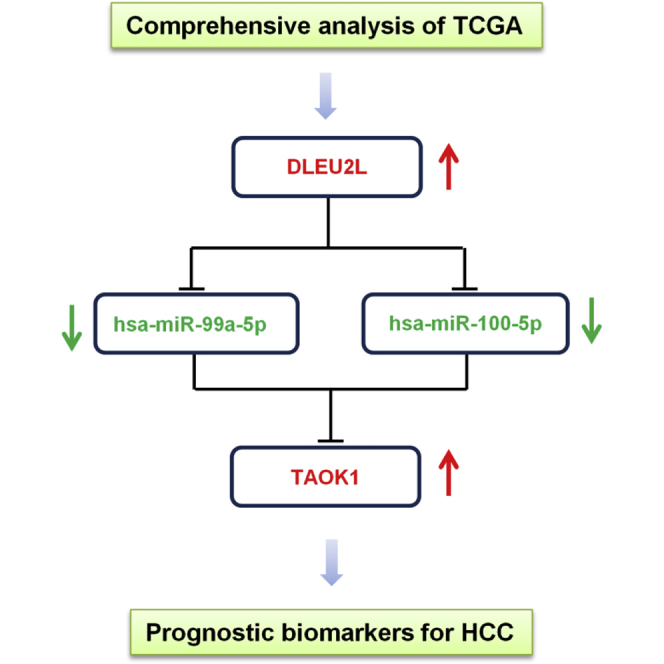
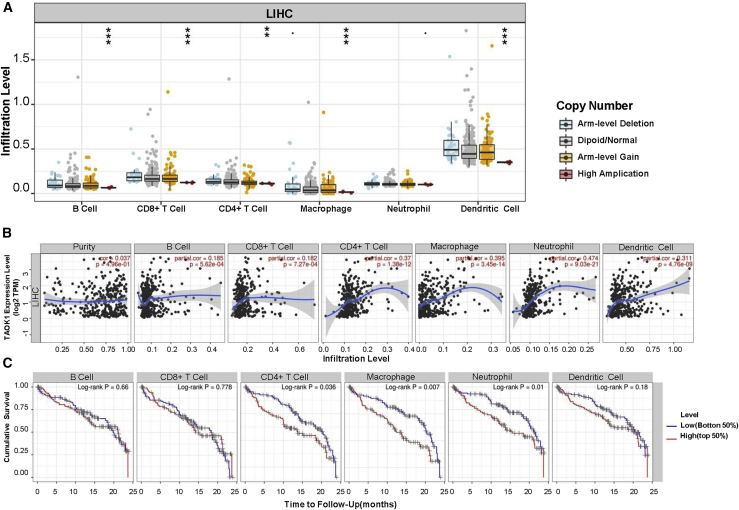
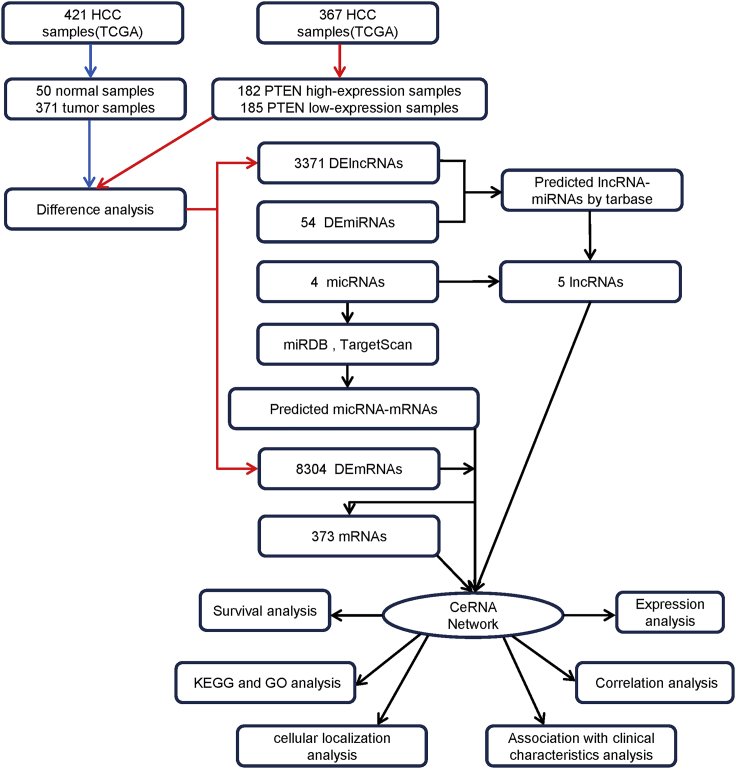
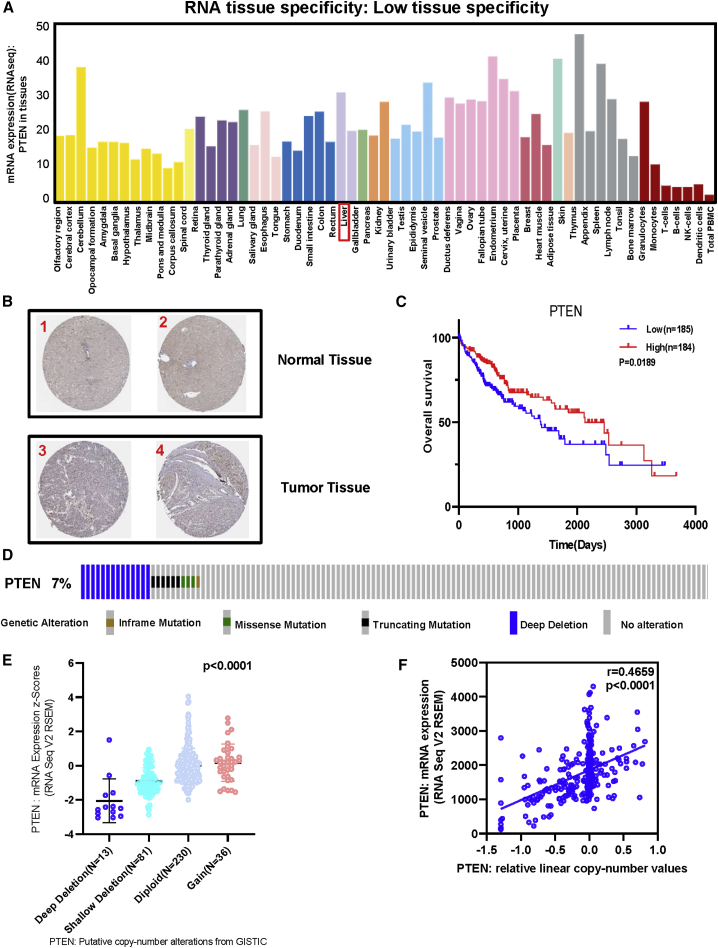
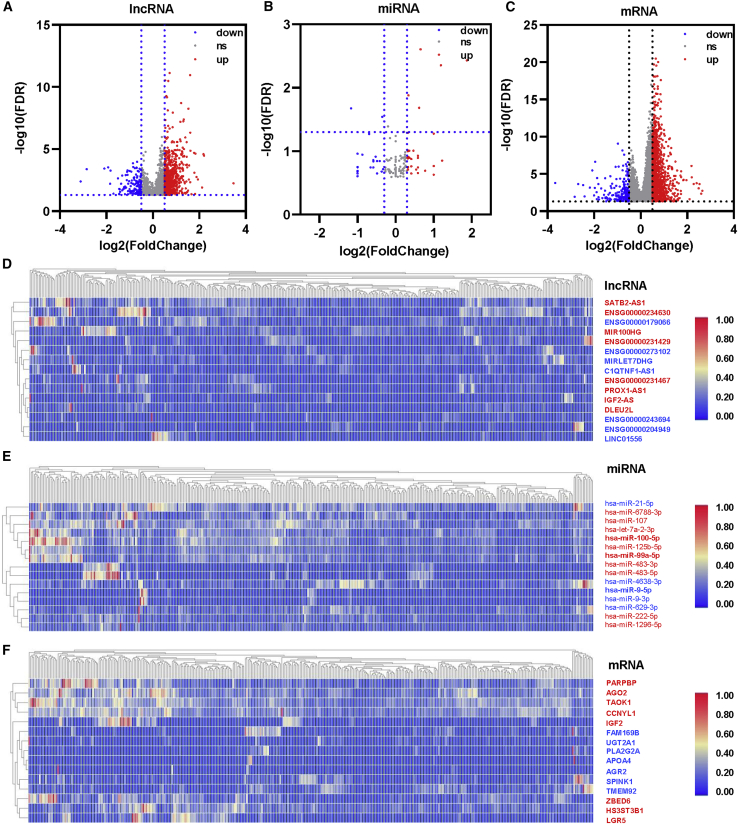
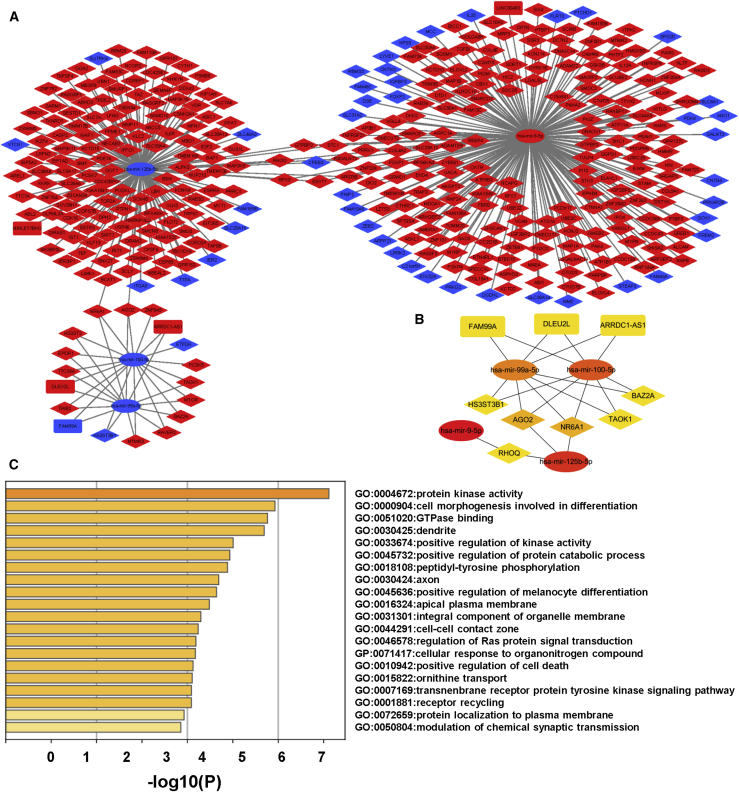
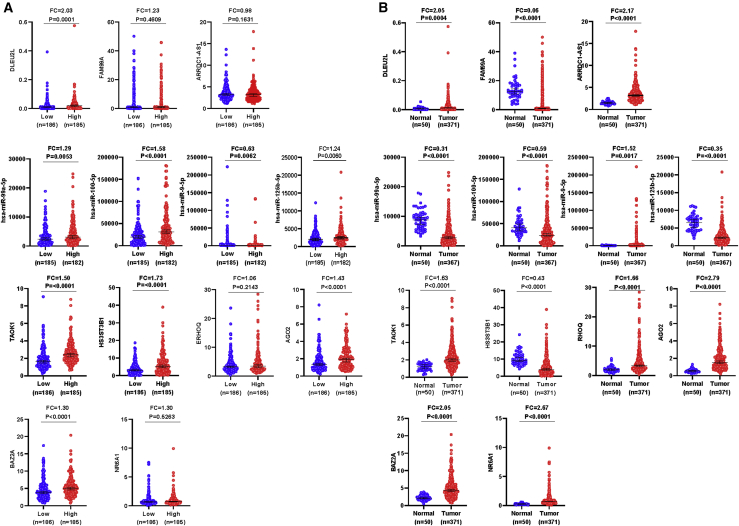
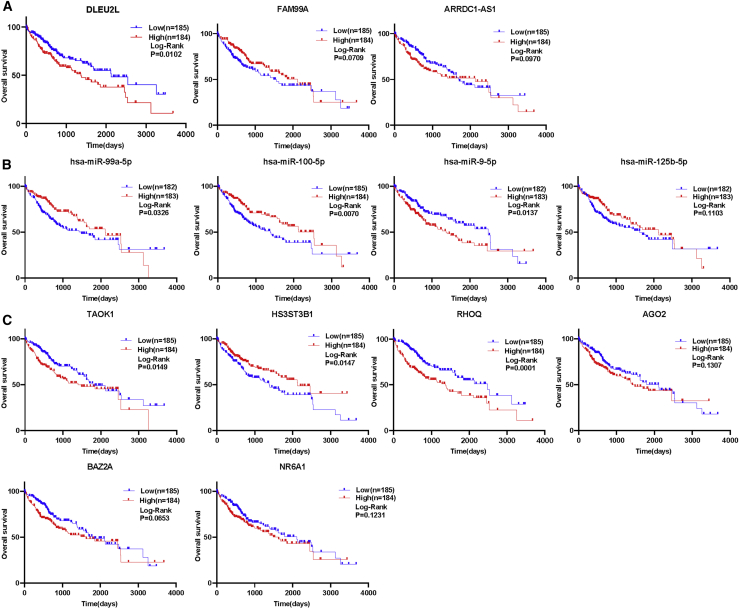
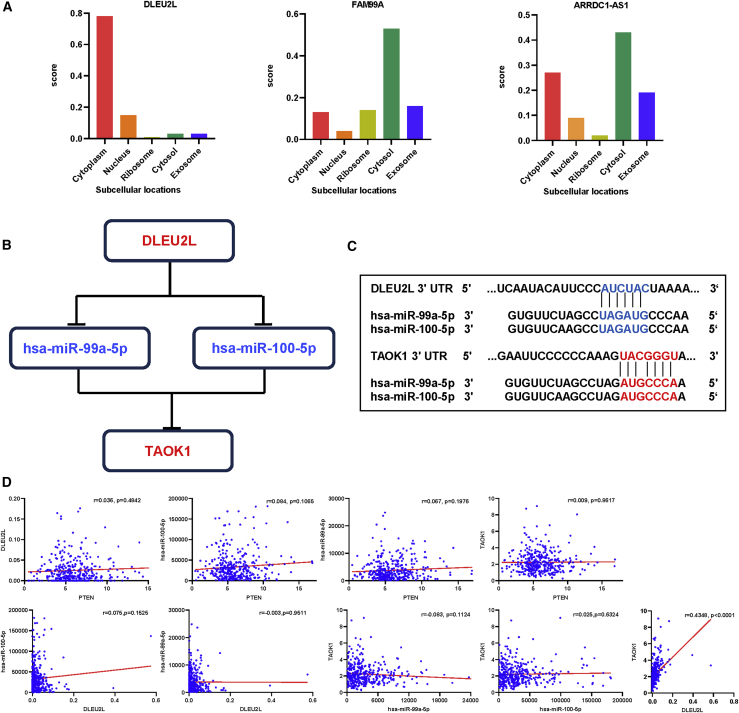
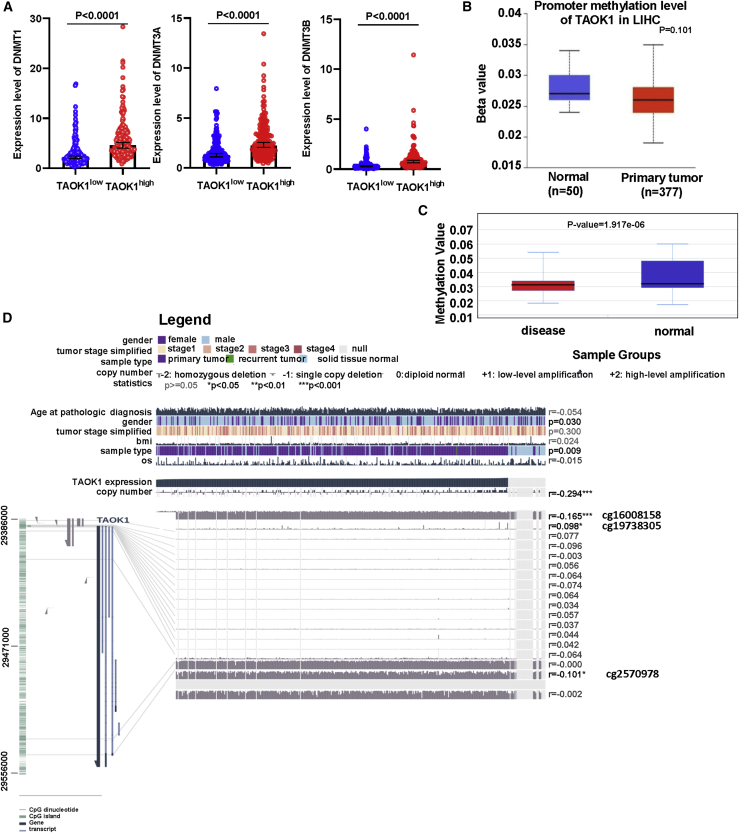
Hepatocellular carcinoma (HCC) is one of the deadliest malignant tumors that are harmful to human health. Increasing evidence has underscored the critical role of the competitive endogenous RNA (ceRNA) regulatory networks among various human cancers. However, the complexity and behavior characteristics of the ceRNA network in HCC were still unclear. In this study, we aimed to clarify a phosphatase and tensin homolog (PTEN)-related ceRNA regulatory network and identify potential prognostic markers associated with HCC. The expression profiles of three RNAs (long non-coding RNAs [lncRNAs], microRNAs [miRNAs], and mRNAs) were extracted from The Cancer Genome Atlas (TCGA) database. The DLEU2L-hsa-miR-100-5p/ hsa-miR-99a-5p-TAOK1 ceRNA network related to the prognosis of HCC was obtained by performing bioinformatics analysis. Importantly, we identified the DLEU2L/TAOK1 axis in the ceRNA by using correlation analysis, and it appeared to become a clinical prognostic model by Cox regression analysis. Furthermore, methylation analyses suggested that the abnormal upregulation of the DLEU2L/TAOK1 axis likely resulted from hypomethylation, and immune infiltration analysis showed that the DLEU2L/TAOK1 axis may have an impact on the changes in the tumor immune microenvironment and the development of HCC. In summary, the current study constructing a ceRNA-based DLEU2L/TAOK1 axis might be a novel important prognostic factor associated with the diagnosis and prognosis of HCC.
肝细胞癌(HCC)是对人类健康危害最大的恶性肿瘤之一。越来越多的证据强调了竞争性内源性RNA(ceRNA)调控网络在各种人类癌症中的关键作用。然而,HCC中ceRNA网络的复杂性和行为特征仍不清楚。在本研究中,我们旨在阐明一个与磷酸酶和张力蛋白同源物(PTEN)相关的ceRNA调控网络,并确定与HCC相关的潜在预后标志物。从癌症基因组图谱(TCGA)数据库中提取了三种RNA(长链非编码RNA [lncRNA]、微小RNA [miRNA]和信使RNA [mRNA])的表达谱。通过生物信息学分析获得了与HCC预后相关的DLEU2L-hsa-miR-100-5p/hsa-miR-99a-5p-TAOK1 ceRNA网络。重要的是,我们通过相关性分析在ceRNA中确定了DLEU2L/TAOK1轴,并且通过Cox回归分析它似乎成为了一种临床预后模型。此外,甲基化分析表明DLEU2L/TAOK1轴的异常上调可能是由于低甲基化导致的,免疫浸润分析表明DLEU2L/TAOK1轴可能对肿瘤免疫微环境的变化和HCC的发展产生影响。总之,当前构建基于ceRNA的DLEU2L/TAOK1轴的研究可能是与HCC诊断和预后相关的一个新的重要预后因素。