Liu Yia-Ping, Wilkinson Lawrence S, Robbins Trevor W
Laboratory of Cognitive Neuroscience, Departments of Physiology and Psychiatry, National Defense Medical Center, Taipei, 11490, Taiwan.
Behavioural and Clinical Neuroscience Institute, University of Cambridge, Cambridge, CB2 3EB, UK.
Psychopharmacology (Berl). 2017 May;234(9-10):1587-1601. doi: 10.1007/s00213-017-4579-8. Epub 2017 Mar 17.
Rats reared in social isolation exhibit various cognitive and behavioural abnormalities in adulthood. However, impulsivity following this treatment still remains unclear, especially in response to medications used in attention deficit hyperactivity disorder, such as amphetamine.
Using an isolation-rearing (IR) manipulation, the present study examined the effects of IR on impulsive action and impulsive choice when also treated with doses of D-amphetamine, by employing the five-choice serial reaction time task (5-CSRTT) and a temporal discounting of reward task (TDRT), respectively.
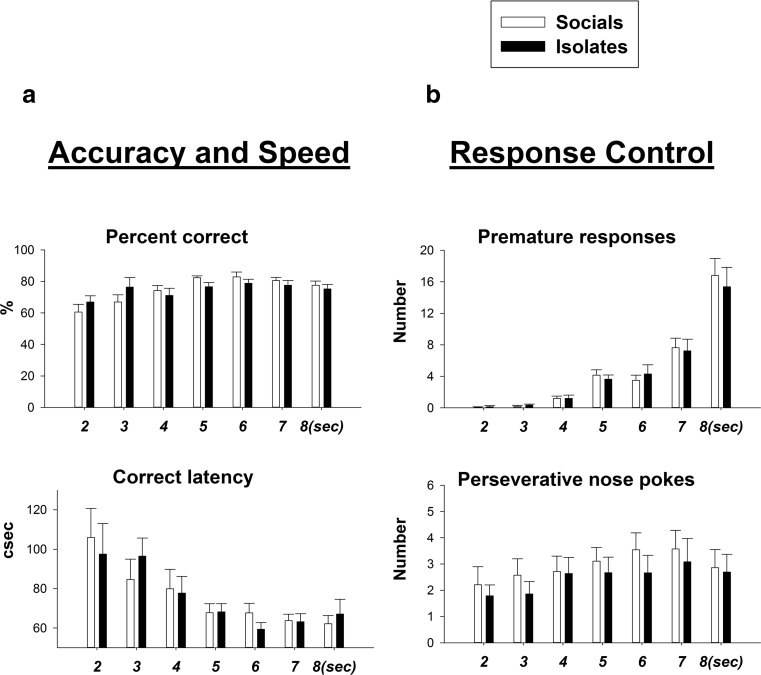
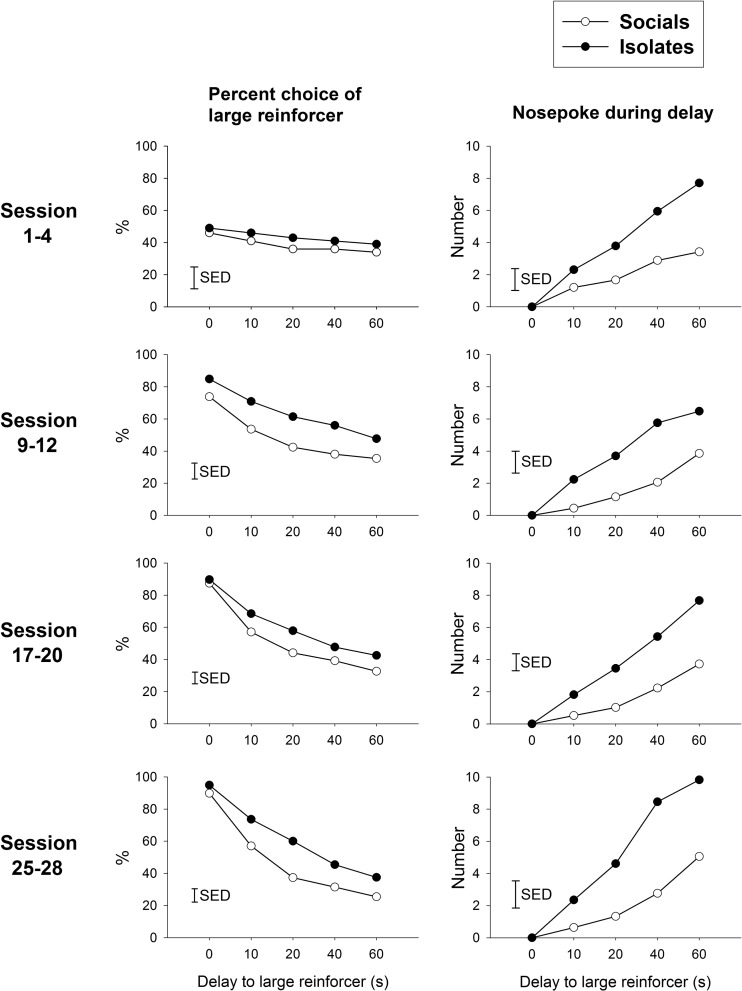
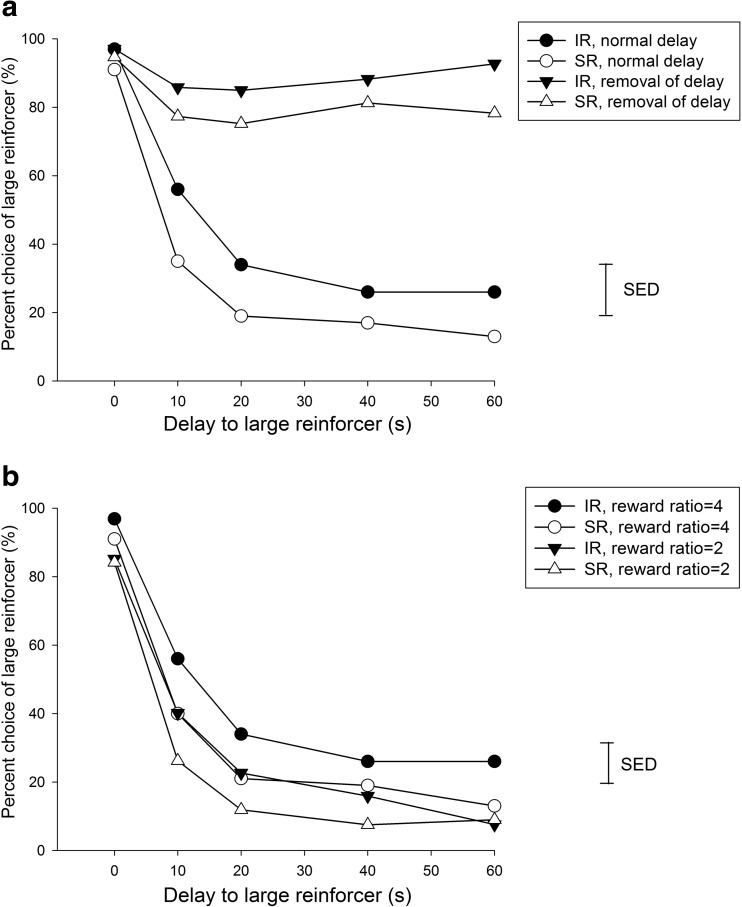
IR rats showed similar acquisition of the 5-CSRTT. Amphetamine increased premature responding in both groups; however, IR rats showed less responding overall. For the TDRT, IR rats revealed a greater preference for the large but delayed reward during task acquisition (i.e. were less impulsive) with a higher rate of nose poking during the delay, and exhibited a compressed dose-response function (i.e. reduced dose sensitivity) for amphetamine.
Impulsive action and impulsive choice were reduced in IR rats under certain conditions, and a blunted response to D-amphetamine was found on these measures. These reductions in impulsivity contrast with locomotor hyperactivity normally shown in IR rats and the findings have implications for the utility of IR as a model of psychopathology.
在社会隔离环境中饲养的大鼠成年后会表现出各种认知和行为异常。然而,这种处理后的冲动性仍不清楚,尤其是对注意力缺陷多动障碍所使用药物(如苯丙胺)的反应。
本研究采用隔离饲养(IR)操作,分别通过使用五选择连续反应时任务(5-CSRTT)和奖励时间折扣任务(TDRT),研究了IR对同时接受不同剂量D-苯丙胺处理时冲动行为和冲动选择的影响。
IR大鼠在5-CSRTT中的习得情况相似。苯丙胺增加了两组的过早反应;然而,IR大鼠总体反应较少。对于TDRT,IR大鼠在任务习得期间对大但延迟的奖励表现出更大的偏好(即冲动性较低),在延迟期间戳鼻频率更高,并且对苯丙胺表现出压缩的剂量反应函数(即剂量敏感性降低)。
在某些条件下,IR大鼠的冲动行为和冲动选择减少,并且在这些指标上发现对D-苯丙胺的反应减弱。这些冲动性的降低与IR大鼠通常表现出的运动性多动形成对比,这些发现对IR作为精神病理学模型的效用具有启示意义。