Truszkowski Torrey Ls, Carrillo Oscar A, Bleier Julia, Ramirez-Vizcarrondo Carolina M, Felch Daniel L, McQuillan Molly, Truszkowski Christopher P, Khakhalin Arseny S, Aizenman Carlos D
Department of Neuroscience, Brown University, Providence, United States.
Bard College, Annandale-On-Hudson, Unied States.
Elife. 2017 Mar 18;6:e25392. doi: 10.7554/eLife.25392.
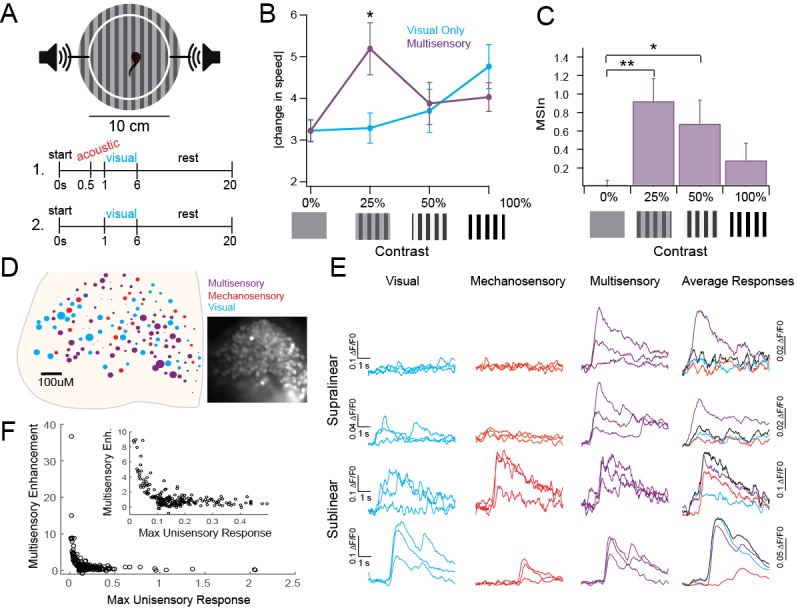
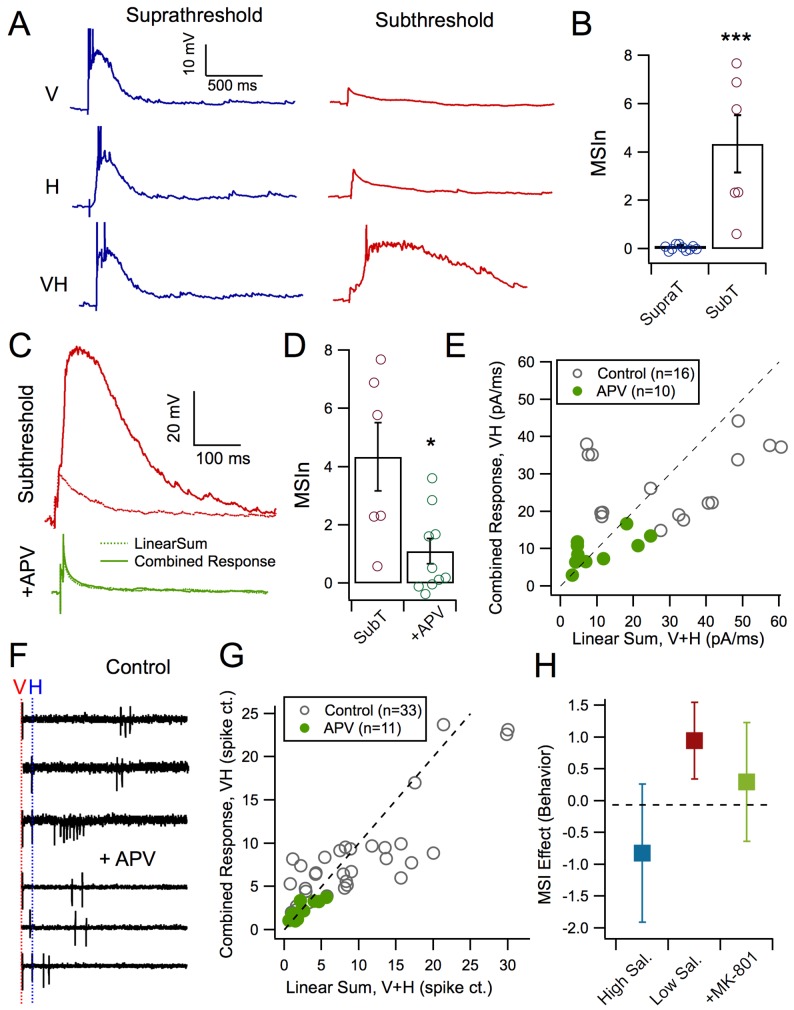
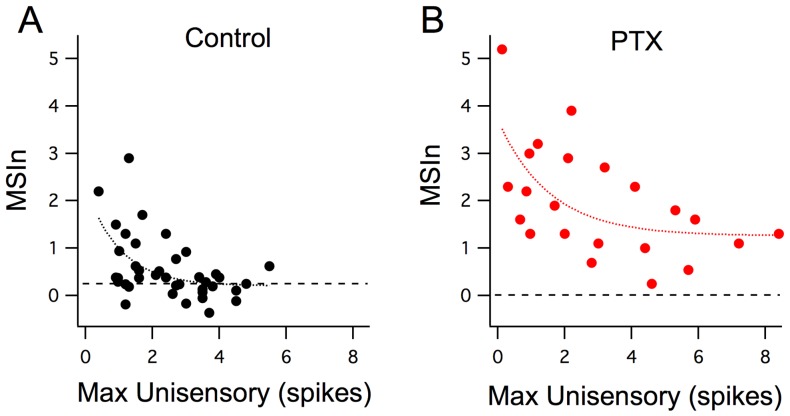
To build a coherent view of the external world, an organism needs to integrate multiple types of sensory information from different sources, a process known as multisensory integration (MSI). Previously, we showed that the temporal dependence of MSI in the optic tectum of tadpoles is mediated by the network dynamics of the recruitment of local inhibition by sensory input (Felch et al., 2016). This was one of the first cellular-level mechanisms described for MSI. Here, we expand this cellular level view of MSI by focusing on the principle of inverse effectiveness, another central feature of MSI stating that the amount of multisensory enhancement observed inversely depends on the size of unisensory responses. We show that non-linear summation of crossmodal synaptic responses, mediated by NMDA-type glutamate receptor (NMDARs) activation, form the cellular basis for inverse effectiveness, both at the cellular and behavioral levels.
为了构建对外界世界的连贯认知,生物体需要整合来自不同来源的多种类型的感官信息,这一过程称为多感官整合(MSI)。此前,我们发现蝌蚪视顶盖中MSI的时间依赖性是由感觉输入招募局部抑制的网络动力学介导的(费尔奇等人,2016年)。这是描述MSI的首批细胞水平机制之一。在此,我们通过关注反向有效性原则来扩展对MSI的这种细胞水平认知,反向有效性是MSI的另一个核心特征,即观察到的多感官增强量与单感官反应的大小成反比。我们表明,由NMDA型谷氨酸受体(NMDARs)激活介导的跨模态突触反应的非线性总和,在细胞和行为水平上均构成了反向有效性的细胞基础。