Kitazawa Satoshi, Nishizawa Satoru, Nakagawa Hideyuki, Funata Masaaki, Nishimura Kazuho, Soga Tomoyoshi, Hara Takahito
Oncology Drug Discovery Unit, Pharmaceutical Research Division, Takeda Pharmaceutical Company Limited, Fujisawa, Japan.
Biomolecular Research Laboratories, Takeda Pharmaceutical Company Limited, Fujisawa, Japan.
Cancer Sci. 2017 Jun;108(6):1185-1193. doi: 10.1111/cas.13240. Epub 2017 May 20.
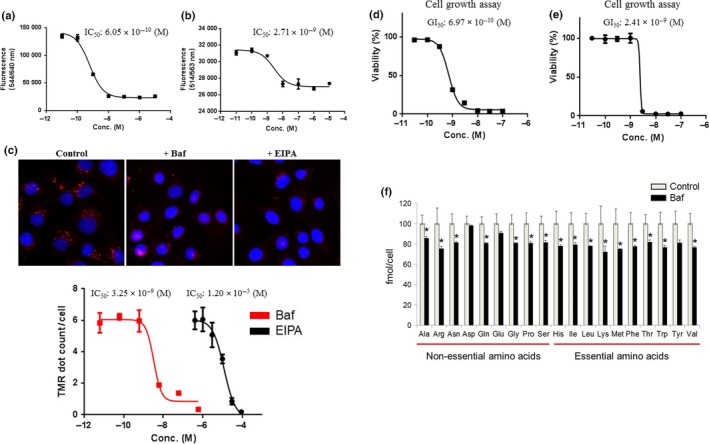
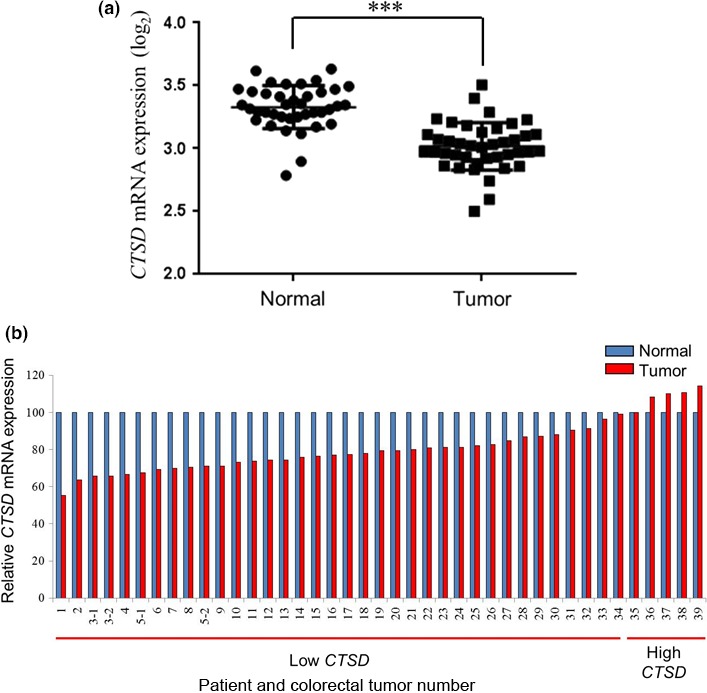
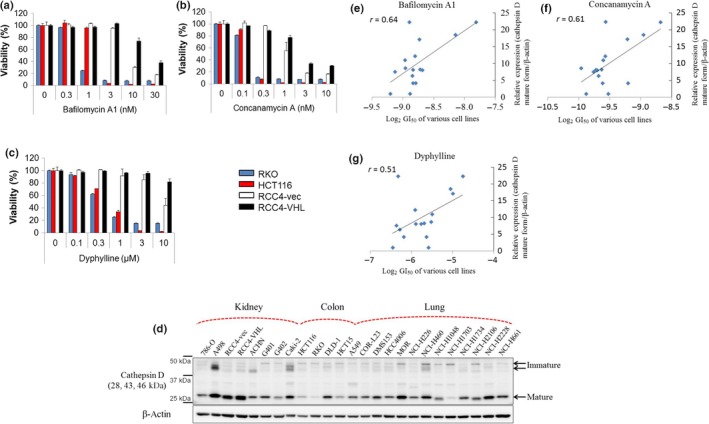
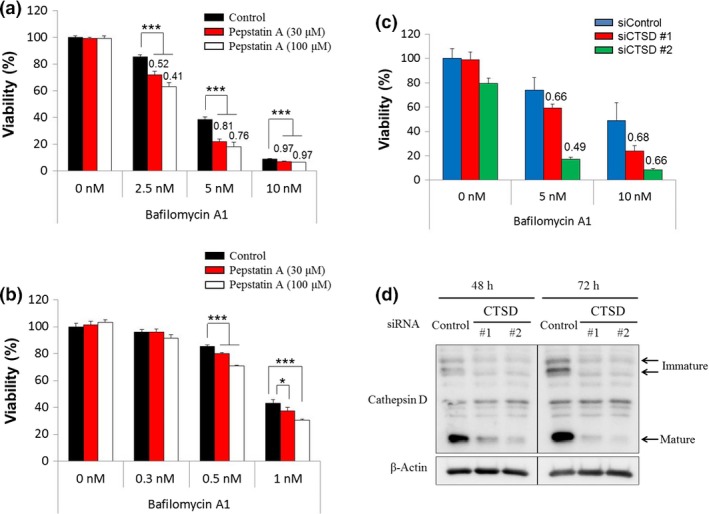
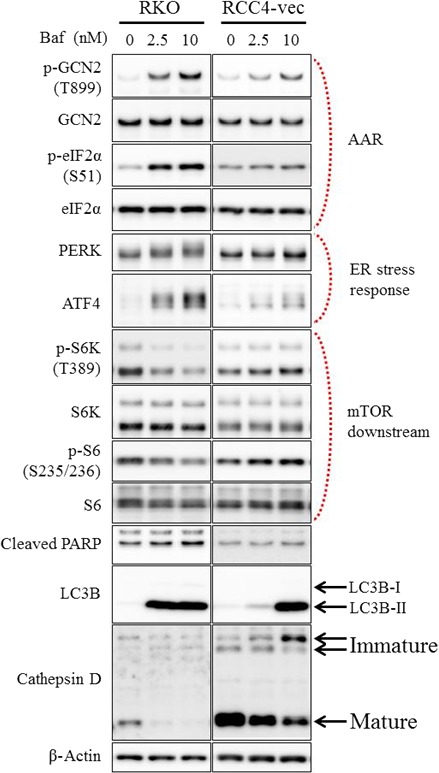
Vacuolar (H )-ATPases (V-ATPases) have important roles in the supply of nutrients to tumors by mediating autophagy and the endocytic uptake of extracellular fluids. Accordingly, V-ATPases are attractive therapeutic targets for cancer. However, the clinical use of V-ATPase inhibitors as anticancer drugs has not been realized, possibly owing to their high toxicity in humans. Inhibition of V-ATPase may be an appropriate strategy in highly susceptible cancers. In this study, we explored markers of V-ATPase inhibitor sensitivity. V-ATPase inhibitors led to pH impairment in acidic intracellular compartments, suppression of macropinocytosis, and decreased intracellular amino acid levels. The sensitivity of cells to V-ATPase inhibitors was correlated with low cathepsin D expression, and cancer cells showed increased sensitivity to V-ATPase inhibitors after pretreatment with a cathepsin D inhibitor and siRNA targeting the cathepsin D gene (CTSD). In addition, V-ATPase inhibitor treatment led to the induction of the amino acid starvation response, upregulation of endoplasmic reticulum stress markers, and suppression of mammalian target of rapamycin (mTOR) signaling in cells expressing low levels of cathepsin D. Some colorectal cancer patients showed the downregulation of cathepsin D in tumor tissues compared with matched normal tissues. These findings indicate that V-ATPase inhibitors are promising therapeutic options for cancers with downregulated cathepsin D.
液泡型(H⁺)-ATP酶(V-ATP酶)通过介导自噬和细胞外液的内吞摄取,在为肿瘤提供营养方面发挥着重要作用。因此,V-ATP酶是有吸引力的癌症治疗靶点。然而,V-ATP酶抑制剂作为抗癌药物的临床应用尚未实现,这可能是由于它们对人类具有高毒性。在高度敏感的癌症中,抑制V-ATP酶可能是一种合适的策略。在本研究中,我们探索了V-ATP酶抑制剂敏感性的标志物。V-ATP酶抑制剂导致酸性细胞内区室的pH值受损、巨胞饮作用受到抑制以及细胞内氨基酸水平降低。细胞对V-ATP酶抑制剂的敏感性与组织蛋白酶D低表达相关,在用组织蛋白酶D抑制剂和靶向组织蛋白酶D基因(CTSD)的小干扰RNA(siRNA)预处理后,癌细胞对V-ATP酶抑制剂的敏感性增加。此外,在组织蛋白酶D表达水平低的细胞中,V-ATP酶抑制剂处理导致氨基酸饥饿反应的诱导、内质网应激标志物的上调以及雷帕霉素靶蛋白(mTOR)信号传导的抑制。与配对的正常组织相比,一些结直肠癌患者的肿瘤组织中组织蛋白酶D表达下调。这些发现表明,V-ATP酶抑制剂对于组织蛋白酶D下调的癌症是有前景的治疗选择。