Department of Chemical Engineering, David H. Koch Institute for Integrative Cancer Research, MIT, Cambridge, Massachusetts 02139, USA.
Nat Commun. 2017 Mar 20;8:14179. doi: 10.1038/ncomms14179.
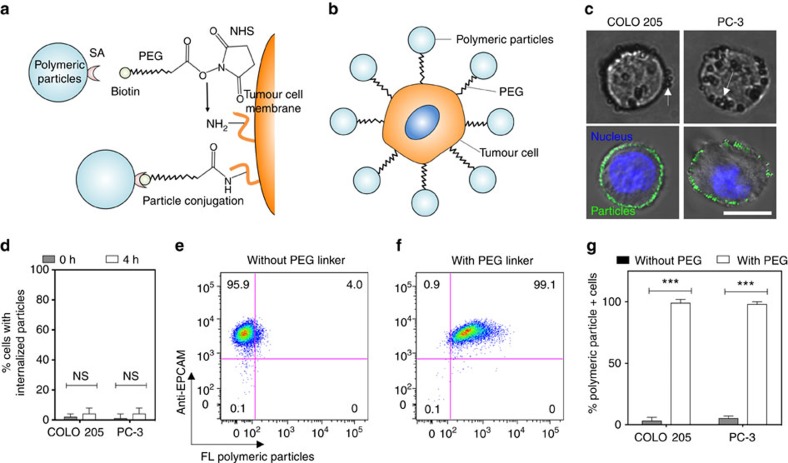
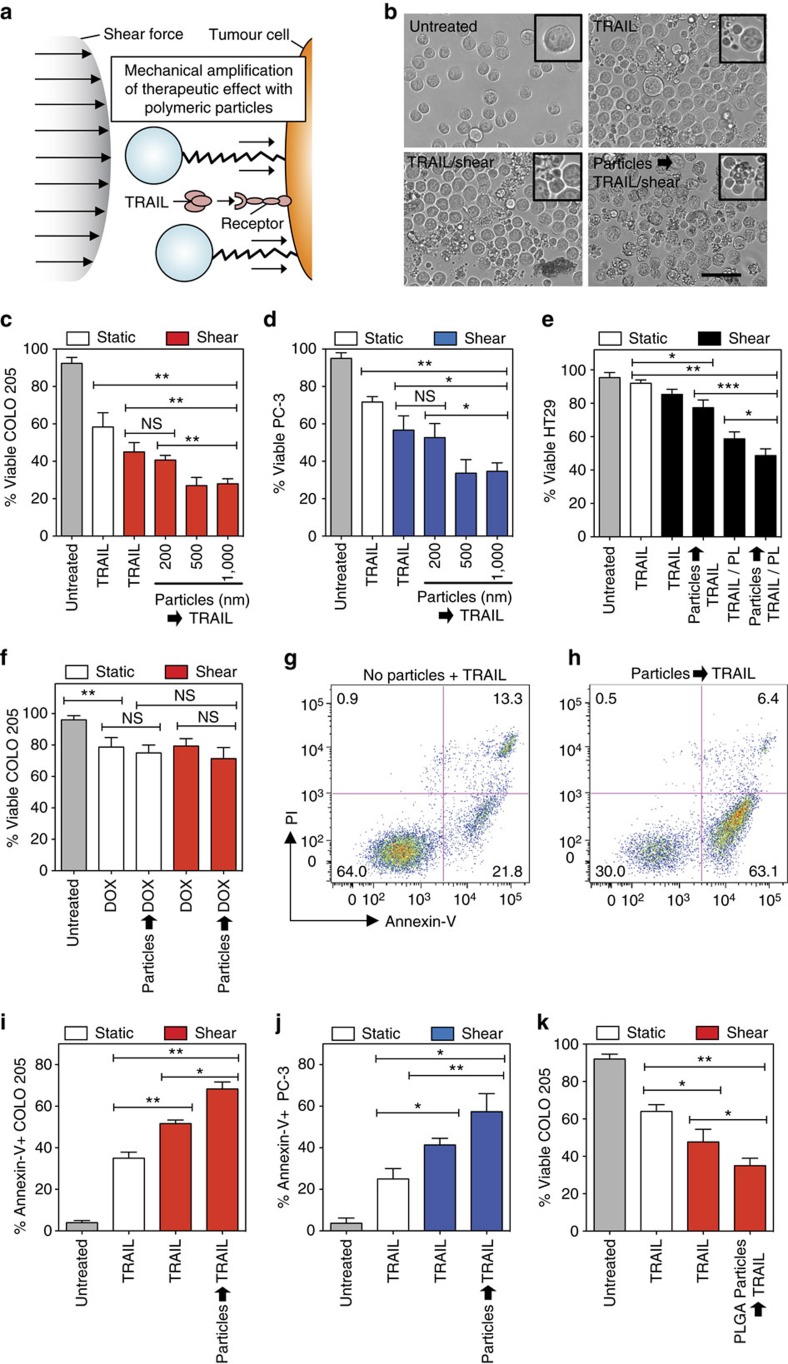
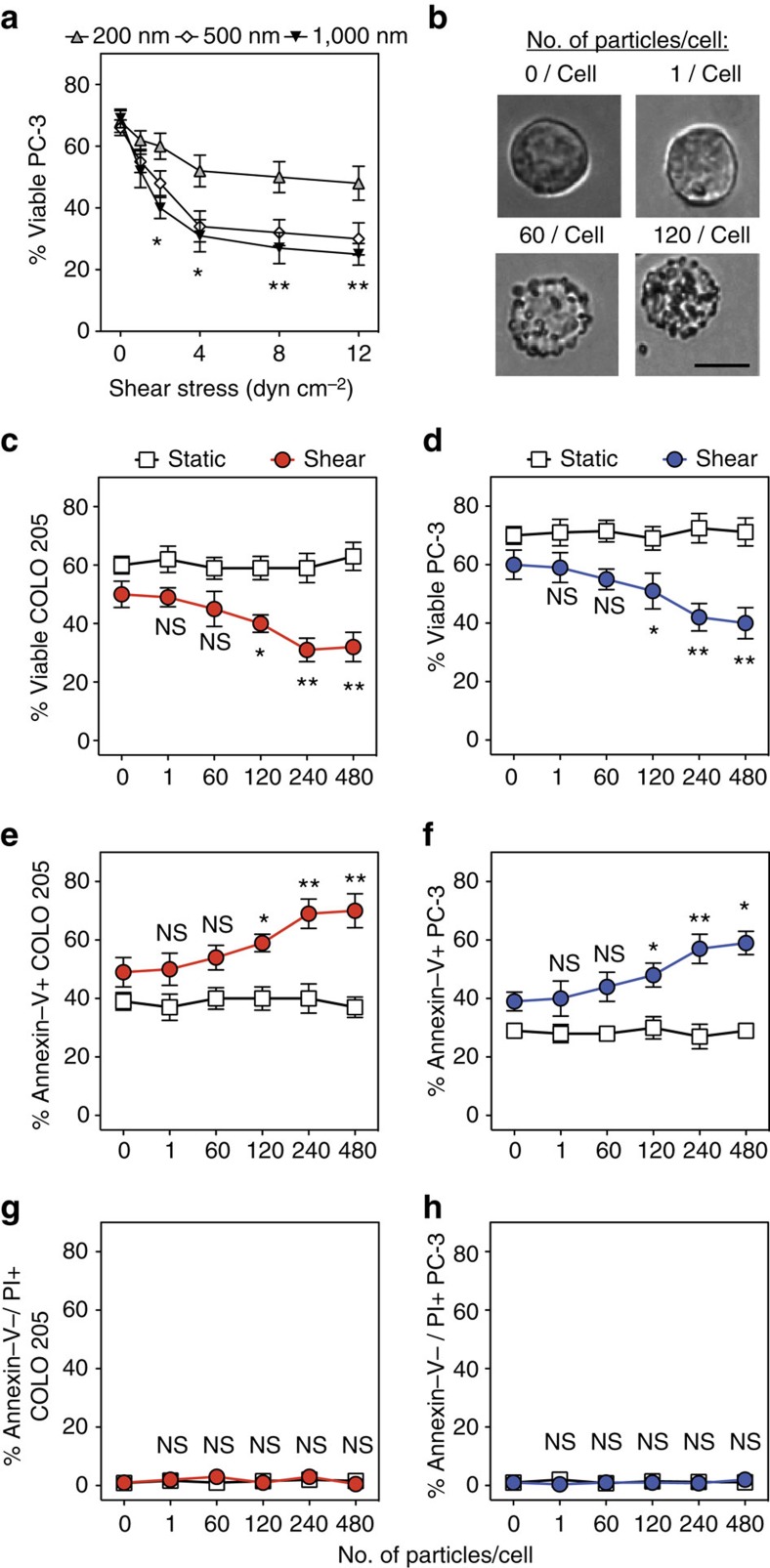
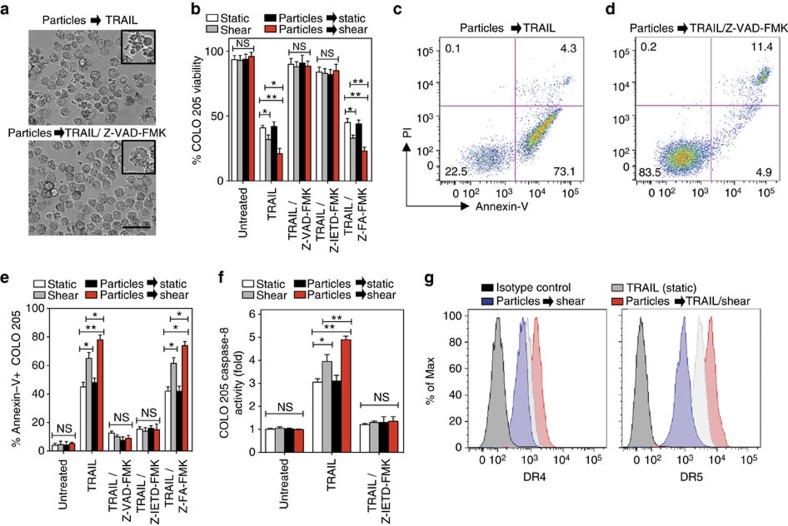
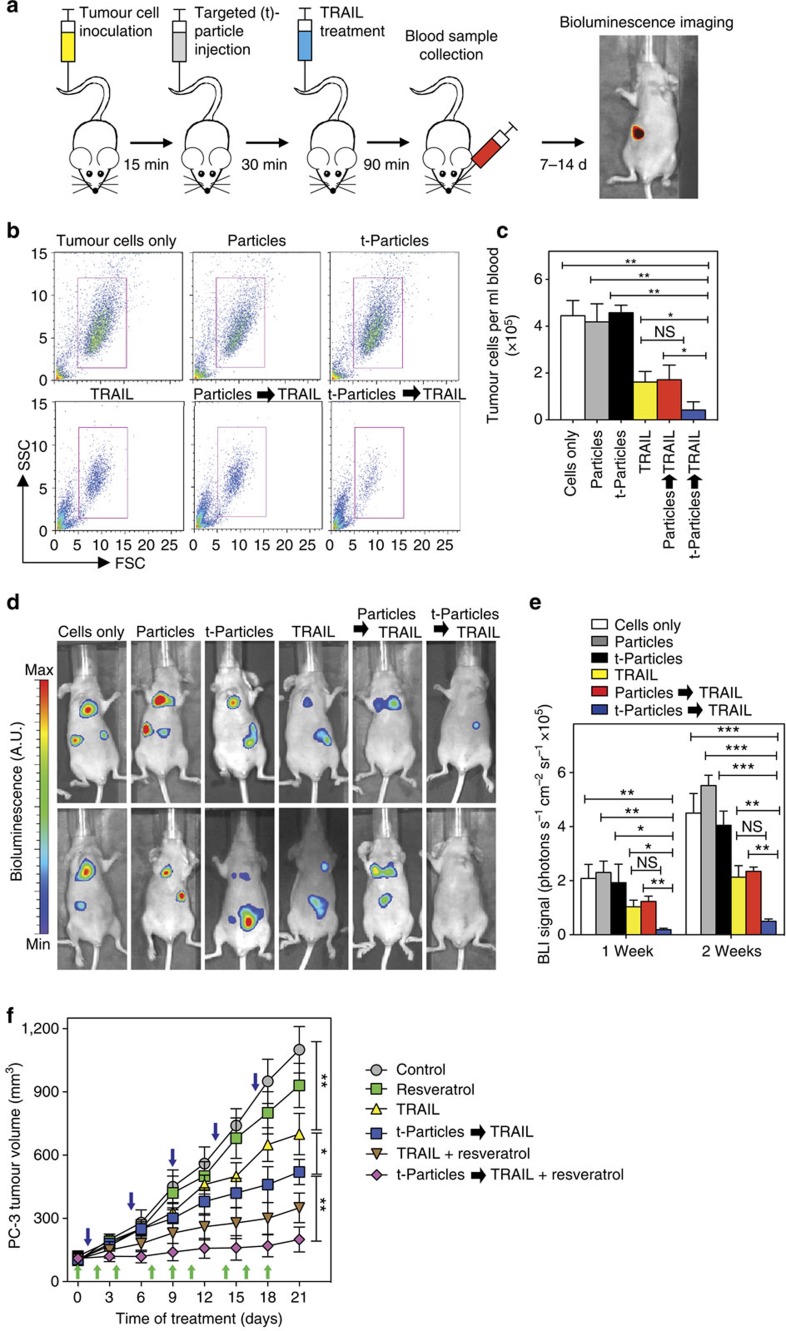
Physical forces affect tumour growth, progression and metastasis. Here, we develop polymeric mechanical amplifiers that exploit in vitro and in vivo physical forces to increase immune cytokine-mediated tumour cell apoptosis. Mechanical amplifiers, consisting of biodegradable polymeric particles tethered to the tumour cell surface via polyethylene glycol linkers, increase the apoptotic effect of an immune cytokine on tumour cells under fluid shear exposure by as much as 50% compared with treatment under static conditions. We show that targeted polymeric particles delivered to tumour cells in vivo amplify the apoptotic effect of a subsequent treatment of immune cytokine, reduce circulating tumour cells in blood and overall tumour cell burden by over 90% and reduce solid tumour growth in combination with the antioxidant resveratrol. The work introduces a potentially new application for a broad range of micro- and nanoparticles to maximize receptor-mediated signalling and function in the presence of physical forces.
物理力会影响肿瘤的生长、进展和转移。在这里,我们开发了聚合物机械增敏剂,利用体外和体内的物理力来增加免疫细胞因子介导的肿瘤细胞凋亡。机械增敏剂由通过聚乙二醇接头连接到肿瘤细胞表面的可生物降解聚合物颗粒组成,与静态条件下的治疗相比,在流体剪切暴露下,免疫细胞因子对肿瘤细胞的凋亡作用增加了多达 50%。我们表明,体内递送到肿瘤细胞的靶向聚合物颗粒可增强随后免疫细胞因子治疗的凋亡作用,将血液中的循环肿瘤细胞和总肿瘤细胞负担减少 90%以上,并与抗氧化剂白藜芦醇联合减少实体瘤生长。这项工作为广泛的微纳米颗粒引入了一种潜在的新应用,以在存在物理力的情况下最大化受体介导的信号转导和功能。