Department of Surgery and Cancer, Institute of Reproductive and Developmental Biology, Imperial College London, Hammersmith Hospital Campus, Du Cane Road, London, W12 0NN, UK.
King's College London, Guy's Hospital Campus, London, UK.
Cancer Immunol Immunother. 2018 Nov;67(11):1753-1765. doi: 10.1007/s00262-018-2199-8. Epub 2018 Aug 24.
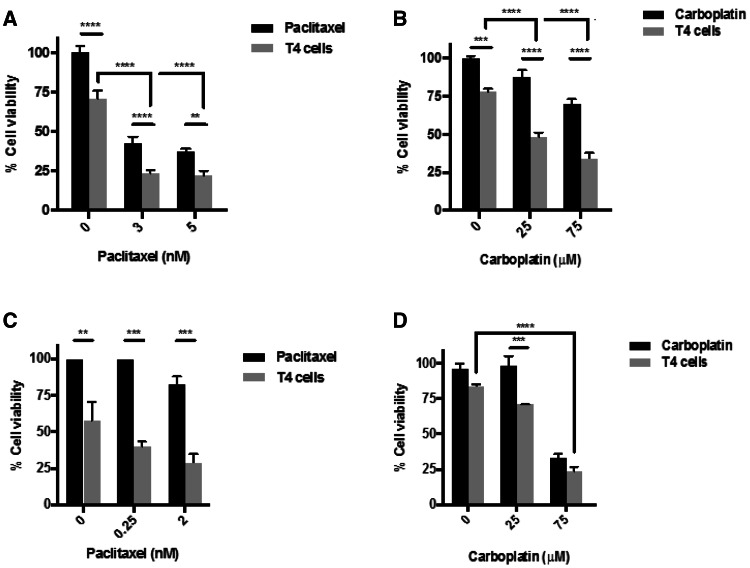
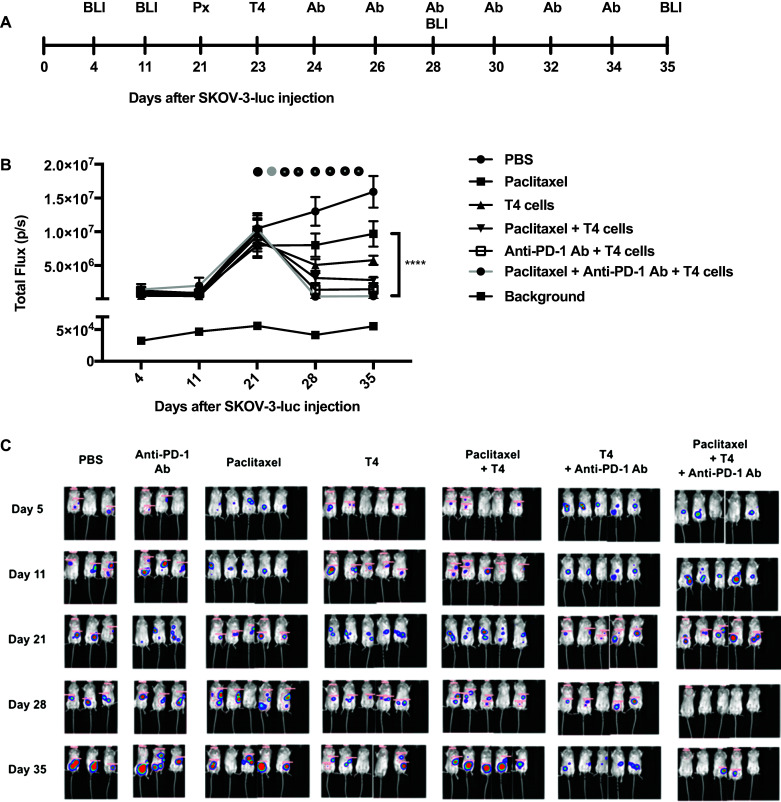
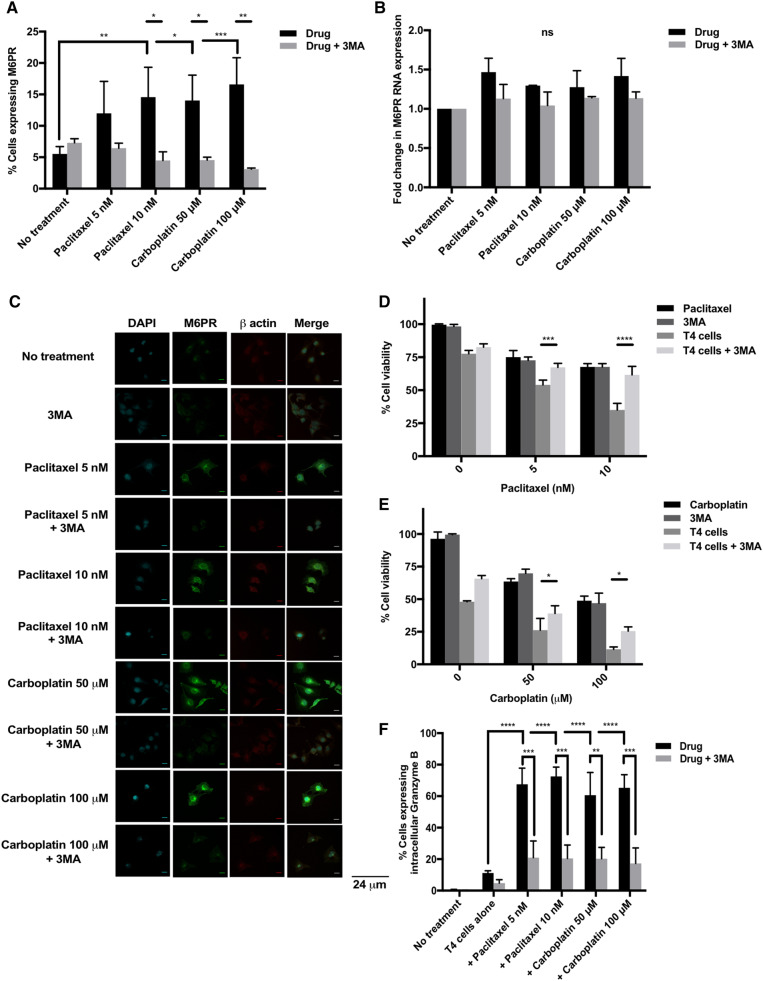
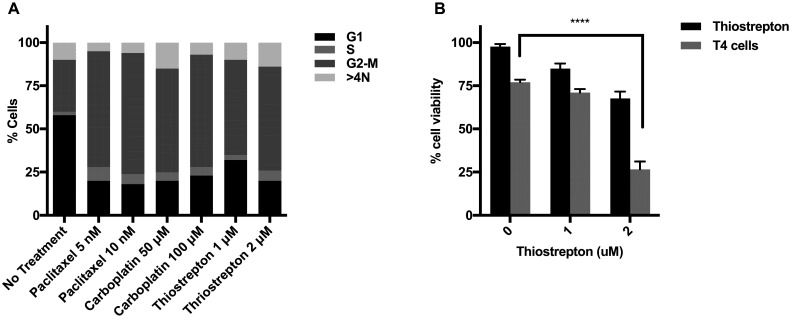
Epithelial ovarian cancer (EOC) is the most lethal of all gynecological malignancies in the UK. Recent evidence has shown that there is potential for immunotherapies to be successful in treating this cancer. We have previously shown the effective application of combinations of traditional chemotherapy and CAR (chimeric antigen receptor) T cell immunotherapy in in vitro and in vivo models of EOC. Platinum-based chemotherapy synergizes with ErbB-targeted CAR T cells (named T4), significantly reducing tumor burden in mice. Here, we show that paclitaxel synergizes with T4 as well, and look into the mechanisms behind the effectiveness of chemo-immunotherapy in our system. Impairment of caspase activity using pan-caspase inhibitor Z-VAD reveals this chemotherapy-induced apoptotic pathway as an essential factor in driving synergy. Mannose-6-phosphate receptor-mediated autophagy and the arrest of cell cycle in G2/M are also shown to be induced by chemotherapy and significantly contributing to the synergy. Increased expression of PD-1 on T4 CAR T cells occurred when these were in culture with ovarian tumor cells; on the other hand, EOC cell lines showed increased PD-L1 expression following chemotherapy treatment. These findings provided a rationale to look into testing PD-1 blockade in combination with paclitaxel and T4 immunotherapy. Combination of these three agents in mice resulted in significant reduction of tumor burden, compared to each treatment alone. In conclusion, the mechanism driving synergy in chemo-immunotherapy of EOC is multifactorial. A deeper understanding of such process is needed to better design combination therapies and carefully stratify patients.
上皮性卵巢癌(EOC)是英国所有妇科恶性肿瘤中最致命的一种。最近的证据表明,免疫疗法在治疗这种癌症方面有成功的潜力。我们之前已经证明了传统化疗和嵌合抗原受体(CAR)T 细胞免疫疗法联合应用在 EOC 的体外和体内模型中的有效性。铂类化疗与针对 ErbB 的 CAR T 细胞(命名为 T4)协同作用,显著降低了小鼠的肿瘤负担。在这里,我们表明紫杉醇也与 T4 协同作用,并研究我们系统中化疗免疫治疗有效性的背后机制。使用泛半胱天冬酶抑制剂 Z-VAD 抑制半胱天冬酶活性表明,这种化疗诱导的细胞凋亡途径是驱动协同作用的一个重要因素。还表明,化疗诱导甘露糖-6-磷酸受体介导的自噬和细胞周期在 G2/M 期的停滞也对协同作用有显著贡献。当 T4 CAR T 细胞与卵巢肿瘤细胞在培养中时,T4 CAR T 细胞上的 PD-1 表达增加;另一方面,EOC 细胞系在化疗治疗后 PD-L1 表达增加。这些发现为研究 PD-1 阻断联合紫杉醇和 T4 免疫治疗提供了依据。这三种药物在小鼠中的联合使用与每种药物单独使用相比,显著降低了肿瘤负担。总之,EOC 化疗免疫治疗协同作用的机制是多因素的。需要更深入地了解这一过程,以便更好地设计联合治疗方案并仔细分层患者。