Azzalin Alberto, Nato Giulia, Parmigiani Elena, Garello Francesca, Buffo Annalisa, Magrassi Lorenzo
Neurochirurgia, Dipartimento di Scienze Clinico-Chirurgiche, Diagnostiche e Pediatriche, University of Pavia - Fondazione IRCCS Policlinico S. Matteo, v.le Golgi 19, 27100 Pavia, Italy; Istituto di Genetica Molecolare IGM-CNR, via Abbiategrasso 207, 27100 Pavia, Italy.
Department of Neuroscience Rita Levi-Montalcini, University of Turin, Neuroscience Institute Cavalieri Ottolenghi (NICO), 10043 Orbassano, (Torino), Italy.
Neoplasia. 2017 Apr;19(4):364-373. doi: 10.1016/j.neo.2017.02.009. Epub 2017 Mar 19.
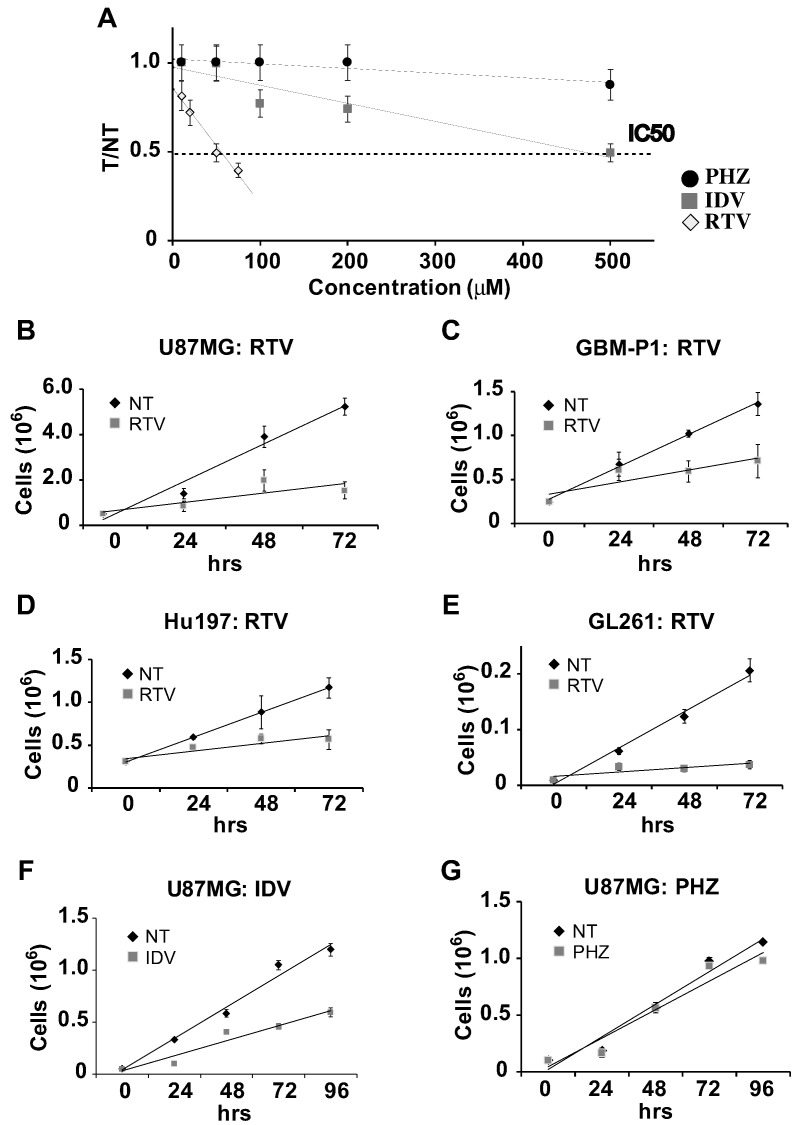
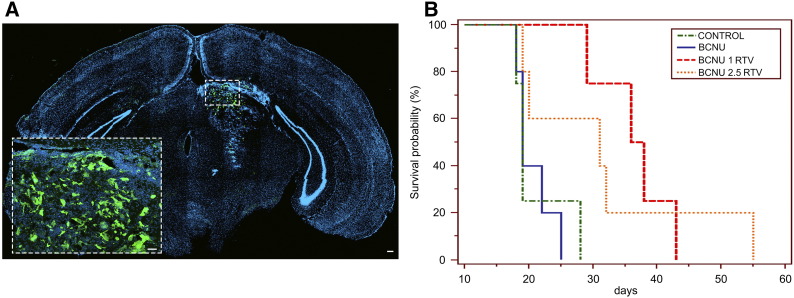
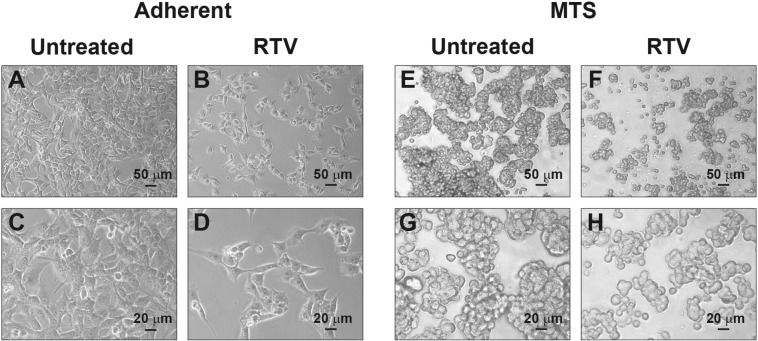
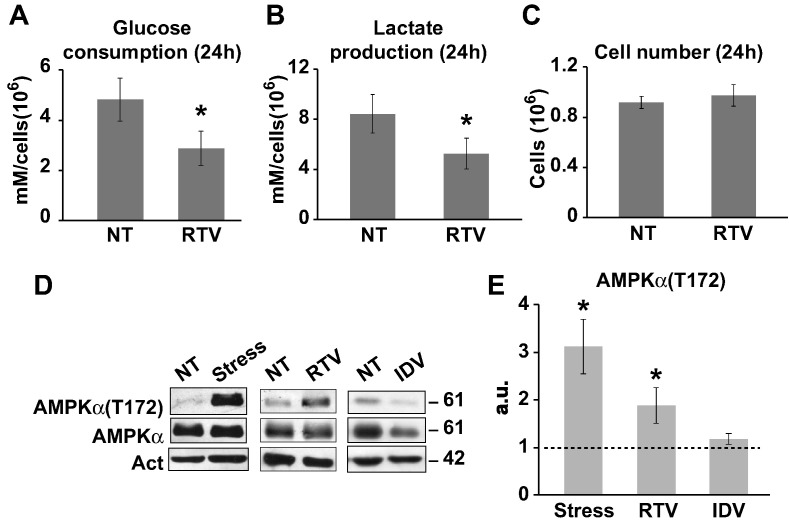
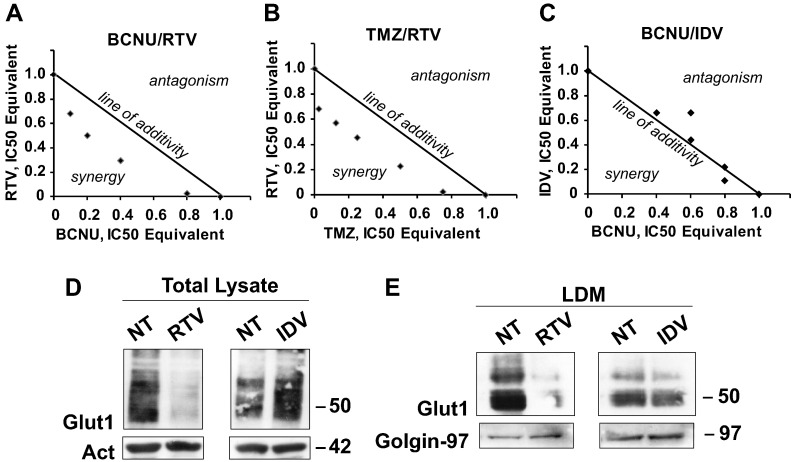
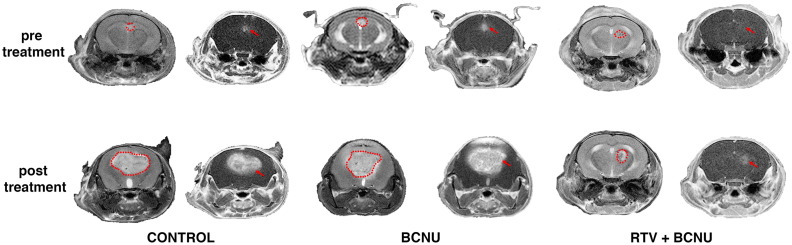
Glucose transport across glioblastoma membranes plays a crucial role in maintaining the enhanced glycolysis typical of high-grade gliomas and glioblastoma. We tested the ability of two inhibitors of the glucose transporters GLUT/SLC2A superfamily, indinavir (IDV) and ritonavir (RTV), and of one inhibitor of the Na/glucose antiporter type 2 (SGLT2/SLC5A2) superfamily, phlorizin (PHZ), in decreasing glucose consumption and cell proliferation of human and murine glioblastoma cells. We found in vitro that RTV, active on at least three different GLUT/SLC2A transporters, was more effective than IDV, a specific inhibitor of GLUT4/SLC2A4, both in decreasing glucose consumption and lactate production and in inhibiting growth of U87MG and Hu197 human glioblastoma cell lines and primary cultures of human glioblastoma. PHZ was inactive on the same cells. Similar results were obtained when cells were grown in adherence or as 3D multicellular tumor spheroids. RTV treatment but not IDV treatment induced AMP-activated protein kinase (AMPKα) phosphorylation that paralleled the decrease in glycolytic activity and cell growth. IDV, but not RTV, induced an increase in GLUT1/SLC2A1 whose activity could compensate for the inhibition of GLUT4/SLC2A4 by IDV. RTV and IDV pass poorly the blood brain barrier and are unlikely to reach sufficient liquoral concentrations in vivo to inhibit glioblastoma growth as single agents. Isobologram analysis of the association of RTV or IDV and 1,3-bis(2-chloroethyl)-1-nitrosourea (BCNU) or 4-methyl-5-oxo-2,3,4,6,8-pentazabicyclo[4.3.0]nona-2,7,9-triene-9-carboxamide (TMZ) indicated synergy only with RTV on inhibition of glioblastoma cells. Finally, we tested in vivo the combination of RTV and BCNU on established GL261 tumors. This drug combination increased the overall survival and allowed a five-fold reduction in the dose of BCNU.
葡萄糖跨胶质母细胞瘤细胞膜的转运在维持高级别胶质瘤和胶质母细胞瘤典型的增强型糖酵解过程中起着关键作用。我们测试了两种葡萄糖转运蛋白GLUT/SLC2A超家族抑制剂茚地那韦(IDV)和利托那韦(RTV)以及一种钠/葡萄糖协同转运蛋白2型(SGLT2/SLC5A2)超家族抑制剂根皮苷(PHZ)降低人源和鼠源胶质母细胞瘤细胞葡萄糖消耗和细胞增殖的能力。我们在体外发现,RTV对至少三种不同的GLUT/SLC2A转运蛋白有活性,在降低葡萄糖消耗和乳酸生成以及抑制U87MG和Hu197人胶质母细胞瘤细胞系及人胶质母细胞瘤原代培养物的生长方面,比GLUT4/SLC2A4的特异性抑制剂IDV更有效。PHZ对相同细胞无活性。当细胞贴壁生长或形成三维多细胞肿瘤球体时,也获得了类似结果。RTV处理而非IDV处理诱导了AMP激活的蛋白激酶(AMPKα)磷酸化,这与糖酵解活性和细胞生长的降低平行。IDV而非RTV诱导了GLUT1/SLC2A1增加,其活性可补偿IDV对GLUT4/SLC2A4的抑制。RTV和IDV透过血脑屏障的能力较差,不太可能在体内达到足够的脑脊液浓度以作为单一药物抑制胶质母细胞瘤生长。RTV或IDV与1,3-双(2-氯乙基)-1-亚硝基脲(BCNU)或4-甲基-5-氧代-2,3,4,6,8-五氮杂双环[4.3.0]壬-2,7,9-三烯-9-甲酰胺(TMZ)联合的等效线图分析表明,仅RTV与BCNU联合对胶质母细胞瘤细胞有协同抑制作用。最后,我们在体内测试了RTV和BCNU联合对已建立的GL261肿瘤的作用。这种药物联合提高了总生存期,并使BCNU剂量降低了五倍。