Boutagy Nabil E, Sinusas Albert J
Section of Cardiovascular Medicine, Department of Medicine, Yale University School of Medicine, 375 Congress Avenue, New Haven, CT, 06519, USA.
Department of Radiology and Biomedical Imaging, Yale University School of Medicine, New Haven, CT, USA.
Curr Cardiol Rep. 2017 Apr;19(4):33. doi: 10.1007/s11886-017-0843-0.
The purpose of this review was to summarize current advances in positron emission tomography (PET) cardiac autonomic nervous system (ANS) imaging, with a specific focus on clinical applications of novel and established tracers.
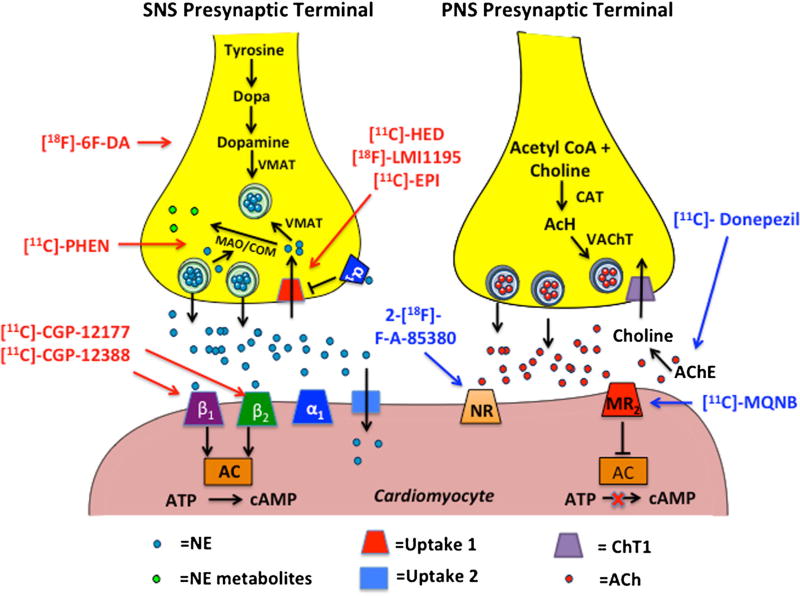
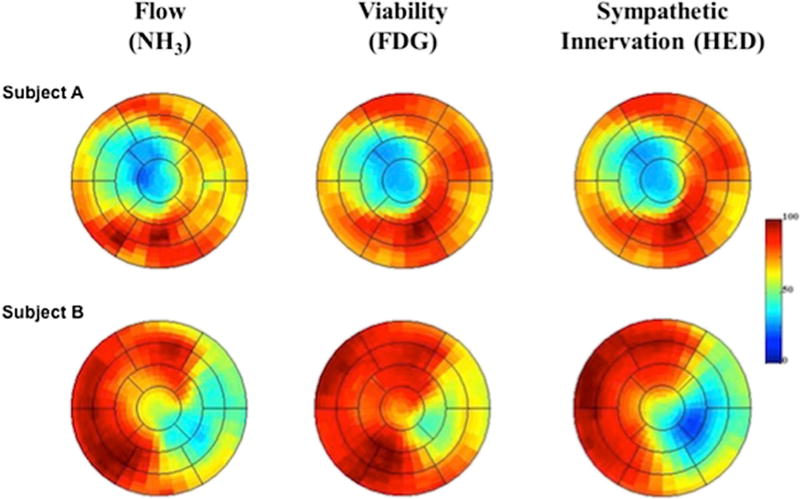
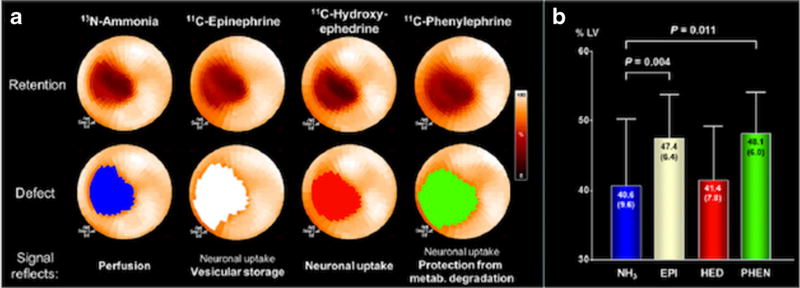
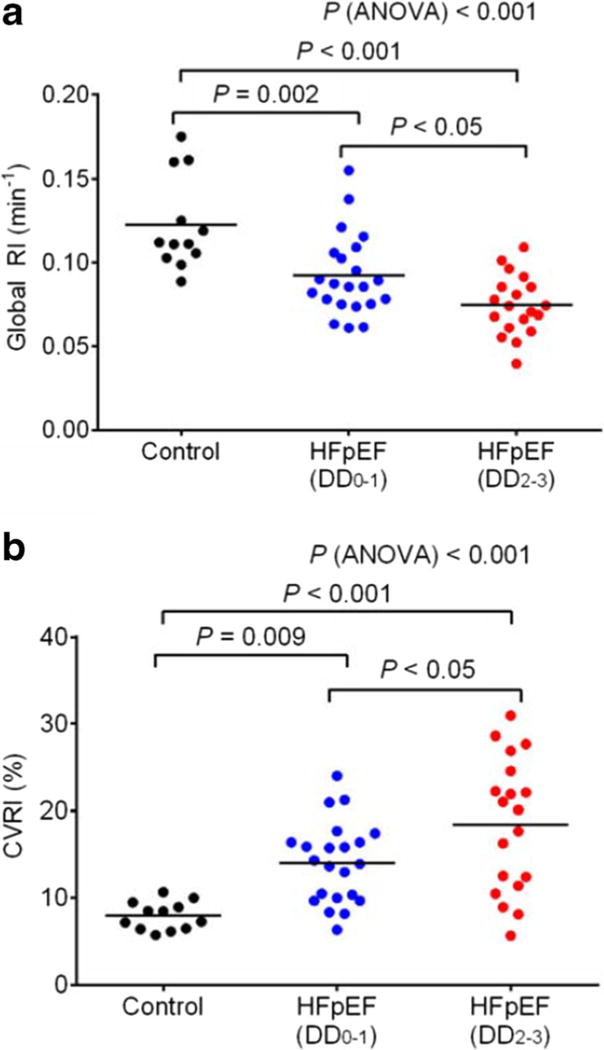
[C]-Meta-hydroxyephedrine (HED) has provided useful information in evaluation of normal and pathological cardiovascular function. Recently, [C]-HED PET imaging was able to predict lethal arrhythmias, sudden cardiac death (SCD), and all-cause mortality in heart failure patients with reduced ejection fraction (HFrEF). In addition, initial [C]-HED PET imaging studies have shown the potential of this agent in elucidating the relationship between impaired cardiac sympathetic nervous system (SNS) innervation and the severity of diastolic dysfunction in HF patients with preserved ejection fraction (HFpEF) and in predicting the response to cardiac resynchronization therapy (CRT) in HFrEF patients. Longer half-life F-labeled presynaptic SNS tracers (e.g., [F]-LMI1195) have been developed to facilitate clinical imaging, although no PET radiotracers that target the ANS have gained wide clinical use in the cardiovascular system. Although the use of parasympathetic nervous system radiotracers in cardiac imaging is limited, the novel tracer, [C]-donepezil, has shown potential utility in initial studies. Many ANS radioligands have been synthesized for PET cardiac imaging, but to date, the most clinically relevant PET tracer has been [C]-HED. Recent studies have shown the utility of [C]-HED in relevant clinical issues, such as in the elusive clinical syndrome of HFpEF. Conversely, tracers that target cardiac PNS innervation have been used less clinically, but novel tracers show potential utility for future work. The future application of [C]-HED and newly designed F-labeled tracers for targeting the ANS hold promise for the evaluation and management of a wide range of cardiovascular diseases, including the prognostication of patients with HFpEF.
本综述旨在总结正电子发射断层扫描(PET)心脏自主神经系统(ANS)成像的当前进展,特别关注新型和已确立示踪剂的临床应用。
[C]-间羟基麻黄碱(HED)在评估正常和病理性心血管功能方面提供了有用信息。最近,[C]-HED PET成像能够预测射血分数降低的心力衰竭(HFrEF)患者的致死性心律失常、心源性猝死(SCD)和全因死亡率。此外,最初的[C]-HED PET成像研究表明,该药物在阐明射血分数保留的心力衰竭(HFpEF)患者心脏交感神经系统(SNS)神经支配受损与舒张功能障碍严重程度之间的关系以及预测HFrEF患者对心脏再同步治疗(CRT)的反应方面具有潜力。已开发出半衰期更长的F标记突触前SNS示踪剂(如[F]-LMI1195)以促进临床成像,尽管尚无靶向ANS的PET放射性示踪剂在心血管系统中获得广泛临床应用。尽管副交感神经系统放射性示踪剂在心脏成像中的应用有限,但新型示踪剂[C]-多奈哌齐在初步研究中已显示出潜在效用。许多用于PET心脏成像的ANS放射性配体已被合成,但迄今为止,临床上最相关的PET示踪剂一直是[C]-HED。最近的研究表明[C]-HED在相关临床问题中具有效用,例如在难以捉摸的HFpEF临床综合征中。相反,靶向心脏副交感神经系统神经支配的示踪剂在临床上使用较少,但新型示踪剂显示出未来工作的潜在效用。[C]-HED和新设计的靶向ANS的F标记示踪剂的未来应用有望用于评估和管理多种心血管疾病,包括HFpEF患者的预后。