Matias Sara, Lottem Eran, Dugué Guillaume P, Mainen Zachary F
Champalimaud Research, Champalimaud Centre for the Unknown, Lisbon, Portugal.
MIT-Portugal Program, Porto Salvo, Portugal.
Elife. 2017 Mar 21;6:e20552. doi: 10.7554/eLife.20552.
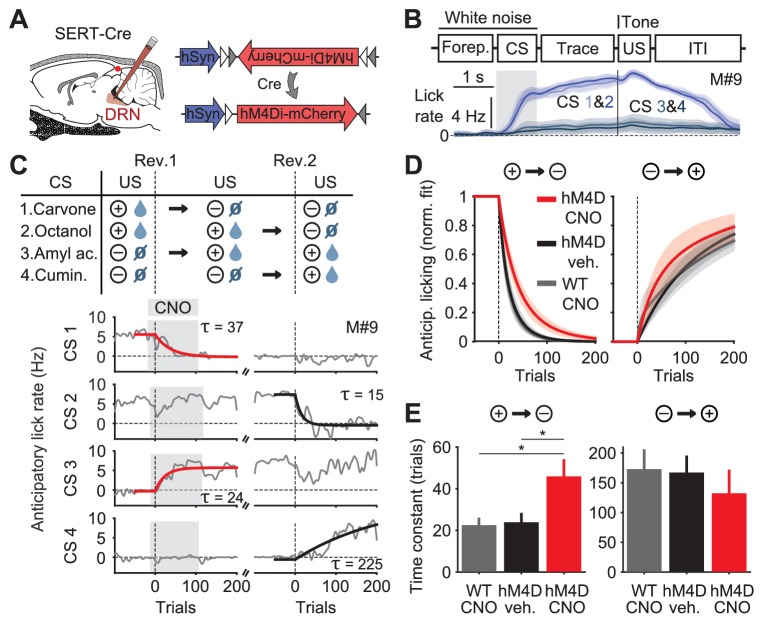
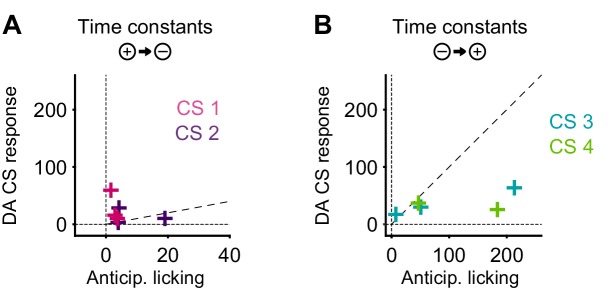
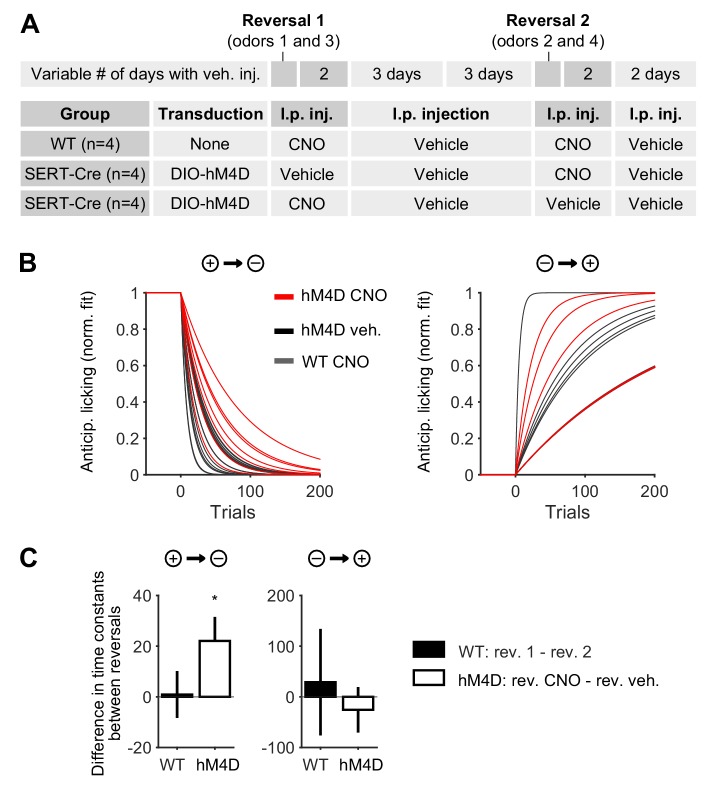
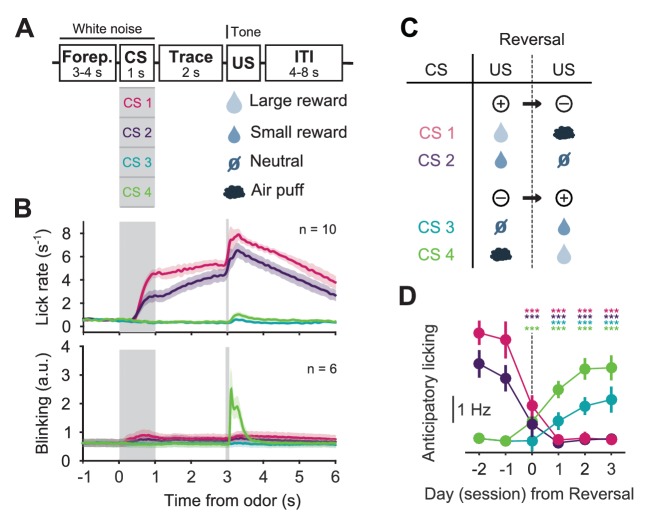
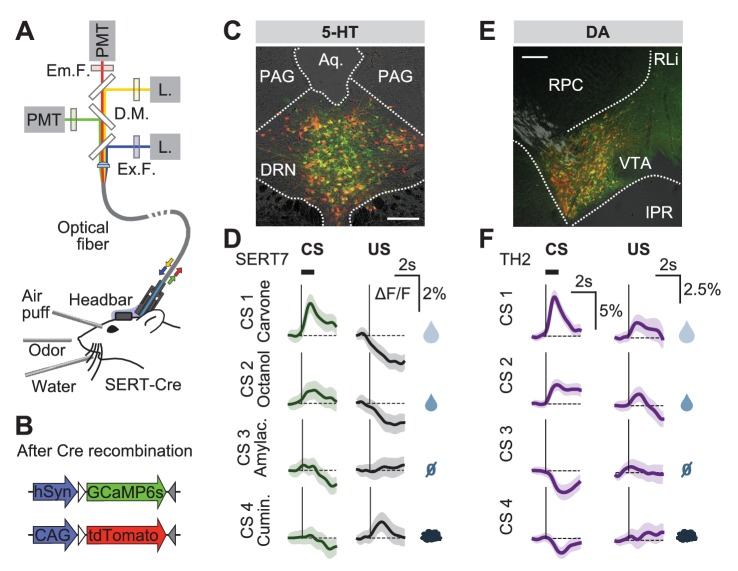
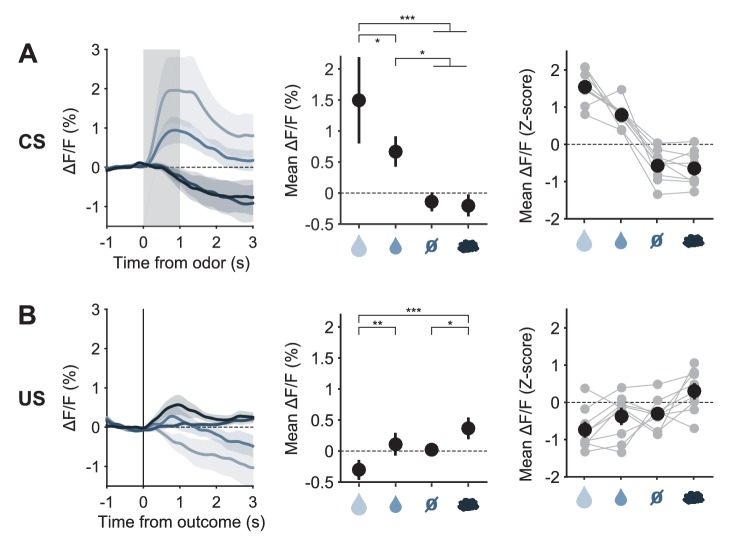
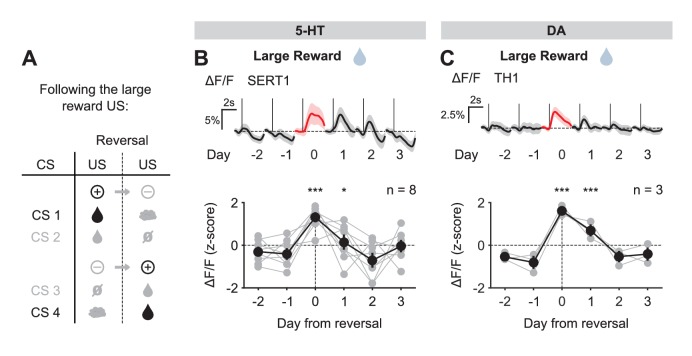
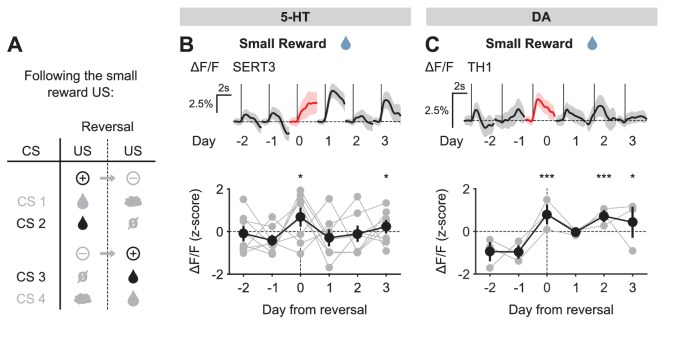
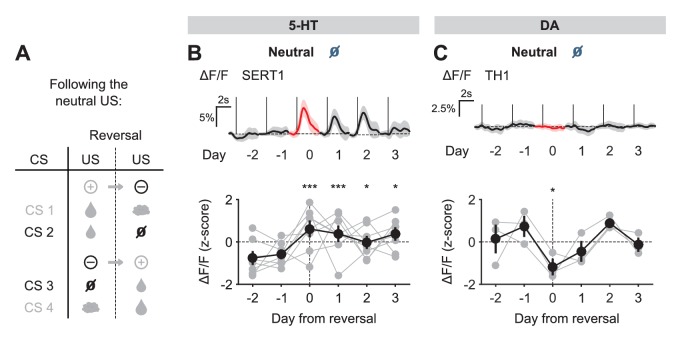
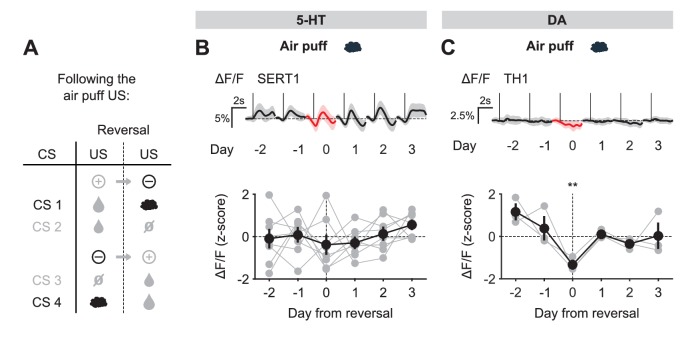
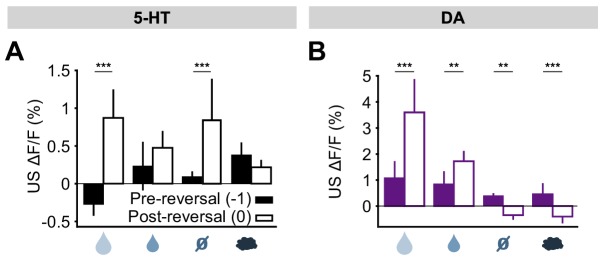
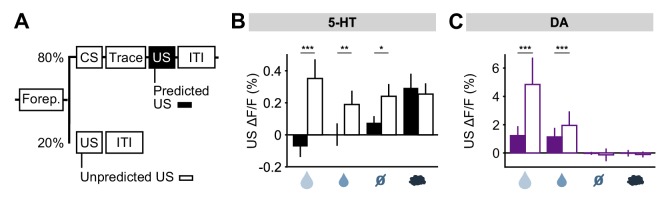
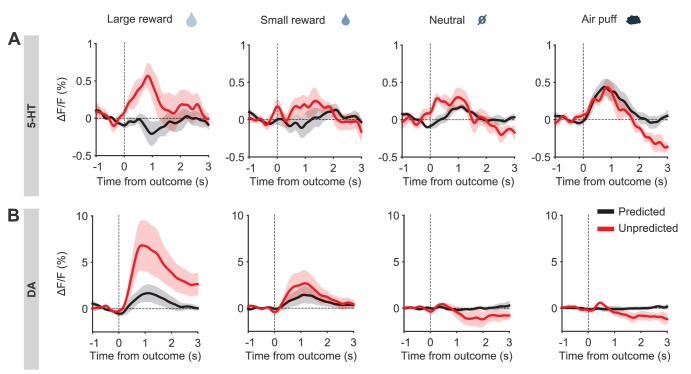
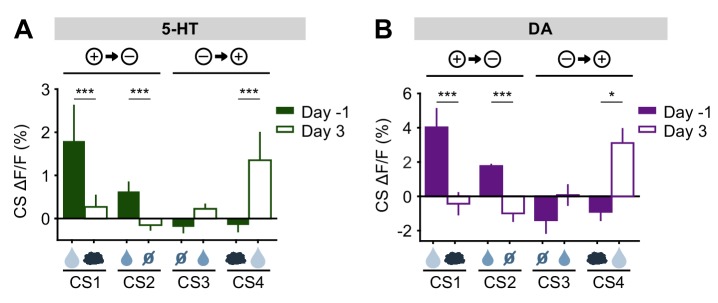
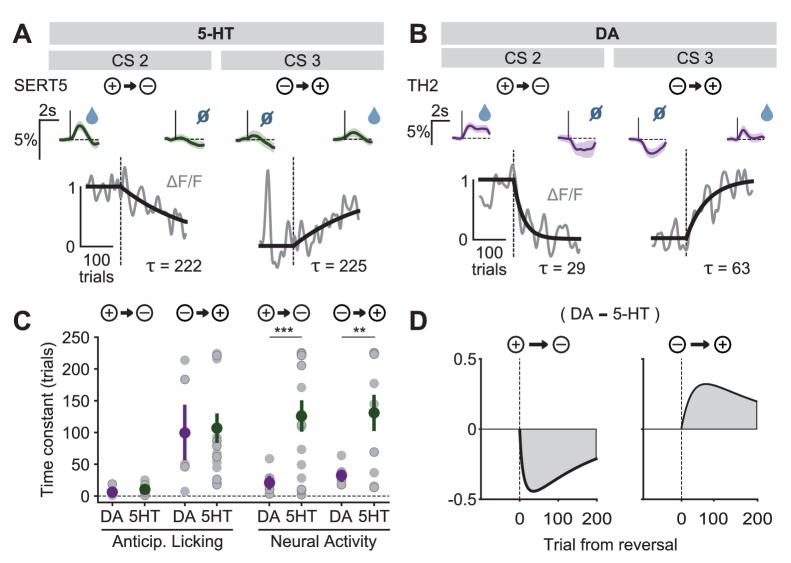
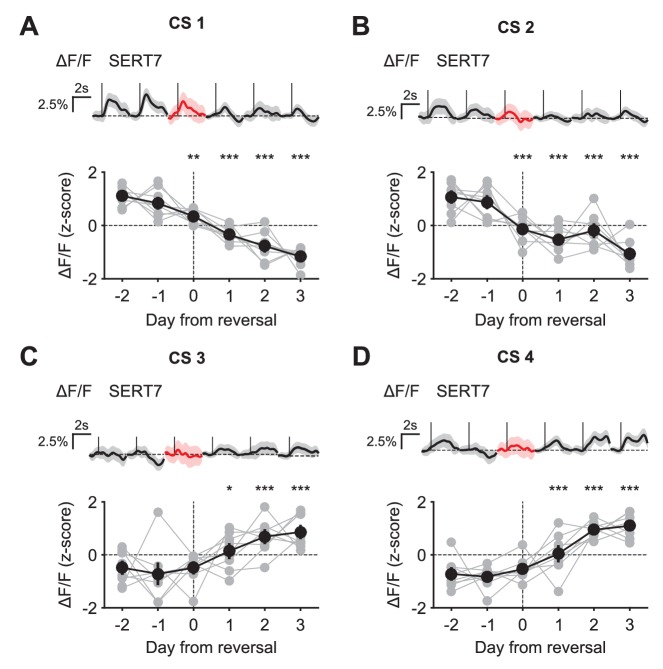
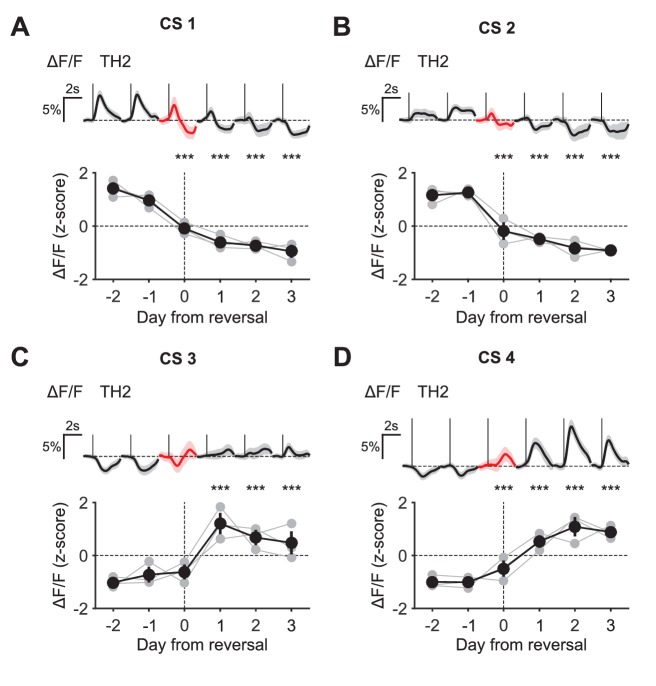
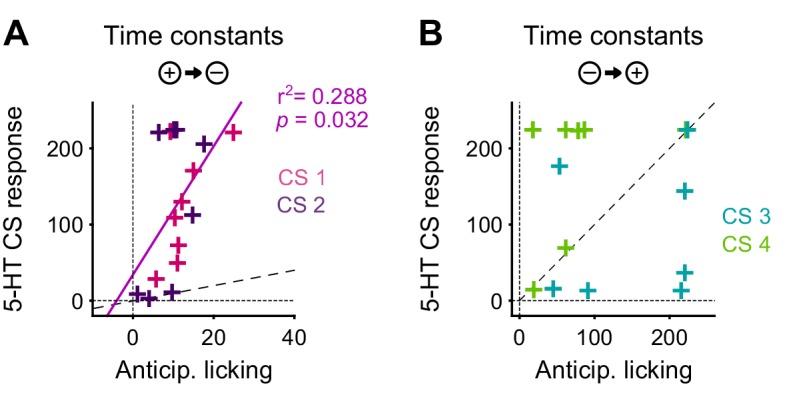
Serotonin is implicated in mood and affective disorders. However, growing evidence suggests that a core endogenous role is to promote flexible adaptation to changes in the causal structure of the environment, through behavioral inhibition and enhanced plasticity. We used long-term photometric recordings in mice to study a population of dorsal raphe serotonin neurons, whose activity we could link to normal reversal learning using pharmacogenetics. We found that these neurons are activated by both positive and negative prediction errors, and thus report signals similar to those proposed to promote learning in conditions of uncertainty. Furthermore, by comparing the cue responses of serotonin and dopamine neurons, we found differences in learning rates that could explain the importance of serotonin in inhibiting perseverative responding. Our findings show how the activity patterns of serotonin neurons support a role in cognitive flexibility, and suggest a revised model of dopamine-serotonin opponency with potential clinical implications.
血清素与情绪和情感障碍有关。然而,越来越多的证据表明,其核心的内源性作用是通过行为抑制和增强可塑性来促进对环境因果结构变化的灵活适应。我们利用小鼠的长期光度记录来研究一群中缝背血清素神经元,通过药物遗传学,我们能够将它们的活动与正常的逆向学习联系起来。我们发现,这些神经元被正向和负向预测误差激活,因此报告的信号类似于在不确定性条件下促进学习的信号。此外,通过比较血清素神经元和多巴胺神经元的线索反应,我们发现了学习率的差异,这可以解释血清素在抑制持续性反应中的重要性。我们的研究结果表明血清素神经元的活动模式如何支持其在认知灵活性中的作用,并提出了一种修订后的多巴胺 - 血清素拮抗模型,具有潜在的临床意义。