Wille Michelle, Lindqvist Kristine, Muradrasoli Shaman, Olsen Björn, Järhult Josef D
Zoonosis Science Center, Department of Medical Biochemistry and Microbiology, Uppsala University, Uppsala, Sweden.
Zoonosis Science Center, Department of Medical Biochemistry and Microbiology, Uppsala University, Uppsala, Sweden.
Infect Genet Evol. 2017 Jul;51:89-97. doi: 10.1016/j.meegid.2017.03.019. Epub 2017 Mar 18.
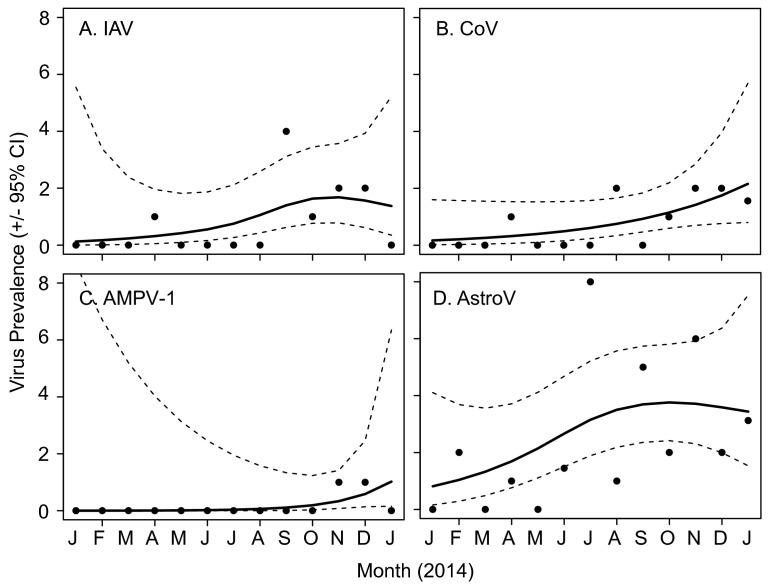
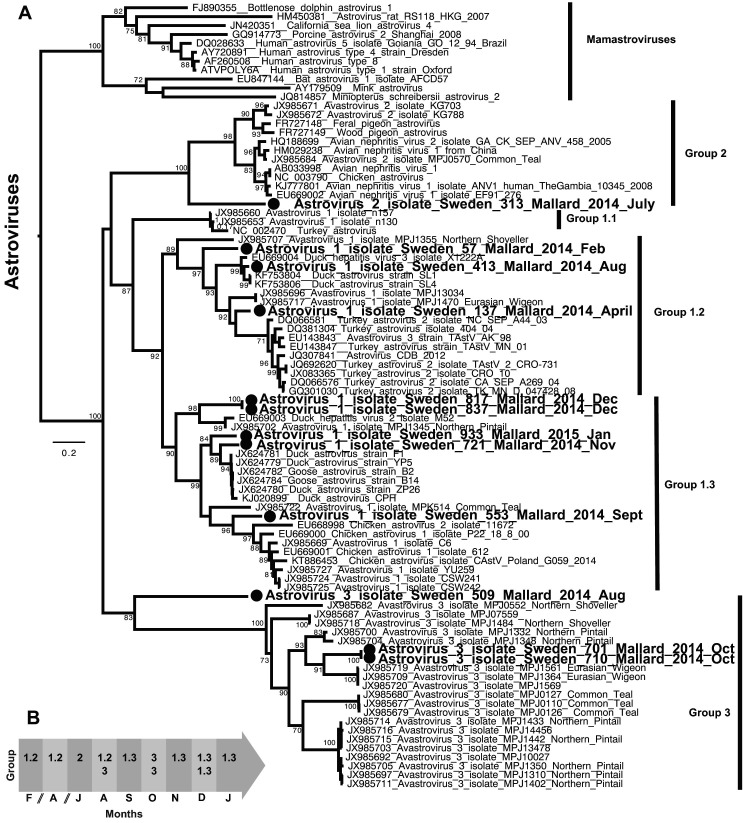
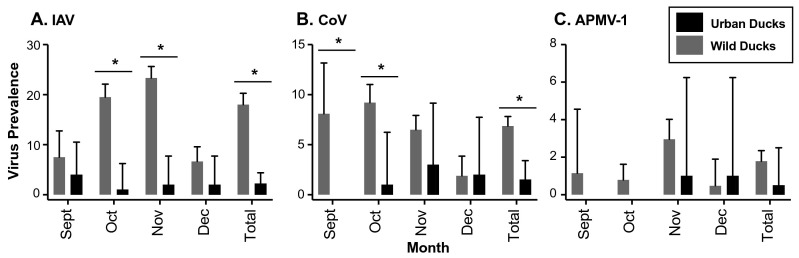
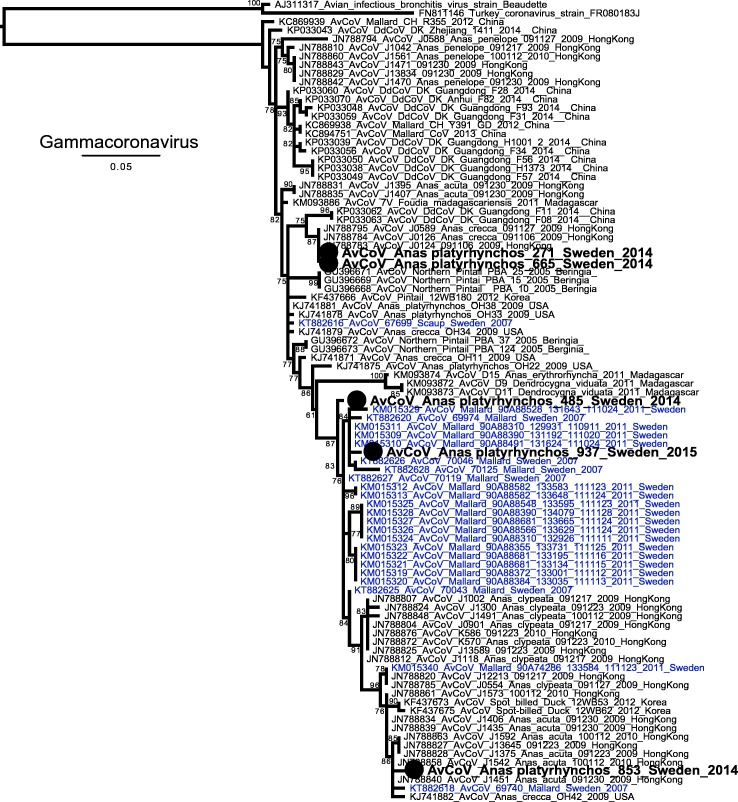
Urbanization is intensifying worldwide, and affects the epidemiology of infectious diseases. However, the effect of urbanization on natural host-pathogen systems remains poorly understood. Urban ducks occupy an interesting niche in that they directly interact with both humans and wild migratory birds, and either directly or indirectly with food production birds. Here we have collected samples from Mallards (Anas platyrhynchos) residing in a pond in central Uppsala, Sweden, from January 2013 to January 2014. This artificial pond is kept ice-free during the winter months, and is a popular location where the ducks are fed, resulting in a resident population of ducks year-round. Nine hundred and seventy seven (977) fecal samples were screened for RNA viruses including: influenza A virus (IAV), avian paramyxovirus 1, avian coronavirus (CoV), and avian astrovirus (AstroV). This intra-annual dataset illustrates that these RNA viruses exhibit similar annual patterns to IAV, suggesting similar ecological factors are at play. Furthermore, in comparison to wild ducks, autumnal prevalence of IAV and CoV are lower in this urban population. We also demonstrate that AstroV might be a larger burden to urban ducks than IAV, and should be better assessed to demonstrate the degree to which wild birds contribute to the epidemiology of these viruses. The presence of economically relevant viruses in urban Mallards highlights the importance of elucidating the ecology of wildlife pathogens in urban environments, which will become increasingly important for managing disease risks to wildlife, food production animals, and humans.
城市化在全球范围内日益加剧,并影响着传染病的流行病学。然而,城市化对自然宿主 - 病原体系统的影响仍知之甚少。城市鸭占据着一个有趣的生态位,因为它们直接与人类和野生候鸟相互作用,并且直接或间接地与产蛋禽类相互作用。在这里,我们于2013年1月至2014年1月从瑞典乌普萨拉市中心一个池塘中的绿头鸭(Anas platyrhynchos)采集了样本。这个人工池塘在冬季保持不结冰,是一个受鸭子喜爱的喂食地点,导致全年都有常驻鸭群。我们对977份粪便样本进行了RNA病毒筛查,包括:甲型流感病毒(IAV)、禽副粘病毒1、禽冠状病毒(CoV)和禽星状病毒(AstroV)。这个年度内数据集表明,这些RNA病毒呈现出与IAV相似的年度模式,这表明存在相似的生态因素在起作用。此外,与野鸭相比,该城市鸭群中IAV和CoV的秋季患病率较低。我们还证明,AstroV对城市鸭的负担可能比IAV更大,应该更好地评估以确定野生鸟类对这些病毒流行病学的贡献程度。城市绿头鸭中存在具有经济相关性的病毒,凸显了阐明城市环境中野生动物病原体生态学的重要性,这对于管理对野生动物、产蛋动物和人类的疾病风险将变得越来越重要。