Tatebayashi Kotaro, Tanaka Yasue, Nakano-Doi Akiko, Sakuma Rika, Kamachi Saeko, Shirakawa Manabu, Uchida Kazutaka, Kageyama Hiroto, Takagi Toshinori, Yoshimura Shinichi, Matsuyama Tomohiro, Nakagomi Takayuki
1 Department of Neurosurgery, Hyogo College of Medicine, Nishinomiya, Japan .
2 Institute for Advanced Medical Sciences , Hyogo College of Medicine, Nishinomiya, Japan .
Stem Cells Dev. 2017 Jun 1;26(11):787-797. doi: 10.1089/scd.2016.0334. Epub 2017 Apr 19.
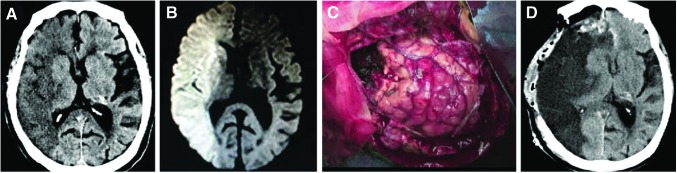
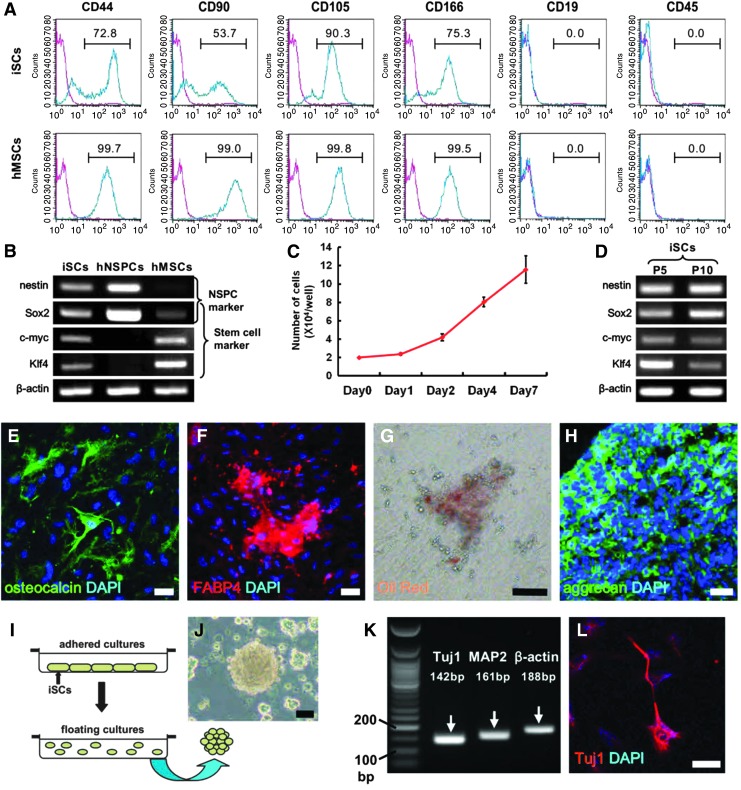
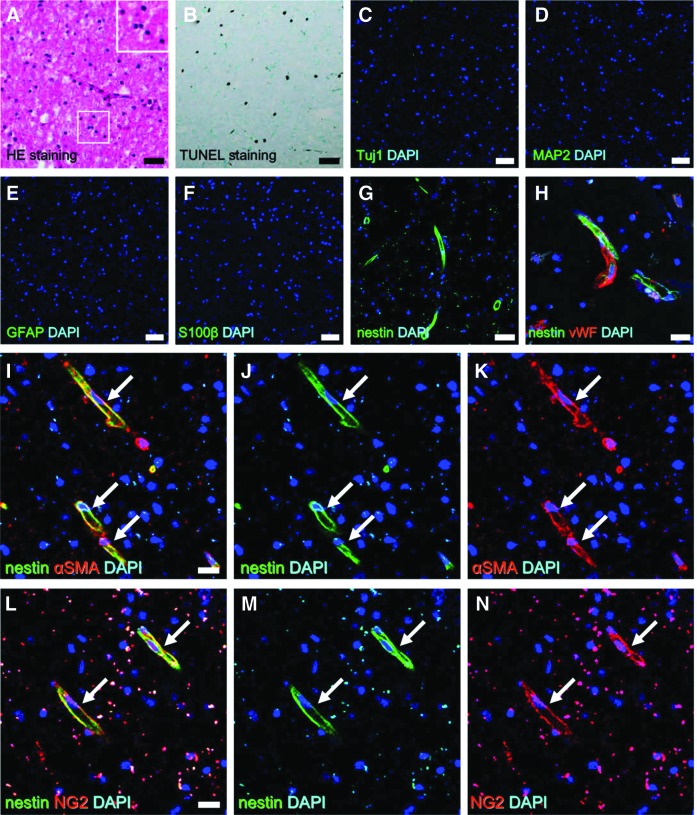
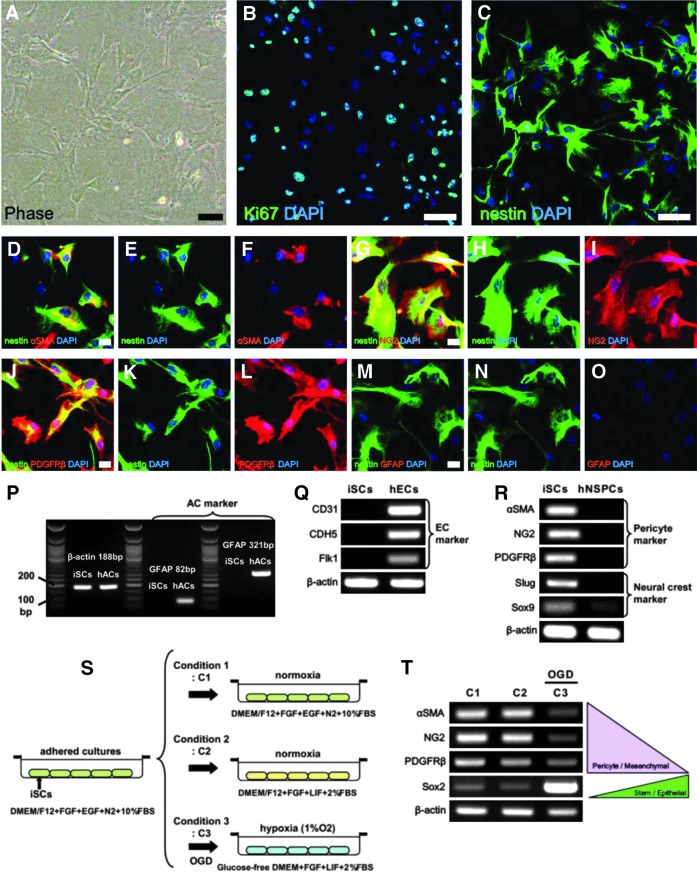
Perivascular regions of the brain harbor multipotent stem cells. We previously demonstrated that brain pericytes near blood vessels also develop multipotency following experimental ischemia in mice and these ischemia-induced multipotent stem cells (iSCs) can contribute to neurogenesis. However, it is essential to understand the traits of iSCs in the poststroke human brain for possible applications in stem cell-based therapies for stroke patients. In this study, we report for the first time that iSCs can be isolated from the poststroke human brain. Putative iSCs were derived from poststroke brain tissue obtained from elderly stroke patients requiring decompressive craniectomy and partial lobectomy for diffuse cerebral infarction. Immunohistochemistry showed that these iSCs were localized near blood vessels within poststroke areas containing apoptotic/necrotic neurons and expressed both the stem cell marker nestin and several pericytic markers. Isolated iSCs expressed these same markers and demonstrated high proliferative potential without loss of stemness. Furthermore, isolated iSCs expressed other stem cell markers, such as Sox2, c-myc, and Klf4, and differentiated into multiple cells in vitro, including neurons. These results show that iSCs, which are likely brain pericyte derivatives, are present within the poststroke human brain. This study suggests that iSCs can contribute to neural repair in patients with stroke.
脑的血管周围区域含有多能干细胞。我们先前证明,小鼠实验性缺血后,血管附近的脑周细胞也会产生多能性,并且这些缺血诱导的多能干细胞(iSCs)可促进神经发生。然而,了解中风后人类大脑中iSCs的特性对于基于干细胞的中风患者治疗的可能应用至关重要。在本研究中,我们首次报告可以从中风后的人类大脑中分离出iSCs。假定的iSCs源自老年中风患者的中风后脑组织,这些患者因弥漫性脑梗死需要进行减压颅骨切除术和部分肺叶切除术。免疫组织化学显示,这些iSCs位于含有凋亡/坏死神经元的中风区域内的血管附近,并同时表达干细胞标志物巢蛋白和几种周细胞标志物。分离出的iSCs表达相同的标志物,并显示出高增殖潜力且未丧失干性。此外,分离出的iSCs表达其他干细胞标志物,如Sox2、c-myc和Klf4,并在体外分化为多种细胞,包括神经元。这些结果表明,iSCs可能是脑周细胞的衍生物,存在于中风后的人类大脑中。这项研究表明,iSCs可以促进中风患者的神经修复。