Bhattacharya Munna, Biswas Dipa, Sana Santanu, Datta Sriparna
Department of Chemical Technology, University of Calcutta, 92, A.P.C Road, Kolkata, 700009, West Bengal, India.
3 Biotech. 2015 Oct;5(5):807-817. doi: 10.1007/s13205-015-0282-9. Epub 2015 Mar 3.
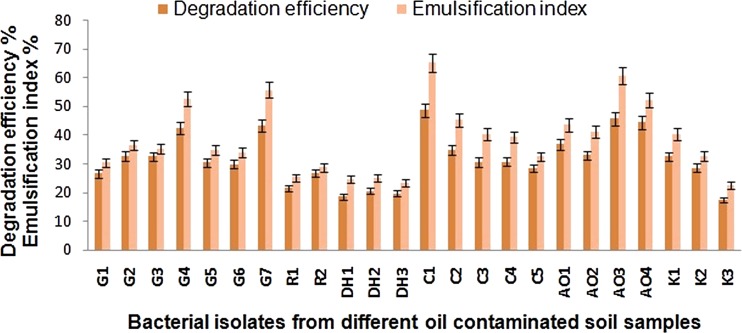
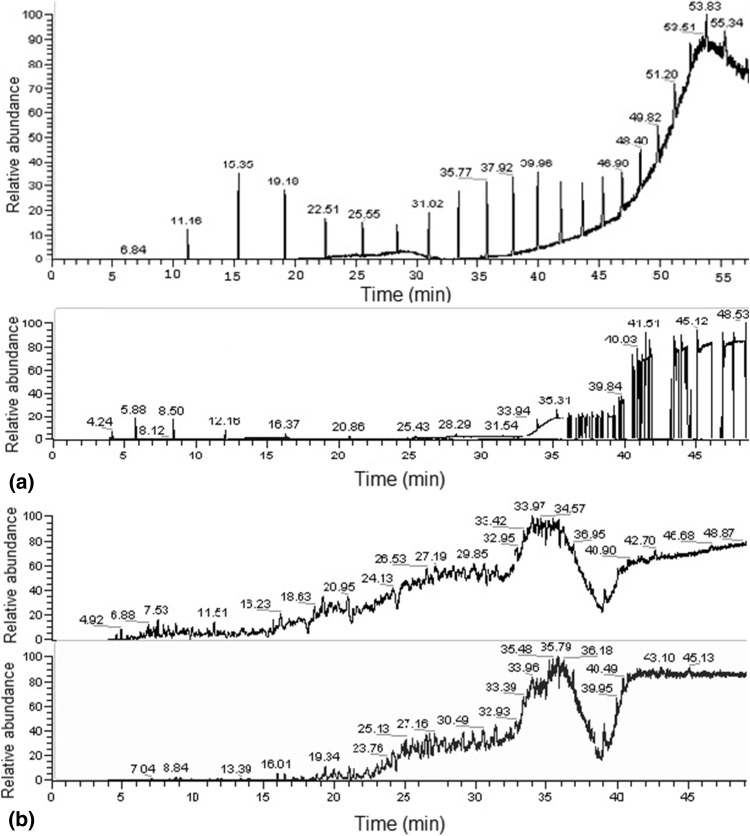
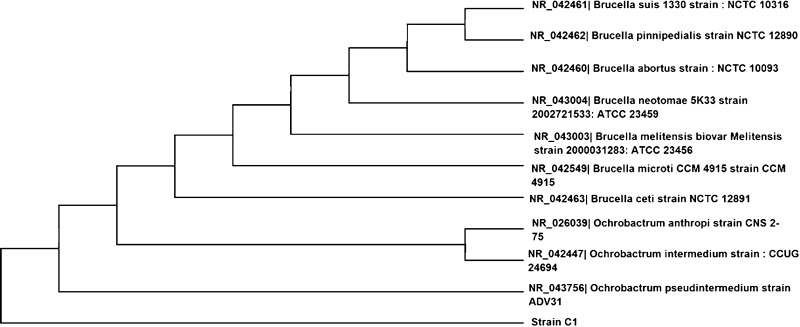
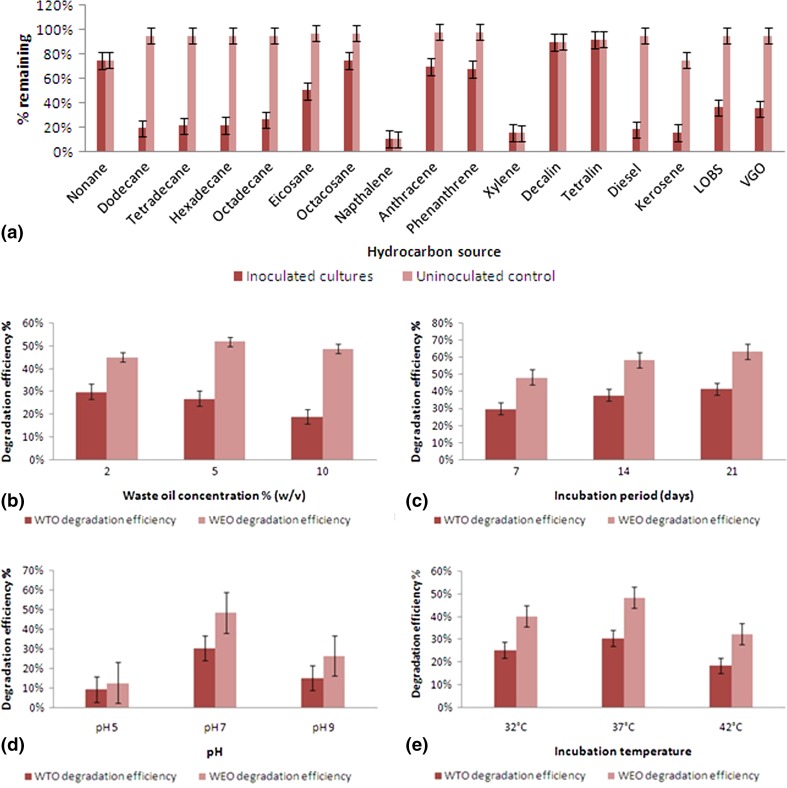
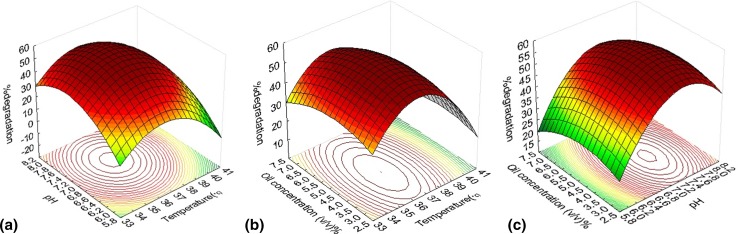
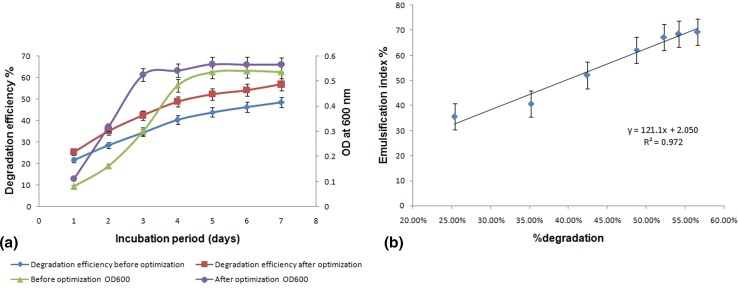
A potential degrader of paraffinic and aromatic hydrocarbons was isolated from oil-contaminated soil from steel plant effluent area in Burnpur, India. The strain was investigated for degradation of waste lubricants (waste engine oil and waste transformer oil) that often contain EPA (Environmental Protection Agency, USA) classified priority pollutants and was identified as Ochrobactrum sp. C1 by 16S rRNA gene sequencing. The strain C1 was found to tolerate unusually high waste lubricant concentration along with emulsification capability of the culture broth, and its degradation efficiency was 48.5 ± 0.5 % for waste engine oil and 30.47 ± 0.25 % for waste transformer oil during 7 days incubation period. In order to get optimal degradation efficiency, a three level Box-Behnken design was employed to optimize the physical parameters namely pH, temperature and waste oil concentration. The results indicate that at temperature 36.4 °C, pH 7.3 and with 4.6 % (v/v) oil concentration, the percentage degradation of waste engine oil will be 57 % within 7 days. At this optimized condition, the experimental values (56.7 ± 0.25 %) are in a good agreement with the predicted values with a calculated R to be 0.998 and significant correlation between biodegradation and emulsification activity (E = 69.42 ± 0.32 %) of the culture broth toward engine oil was found with a correlation coefficient of 0.972. This is the first study showing that an Ochrobactrum sp. strain is capable of degrading waste lubricants, which might contribute to the bioremediation of waste lubricating oil-contaminated soil.
从印度布尔纳布尔钢铁厂废水排放区受石油污染的土壤中分离出一种能够降解链烷烃和芳烃的菌株。对该菌株降解废润滑油(废发动机油和废变压器油)的能力进行了研究,这些废润滑油通常含有美国环境保护局(EPA)分类的优先污染物,通过16S rRNA基因测序鉴定该菌株为苍白杆菌属C1。发现菌株C1能够耐受异常高浓度的废润滑油,且其培养液具有乳化能力,在7天的培养期内,其对废发动机油的降解效率为48.5±0.5%,对废变压器油的降解效率为30.47±0.25%。为了获得最佳降解效率,采用三水平Box-Behnken设计优化物理参数,即pH值、温度和废油浓度。结果表明,在温度36.4℃、pH值7.3和油浓度4.6%(v/v)的条件下,废发动机油在7天内的降解率将达到57%。在此优化条件下,实验值(56.7±0.25%)与预测值吻合良好,计算得到的R为0.998,且发现培养液对发动机油的生物降解与乳化活性(E=69.42±0.32%)之间存在显著相关性,相关系数为0.972。这是首次表明苍白杆菌属菌株能够降解废润滑油的研究,这可能有助于对受废润滑油污染土壤的生物修复。