
常氧和缺氧沿海水域中参与肽分解的不同细菌群落。
Different Bacterial Communities Involved in Peptide Decomposition between Normoxic and Hypoxic Coastal Waters.
作者信息
Liu Shuting, Wawrik Boris, Liu Zhanfei
机构信息
Marine Science Institute, The University of Texas at Austin, Port Aransas TX, USA.
Department of Microbiology and Plant Biology, The University of Oklahoma, Norman OK, USA.
出版信息
Front Microbiol. 2017 Mar 7;8:353. doi: 10.3389/fmicb.2017.00353. eCollection 2017.
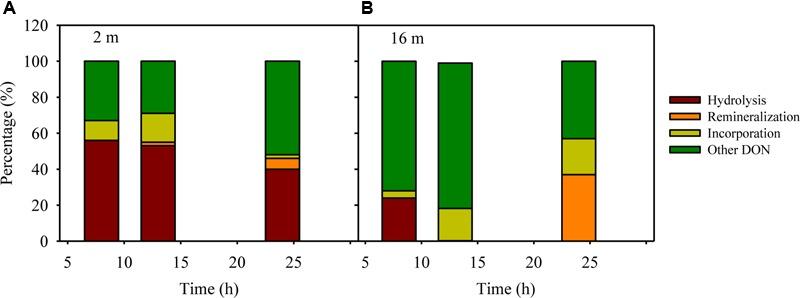
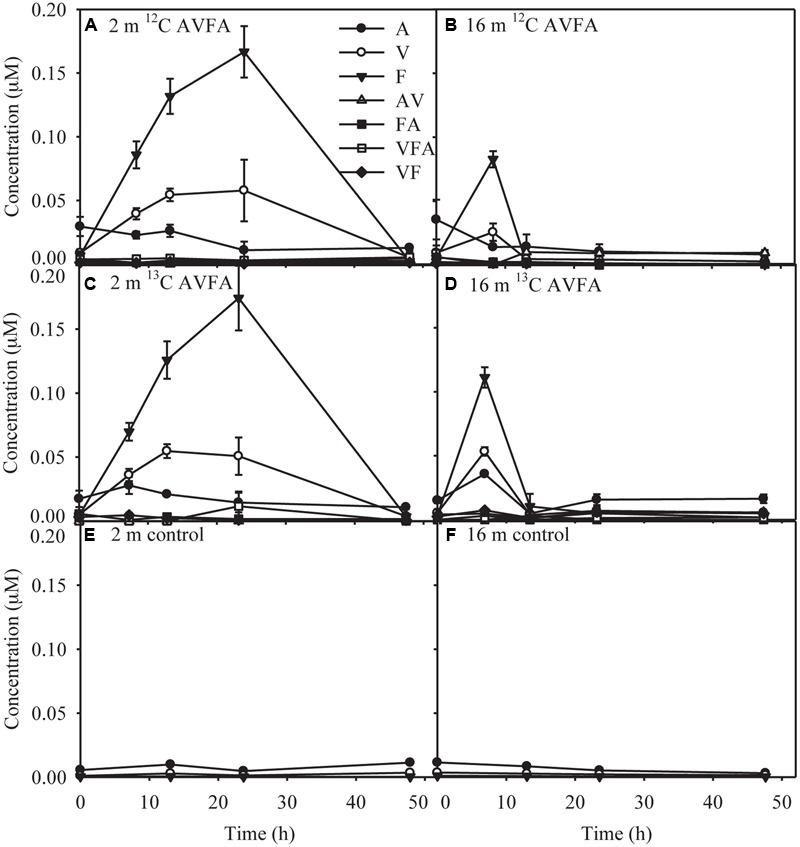
Proteins and peptides are key components of the labile dissolved organic matter pool in marine environments. Knowing which types of bacteria metabolize peptides can inform the factors that govern peptide decomposition and further carbon and nitrogen remineralization in marine environments. A C-labeled tetrapeptide, alanine-valine-phenylalanine-alanine (AVFA), was added to both surface (normoxic) and bottom (hypoxic) seawater from a coastal station in the northern Gulf of Mexico for a 2-day incubation experiment, and bacteria that incorporated the peptide were identified using DNA stable isotope probing (SIP). The decomposition rate of AVFA in the bottom hypoxic seawater (0.018-0.035 μM h) was twice as fast as that in the surface normoxic seawater (0.011-0.017 μM h). SIP experiments indicated that incorporation of C was highest among the Flavobacteria, Sphingobacteria, Alphaproteobacteria, Acidimicrobiia, Verrucomicrobiae, Cyanobacteria, and Actinobacteria in surface waters. In contrast, highest C-enrichment was mainly observed in several Alphaproteobacteria () and Gammaproteobacteria genera () in the bottom water. These data suggest that a more diverse group of both oligotrophic and copiotrophic bacteria may be involved in metabolizing labile organic matter such as peptides in normoxic coastal waters, and several copiotrophic genera belonging to Alphaproteobacteria and Gammaproteobacteria and known to be widely distributed may contribute to faster peptide decomposition in the hypoxic waters.
蛋白质和肽是海洋环境中不稳定溶解有机物库的关键组成部分。了解哪些类型的细菌能够代谢肽,可以为控制海洋环境中肽分解以及进一步的碳和氮再矿化的因素提供信息。将一种碳标记的四肽,丙氨酸 - 缬氨酸 - 苯丙氨酸 - 丙氨酸(AVFA)添加到墨西哥湾北部一个沿海站点的表层(常氧)和底层(缺氧)海水中,进行为期2天的培养实验,并使用DNA稳定同位素探测(SIP)来鉴定摄取该肽的细菌。AVFA在底层缺氧海水中的分解速率(0.018 - 0.035 μM/h)是表层常氧海水中分解速率(0.011 - 0.017 μM/h)的两倍。SIP实验表明,在表层水中,黄杆菌属、鞘脂杆菌属、α - 变形菌纲、酸微菌纲、疣微菌门、蓝细菌和放线菌中碳的摄取量最高。相比之下,在底层水中,最高的碳富集主要出现在几个α - 变形菌纲()和γ - 变形菌纲属()中。这些数据表明,在常氧沿海水域中,可能有更多种类的贫营养和富营养细菌参与代谢诸如肽等不稳定有机物,而属于α - 变形菌纲和γ - 变形菌纲且已知分布广泛的几个富营养属可能有助于缺氧水域中肽的更快分解。



 Zotero 插件