Indelli Pier Francesco, Pipino Gennaro, Johnson Paul, Graceffa Angelo, Marcucci Massimiliano
Department of Orthopaedic Surgery, Stanford University School of Medicine, Stanford, CA, USA.
Division of Orthopaedic Surgery, Villa Regina Hospital, Bologna, Italy; Faculty of Medical Sciences, Uniludes University, Lugano, Switzerland.
Arthroplast Today. 2016 Aug 21;2(4):193-198. doi: 10.1016/j.artd.2016.05.002. eCollection 2016 Dec.
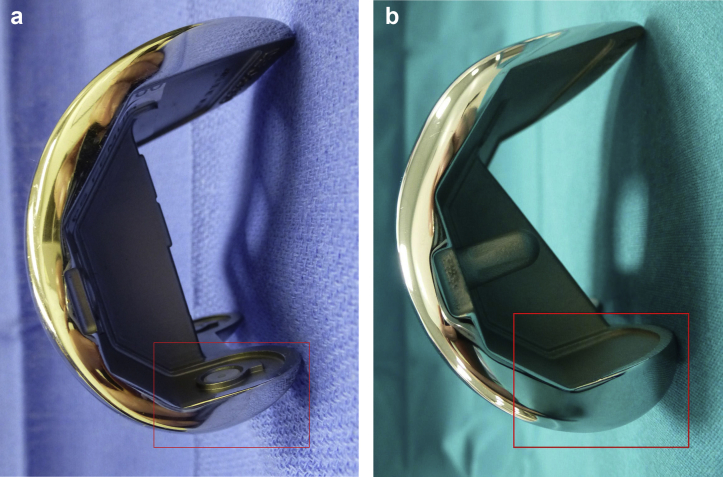
Total knee arthroplasty (TKA) designs continue to be modified to optimize patient's outcome. This study was designed to compare clinical and radiological results of classic worldwide used TKA posterior-stabilized (PS) design to those of its recent evolution.
A consecutive group of 100 patients undergoing TKA using a classic cemented fixed-bearing PS TKA system was matched by age, gender, body max index to 100 patients having the newer cemented fixed-bearing PS design, both by the same manufacturer. Patients were assessed preoperatively, at 12 months and at 24 months minimum follow-up (range, 24-46) in a standard prospective fashion. The outcome assessments used were the Oxford Knee Score, the Knee Society Score, range of motion, and a satisfaction survey. A 2-sample test comparing the 2 groups was performed.
No patients were lost at follow-up. At 2-year follow-up, differences in clinical and radiological Knee Society Score ( = .09), Oxford Score ( = .08), and overall satisfaction rate did not reach statistical significance. Implant group 2 showed a statistically significant decrease in postoperative anterior knee pain ( = .006). At final follow-up, 16% of group 1 knees achieved > 130° flexion compared with 37% in group 2 ( = .0009). There were 2 revisions for any reason in group 1 and none in group 2.
Design modifications applied to the newer TKA system allowed greater flexion and lower patellofemoral complications but did not appear to achieve better overall clinical scores.
全膝关节置换术(TKA)的设计不断改进以优化患者预后。本研究旨在比较全球广泛使用的经典TKA后稳定型(PS)设计与其最新改进设计的临床和影像学结果。
连续选取100例使用经典骨水泥固定承重PS TKA系统进行TKA的患者,按照年龄、性别、身体质量指数与100例使用同一制造商生产的新型骨水泥固定承重PS设计的患者进行匹配。以标准的前瞻性方式在术前、术后12个月和至少24个月(范围24 - 46个月)对患者进行评估。所使用的结局评估指标包括牛津膝关节评分、膝关节协会评分、活动范围和满意度调查。对两组进行双样本检验。
随访期间无患者失访。在2年随访时,临床和影像学膝关节协会评分(P = 0.09)、牛津评分(P = 0.08)以及总体满意度的差异未达到统计学显著性。植入物第2组术后前膝疼痛有统计学显著下降(P = 0.006)。在末次随访时,第1组膝关节中有16%达到>130°屈曲,而第2组为37%(P = 0.0009)。第1组有2例因任何原因进行了翻修,第2组无翻修病例。
应用于新型TKA系统的设计改进可实现更大的屈曲度并降低髌股并发症,但似乎并未取得更好的总体临床评分。