Zhao Rongce, Chen Kefei, Zhou Jing, He Jingyang, Liu Jun, Guan Peng, Li Bo, Qin Yang
Department of Liver Surgery and Liver Transplantation Center Department of Medical Oncology, Cancer Center, State Key Laboratory of Biotherapy, West China Hospital, Sichuan University Department of Biochemistry and Molecular Biology Department of Forensic Pathology, West China School of Preclinical and Forensic Medicine, Sichuan University, Chengdu, China.
Medicine (Baltimore). 2017 Mar;96(12):e6420. doi: 10.1097/MD.0000000000006420.
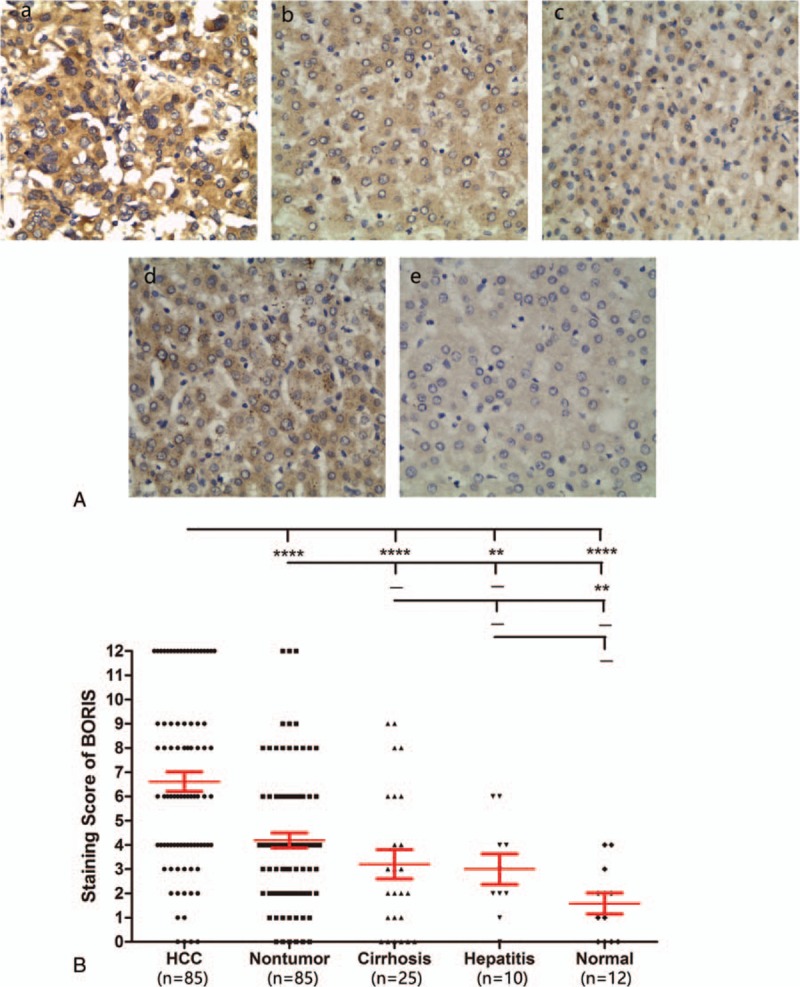
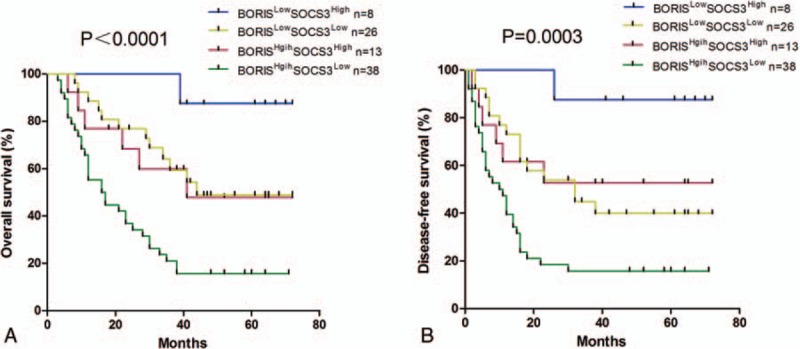
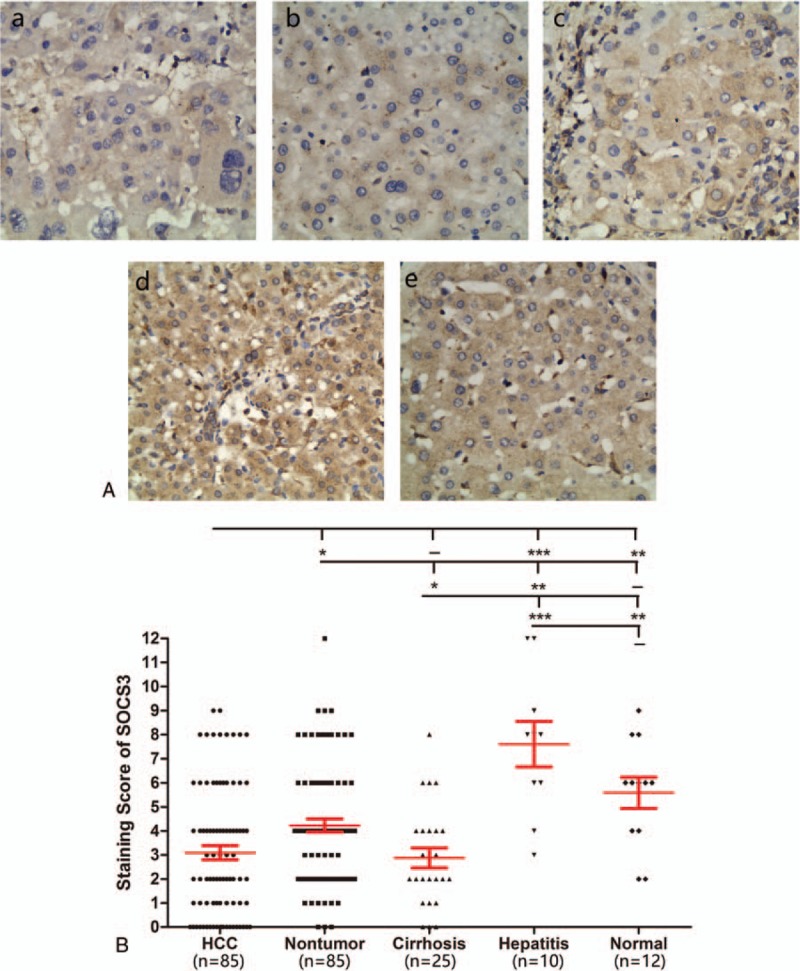
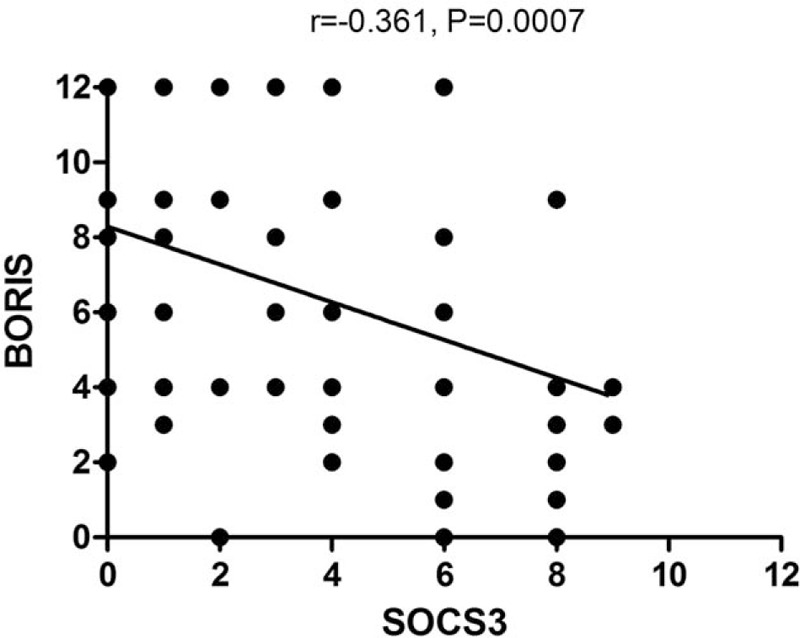
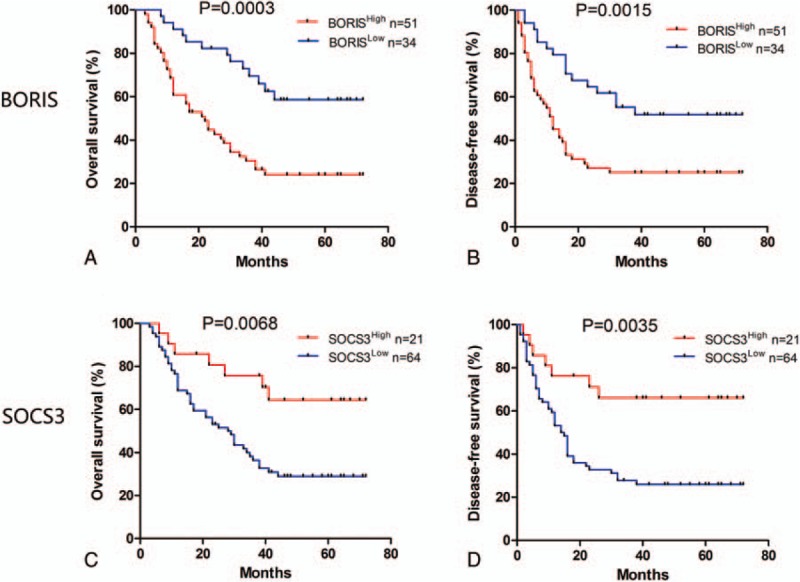
Brother of regulator of imprinted sites (BORIS) is a DNA-binding protein that is normally expressed in the testes. However, aberrant expression of BORIS is observed in various carcinomas, indicating a malignant role for this protein. Furthermore, abolishment or reduction of suppressor of cytokine signaling 3 (SOCS3) expression directed by promoter methylation is considered significant in hepatocellular carcinoma (HCC) carcinogenesis. This study aims to investigate BORIS and SOCS3 expression in HCC specimens and assess the prognostic significance of these proteins.BORIS and SOCS3 expression was examined using immunohistochemistry in HCC tissues, along with corresponding paracarcinomatous, cirrhosis, hepatitis, and normal liver tissues. The expression levels of these 2 proteins in HCC were evaluated for their association with clinicopathological parameters. Survival analysis was performed using Kaplan-Meier curves, the log-rank test, and multivariate Cox regression analysis.BORIS expression was significantly higher in HCC tissues than in normal liver tissues. In contrast, SOCS3 expression was dramatically lower in HCC tissues. BORIS expression was associated with tumor size, differentiation grade, satellite lesions, and recurrence while SOCS3 expression correlated with differentiation grade, vascular invasion, and recurrence. A significant negative correlation between BORIS and SOCS3 was observed. Patients with high BORIS expression and/or low SOCS3 expression had poorer postoperative survival. Patients with both these characteristics had the poorest prognostic outcome.BORIS and SOCS3 are promising as valuable indicators for predicting HCC prognosis.
印记位点调控因子的兄弟蛋白(BORIS)是一种通常在睾丸中表达的DNA结合蛋白。然而,在各种癌症中均观察到BORIS的异常表达,表明该蛋白具有恶性作用。此外,由启动子甲基化导致的细胞因子信号转导抑制因子3(SOCS3)表达的缺失或降低在肝细胞癌(HCC)的致癌过程中被认为具有重要意义。本研究旨在调查HCC标本中BORIS和SOCS3的表达情况,并评估这些蛋白的预后意义。采用免疫组织化学方法检测HCC组织以及相应的癌旁组织、肝硬化组织、肝炎组织和正常肝组织中BORIS和SOCS3的表达。评估这两种蛋白在HCC中的表达水平与临床病理参数的相关性。使用Kaplan-Meier曲线、对数秩检验和多变量Cox回归分析进行生存分析。HCC组织中BORIS的表达明显高于正常肝组织。相反,HCC组织中SOCS3的表达显著降低。BORIS的表达与肿瘤大小、分化程度、卫星灶和复发相关,而SOCS3的表达与分化程度、血管侵犯和复发相关。观察到BORIS和SOCS3之间存在显著的负相关。BORIS高表达和/或SOCS3低表达的患者术后生存率较差。同时具有这两种特征的患者预后最差。BORIS和SOCS3有望成为预测HCC预后的有价值指标。