Hakenbeck Susanne E, Evans Jane, Chapman Hazel, Fóthi Erzsébet
Department of Archaeology and Anthropology, University of Cambridge, Cambridge, United Kingdom.
NERC Isotope Geosciences Laboratory, Keyworth, Nottingham, United Kingdom.
PLoS One. 2017 Mar 22;12(3):e0173079. doi: 10.1371/journal.pone.0173079. eCollection 2017.
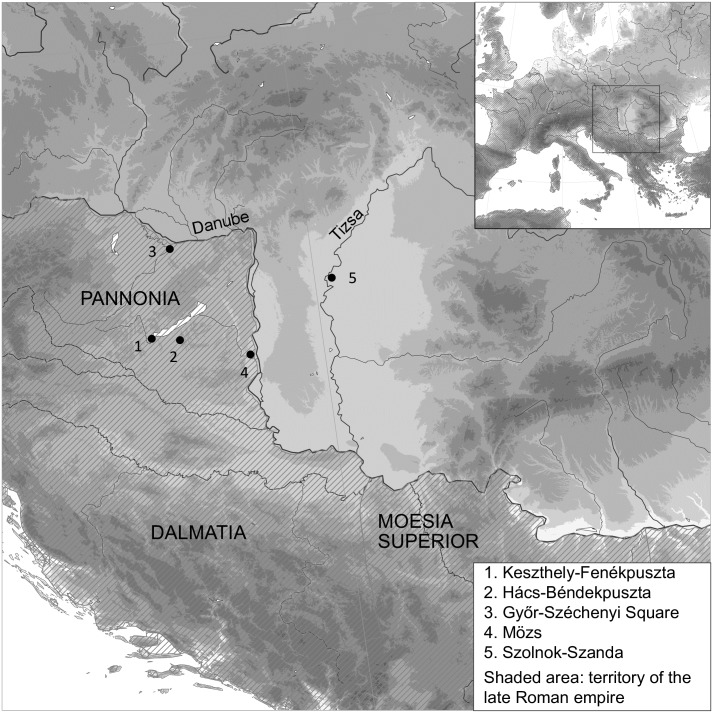
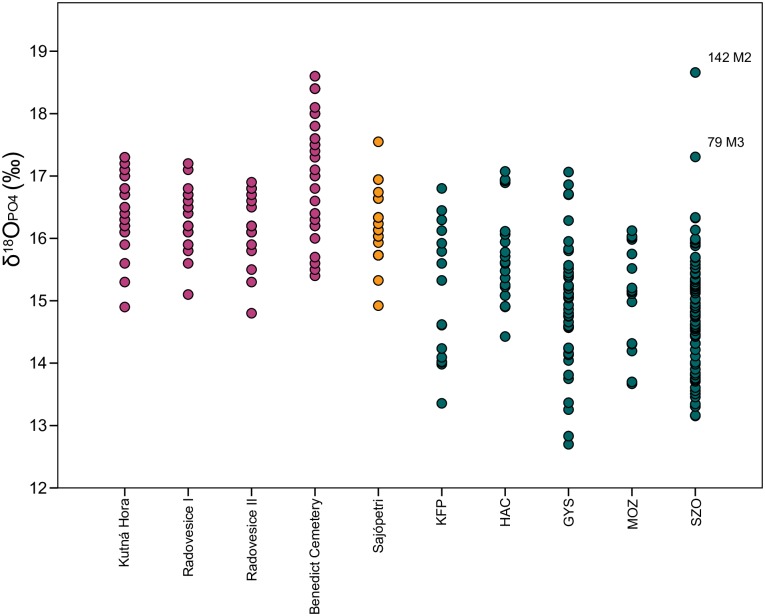
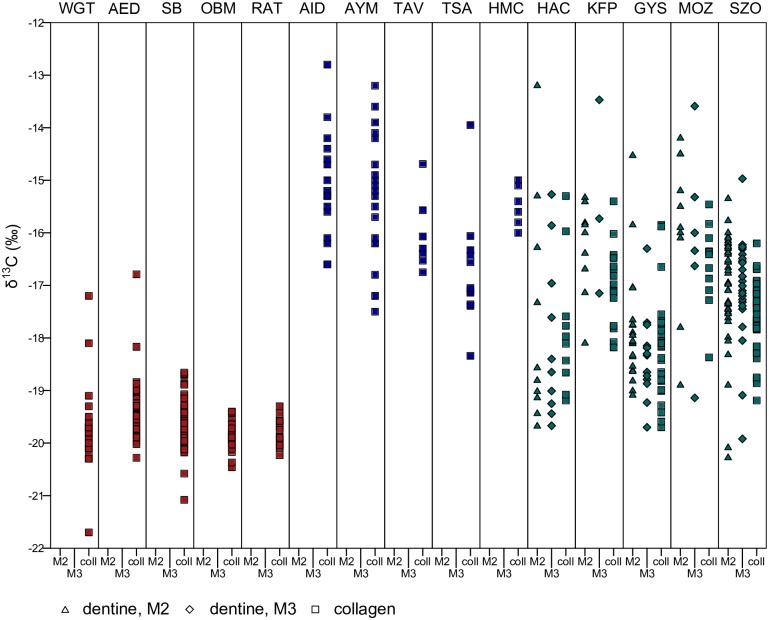
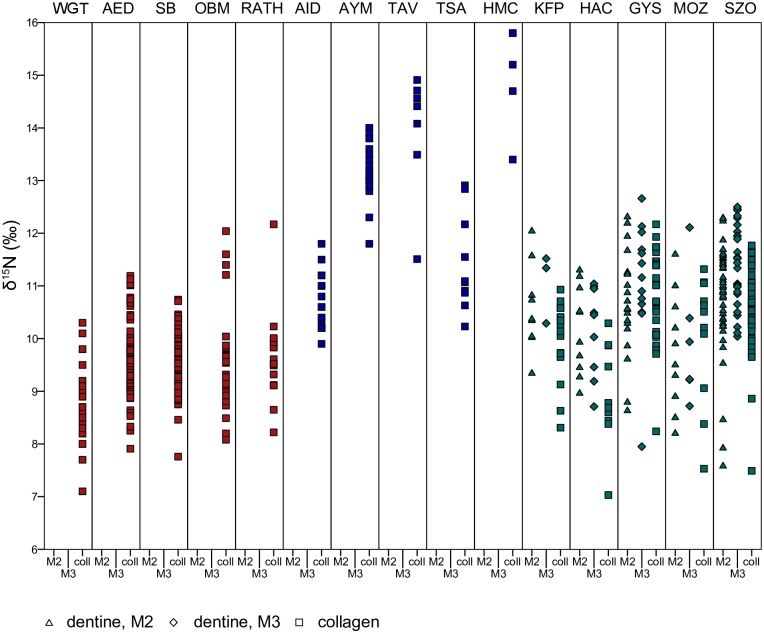
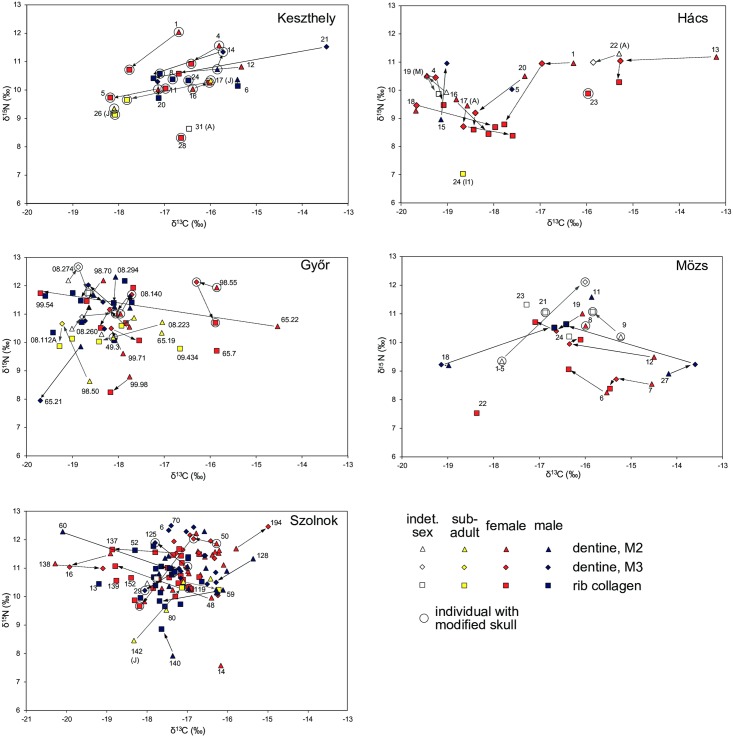
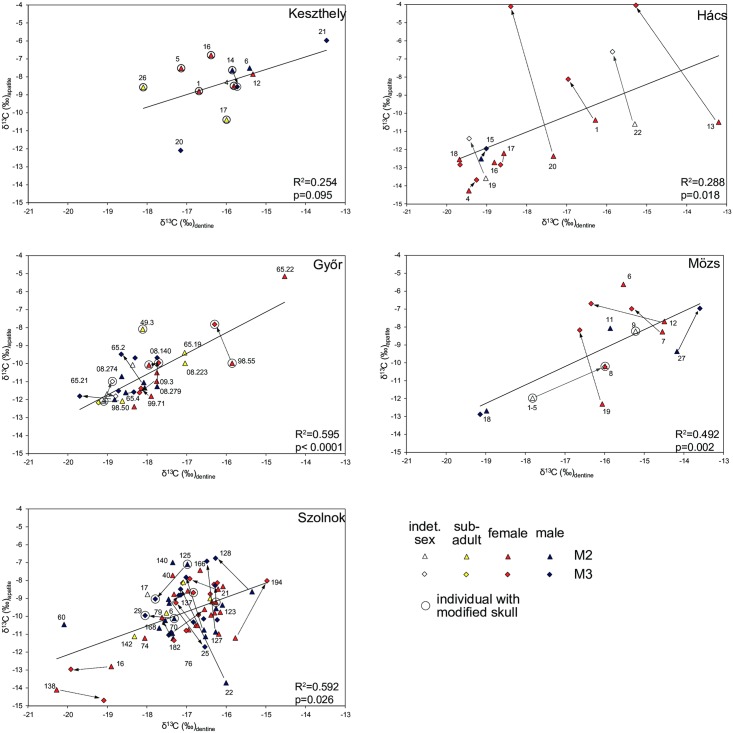
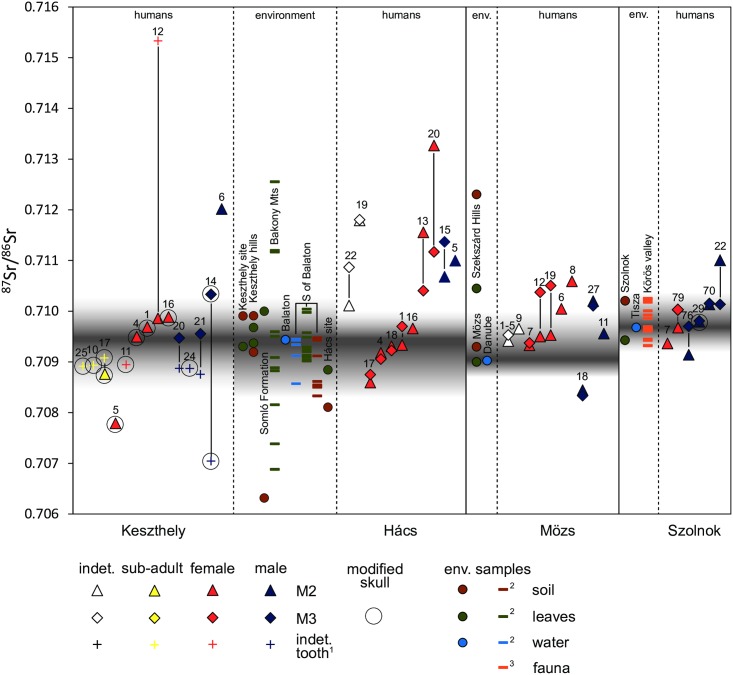
We conducted a multi-isotope study of five fifth-century AD cemeteries in modern-day Hungary to determine relationships between nomadic-pastoralist incomers-the historically documented Huns and other nomadic groups-and the sedentary agricultural population of the late Roman province of Pannonia. Contemporary historical sources describe this relationship as adversarial and destructive for the late Roman population, but archaeological evidence indicates high levels of hybridity between different groups. We undertook carbon, nitrogen, strontium and oxygen isotope analyses of bone collagen, dentine and tooth enamel at Keszthely-Fenékpuszta, Hács-Béndekpuszta, Győr-Széchenyi Square, Mözs and Szolnok-Szanda to examine these relationships through past subsistence practices. The patterns at all sites indicate medium to high animal protein consumption with little evidence for a significant contribution of aquatic resources. All populations relied to a great extent on C4 plants, most likely millet. Within each population, diet was heterogeneous, with significant variations in terms of animal protein and C3 and C4 plant consumption. High levels of intra-population and individual variability suggest that populations made use of a range of subsistence strategies, with many individuals exhibiting significant changes over their lifetimes. Rather than being characterised only by violence, the historically-documented influx of nomadic populations appears to have led to widespread changes in subsistence strategies of populations in the Carpathian basin. Nomadic-pastoralist groups may have switched to smaller herds and more farming, and, conversely, local populations may have integrated with a new economic system based on animal herding.
我们对现代匈牙利境内五个公元五世纪的墓地进行了多同位素研究,以确定游牧牧民外来者(历史文献记载的匈人及其他游牧群体)与罗马晚期潘诺尼亚行省的定居农业人口之间的关系。当代历史资料将这种关系描述为对罗马晚期人口具有对抗性和破坏性,但考古证据表明不同群体之间存在高度的混合性。我们对凯斯特海伊-费内克普斯塔、哈奇-本德克普斯塔、杰尔-塞切尼广场、默兹和索尔诺克-桑达等地的骨胶原、牙本质和牙釉质进行了碳、氮、锶和氧同位素分析,以通过过去的生存方式来研究这些关系。所有遗址的模式都表明动物蛋白消费量处于中高水平,几乎没有证据表明水产资源有显著贡献。所有人群在很大程度上依赖C4植物,很可能是小米。在每个人群中,饮食是多样化的,在动物蛋白以及C3和C4植物消费方面存在显著差异。人群内部和个体的高度变异性表明,人群采用了一系列生存策略,许多个体在其一生中表现出显著变化。历史文献记载的游牧人口涌入似乎并非仅以暴力为特征,而是导致了喀尔巴阡盆地人群生存策略的广泛变化。游牧牧民群体可能转向了更小的畜群和更多的农耕,相反,当地人群可能融入了基于畜牧的新经济体系。