Sahadevan Lipin Dev Mundur, Misra Chandra Shekhar, Thankamani V
School of Bio Sciences and Technology, VIT University, Vellore, 632014, Tamil Nadu, India.
Department of Biotechnology, Prathyusha Institute of Technology and Management, Tiruvallur, 602025, Tamil Nadu, India.
3 Biotech. 2016 Jun;6(1):56. doi: 10.1007/s13205-016-0384-z. Epub 2016 Feb 13.
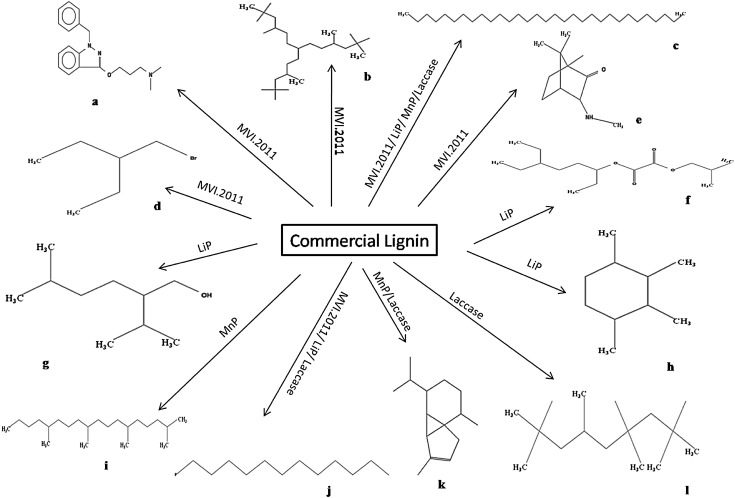
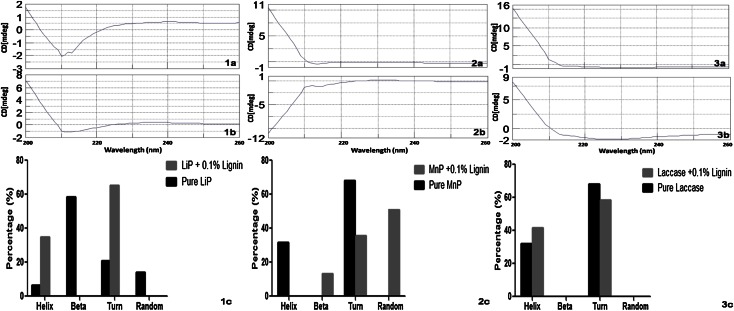
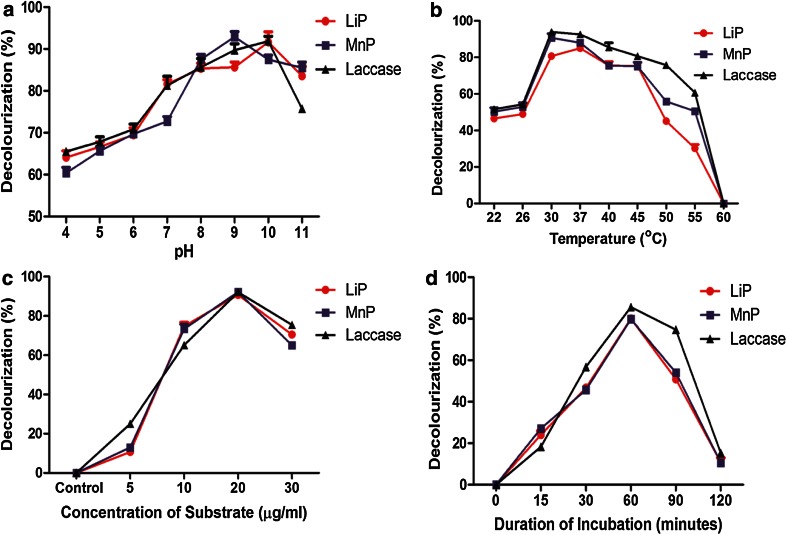
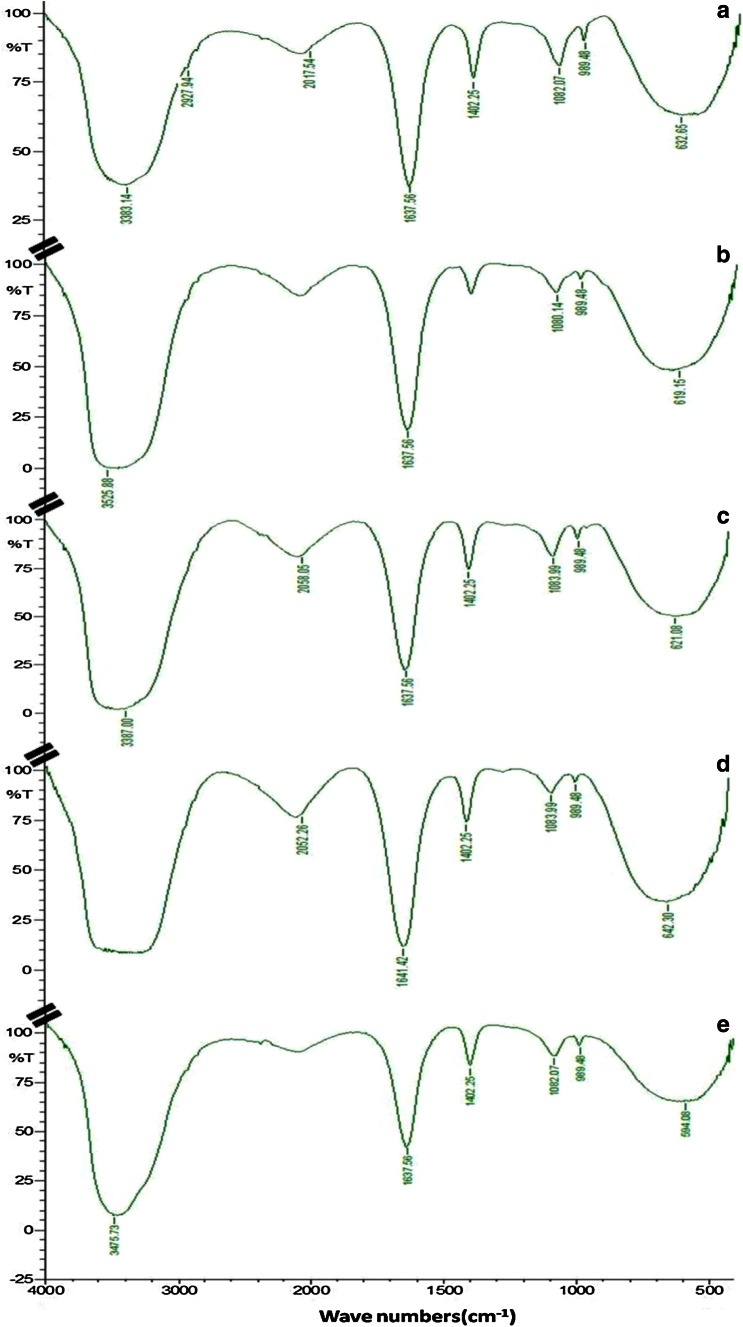
Lignin is a major component of all plants, the degradation of which remains a major challenge to date owing to its recalcitrant nature. Several classes of fungi have been studied to carry out this process to some extent, but overall the process remains inefficient. We have isolated a novel alkalophilic dimorphic lignin-degrading Deuteromycete from soil, identified as "uncultured" and coded as MVI.2011. Supernatant from 12-h culture of MVI.2011 in optimized mineral medium containing lignin pH 9.0 was analysed for Lignin Peroxidase, Manganese Peroxidase and Laccase. Enzyme purification was carried out by standard protocols using ammonium sulphate precipitation followed by further purification by Gel Permeation Chromatography. Analysis of total protein, specific enzyme activity and molecular weight of the GPC-purified LiP, MnP and Laccase showed 93.83 μg/ml, 5.27 U/mg, 42 kDa; 78.13 μg/ml, 13.18 U/mg, 45 kDa and 85.81 μg/ml, 4.77 U/mg, 62 kDa, respectively. The purified enzymes possessed high activity over a wide range of pH (4-11), and temperature (30-55 °C). The optimum substrate concentration was 20 μg/ml of lignin for all the three enzymes. CD spectra suggested that the predominant secondary structure was helix in LiP, and, turns in MnP and Laccase. The breakdown products of lignin degradation by MVI.2011 and the three purified enzymes were detected and identified by FTIR and GC-MS. They were oxalic acid, hentriacontane, derivatives of octadecane, nonane, etc. These vital compounds are certain to find application as biofuels, an alternate energy source in various industries.
木质素是所有植物的主要成分,由于其难降解的特性,迄今为止,其降解仍是一个重大挑战。人们已经研究了几类真菌在一定程度上进行这个过程,但总体而言该过程仍然效率低下。我们从土壤中分离出一种新型嗜碱双态木质素降解半知菌,它被鉴定为“未培养”,编码为MVI.2011。对MVI.2011在含有木质素pH 9.0的优化矿物培养基中培养12小时后的上清液进行木质素过氧化物酶、锰过氧化物酶和漆酶分析。酶的纯化按照标准方案进行,先用硫酸铵沉淀,然后通过凝胶渗透色谱进一步纯化。对凝胶渗透色谱纯化的木质素过氧化物酶、锰过氧化物酶和漆酶的总蛋白、比酶活性和分子量分析表明,其分别为93.83μg/ml、5.27 U/mg、42 kDa;78.13μg/ml、13.18 U/mg、45 kDa和85.81μg/ml、4.77 U/mg、62 kDa。纯化后的酶在很宽的pH范围(4 - 11)和温度范围(30 - 55℃)内都具有高活性。所有这三种酶的最佳底物浓度均为20μg/ml木质素。圆二色光谱表明,木质素过氧化物酶的主要二级结构是螺旋结构,而锰过氧化物酶和漆酶的主要二级结构是转角结构。通过傅里叶变换红外光谱和气相色谱 - 质谱联用仪对MVI.2011和三种纯化酶降解木质素的产物进行了检测和鉴定。它们是草酸、三十一烷、十八烷衍生物、壬烷等。这些重要化合物肯定会在生物燃料领域得到应用,生物燃料是各行业的一种替代能源。