Anantha R K, Kota S
Centre for Biotechnology, Acharya Nagarjuna University, Nagarjuna Nagar, Guntur, 522 510, Andhra Pradesh, India.
Department of Biotechnology, Bapatla Engineering College, Bapatla, 522 101, Andhra Pradesh, India.
3 Biotech. 2016 Jun;6(1):83. doi: 10.1007/s13205-016-0381-2. Epub 2016 Feb 23.
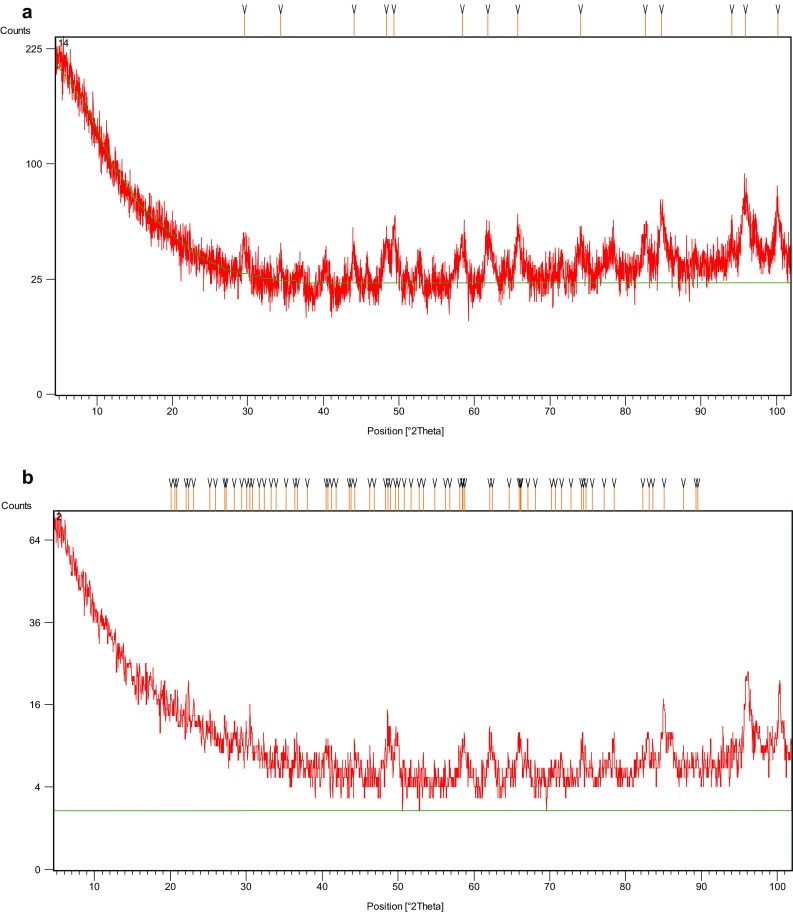
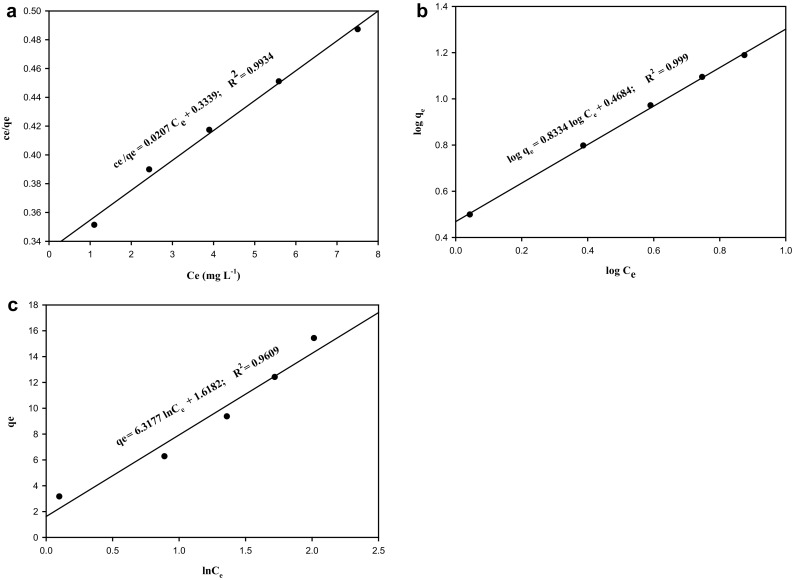
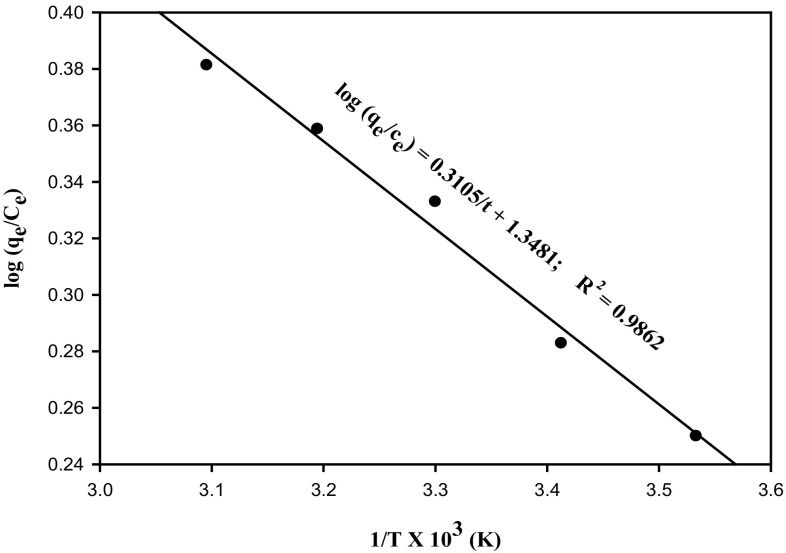
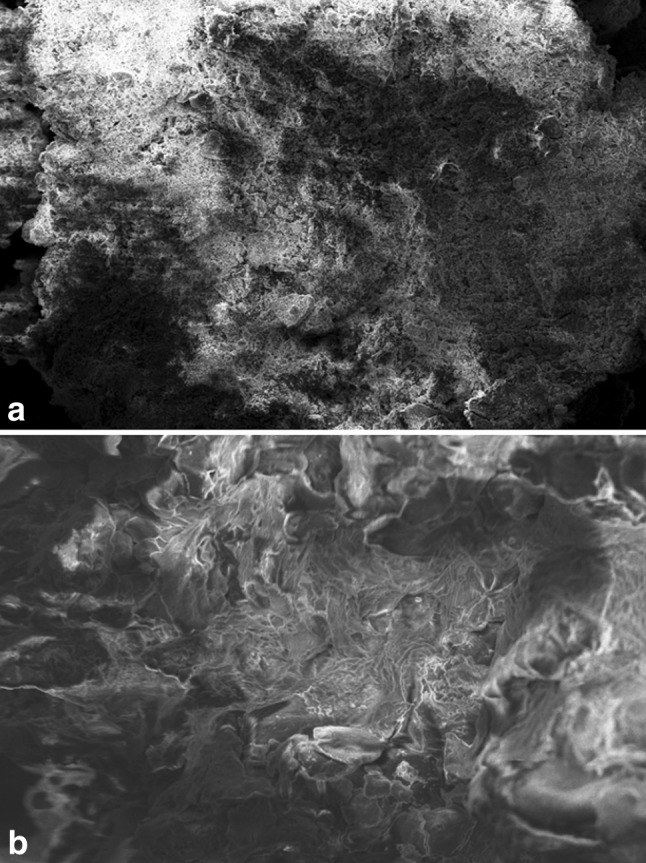
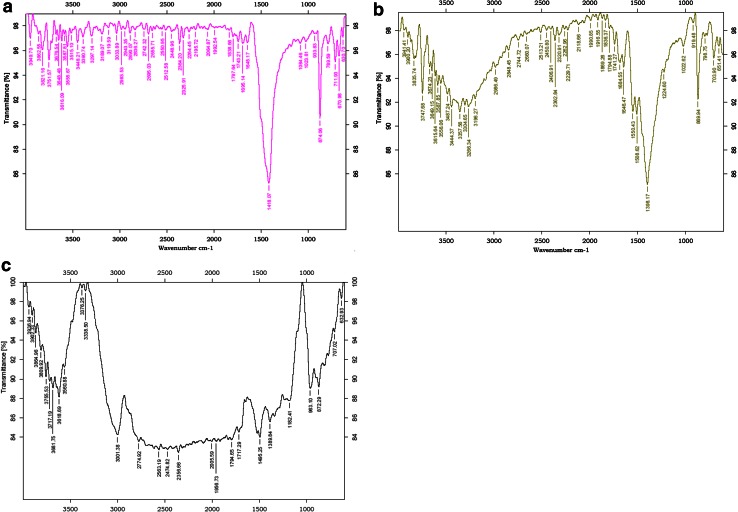
Rapid industrialisation, technological development, urbanization and increase in population in the recent past coupled with unplanned and unscientific disposal methods led to increased heavy metal levels in water. Realizing the need for development of eco-friendly and cost effective methods, the present investigation was done for the adsorptive removal of copper from aqueous solutions with Dromaius novaehollandiae eggshell and chitosan composite. By one variable at a time method, the optimum contact time was found to be 60 min with an adsorbent dosage of 8 g/L at pH 6, initial adsorbate concentration of 20 mg/L and temperature 30 °C. The equilibrium data followed Langmuir and Freundlich isotherm models and pseudo second-order kinetics. The equilibrium adsorption capacity determined from Langmuir isotherm was 48.3 mg/g. From the Van't Hoff equation, thermodynamic parameters such as enthalpy (ΔH°), entropy (ΔS°) and Gibb's free energy (ΔG°) were calculated and inferred that the process was spontaneous, irreversible and endothermic. To know the cumulative effects of operating parameters, a three level full factorial design of Response Surface Methodology (RSM) was applied and the suggested optimum conditions were 7.90 g/L of adsorbent dosage, 20.2651 mg/L of initial adsorbate concentration and 5.9 pH. Maximum percentage of copper adsorption attained was 95.25 % (19.05 mg/L) and the residual concentration of the metal after sorption corresponded to 0.95 mg/L, which is below the permissible limits (1.3 mg/L) of copper in drinking water. The adsorbent was characterized before and after adsorption by SEM-EDS, FTIR and XRD. The FTIR analysis showed the involvement of carboxyl, hydroxyl and amino groups while XRD analysis revealed the predominantly amorphous nature of the composite post-adsorption and the peaks at 2θ angles characteristic for copper and copper oxide. The mechanisms involved in the adsorption of copper onto the adsorbent are chemisorption, complexation and ion exchange.
近期,快速工业化、技术发展、城市化以及人口增长,再加上无计划且不科学的处置方法,导致水中重金属含量增加。意识到开发环保且经济高效方法的必要性,本研究采用鸸鹋蛋壳与壳聚糖复合材料对水溶液中的铜进行吸附去除。通过一次改变一个变量的方法,发现在pH值为6、初始吸附质浓度为20mg/L、温度为30℃、吸附剂用量为8g/L的条件下,最佳接触时间为60分钟。平衡数据符合朗缪尔和弗伦德利希等温线模型以及伪二级动力学。由朗缪尔等温线确定的平衡吸附容量为48.3mg/g。根据范特霍夫方程,计算了焓(ΔH°)、熵(ΔS°)和吉布斯自由能(ΔG°)等热力学参数,推断该过程是自发、不可逆且吸热的。为了解操作参数的累积影响,应用了响应面法的三水平全因子设计,建议的最佳条件为吸附剂用量7.90g/L、初始吸附质浓度20.2651mg/L和pH值5.9。铜的最大吸附百分比达到95.25%(19.05mg/L),吸附后金属的残留浓度为0.95mg/L,低于饮用水中铜的允许限值(1.3mg/L)。吸附前后通过扫描电子显微镜-能谱仪(SEM-EDS)、傅里叶变换红外光谱(FTIR)和X射线衍射(XRD)对吸附剂进行了表征。FTIR分析表明羧基、羟基和氨基参与其中,而XRD分析显示吸附后复合材料主要为非晶态性质以及在2θ角处出现铜和氧化铜的特征峰。铜吸附到吸附剂上的机制包括化学吸附、络合和离子交换。