Chen Christopher Phillip, Lyu Yuanzhi, Chuang Frank, Nakano Kazushi, Izumiya Chie, Jin Di, Campbell Mel, Izumiya Yoshihiro
Department of Dermatology, University of California Davis School of Medicine, Sacramento, California, USA.
Department of Biochemistry and Molecular Medicine, University of California Davis School of Medicine, Sacramento, California, USA.
J Virol. 2017 May 12;91(11). doi: 10.1128/JVI.02491-16. Print 2017 Jun 1.
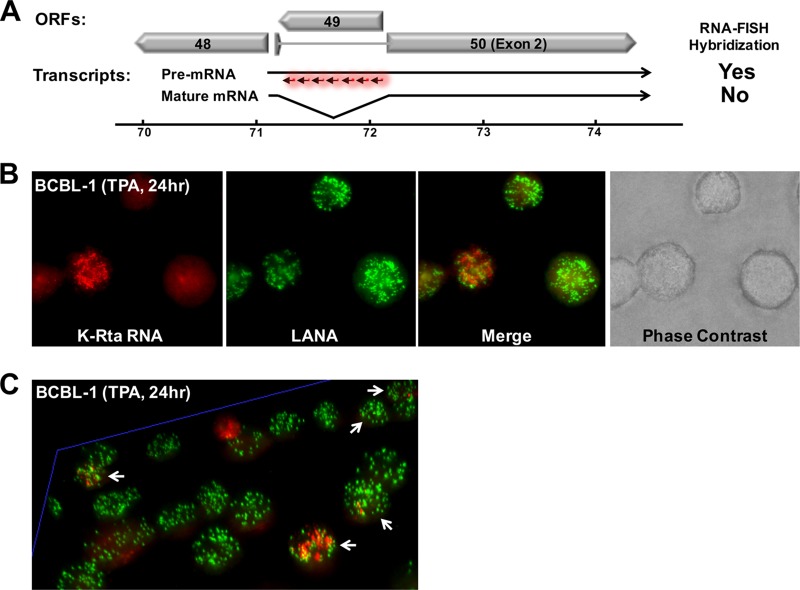
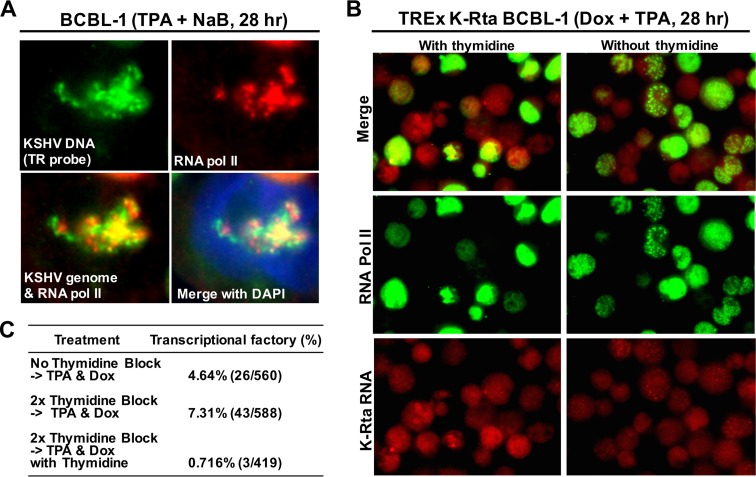
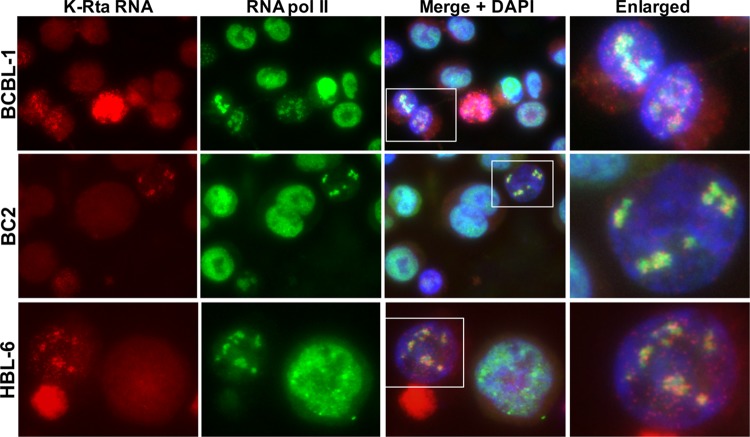
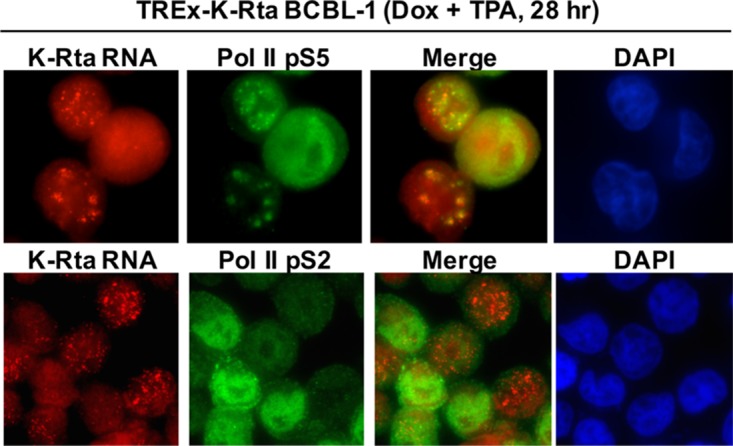
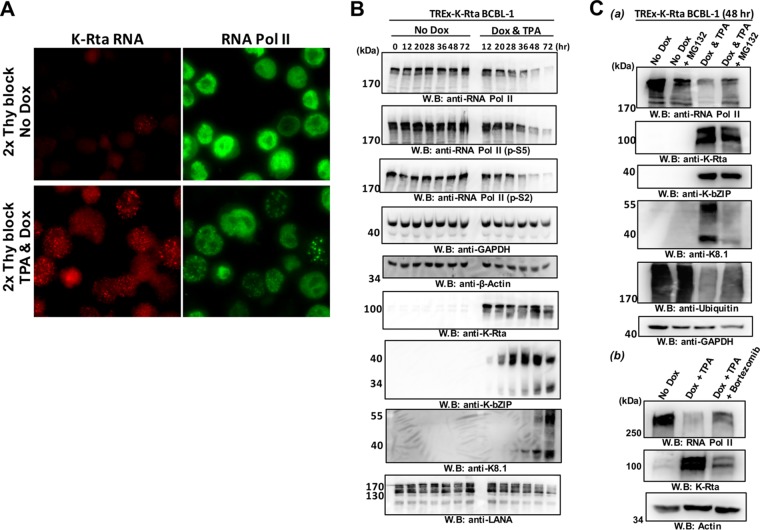
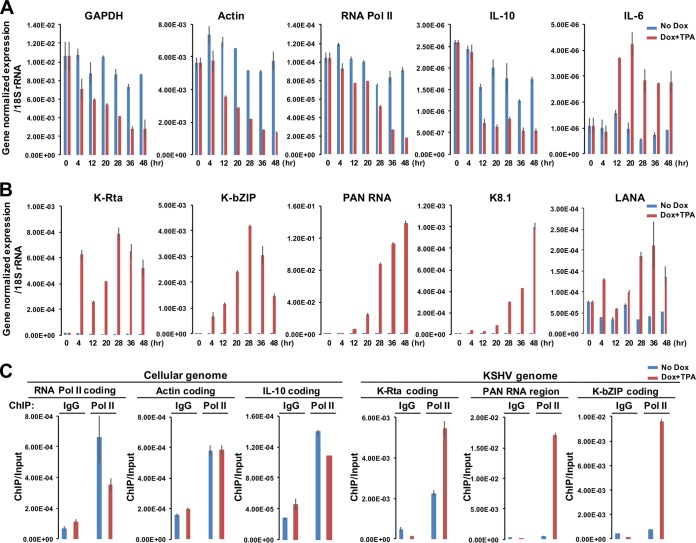
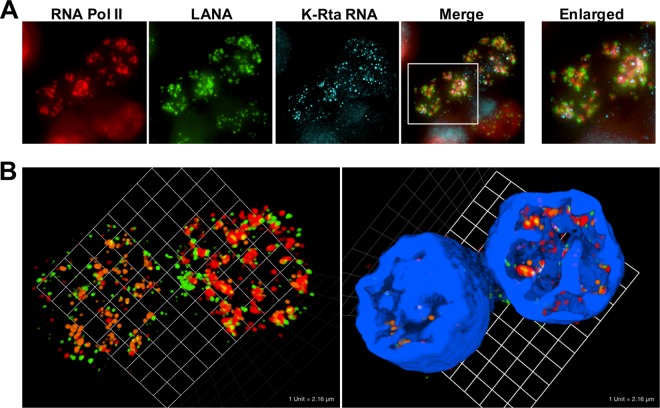
Locally concentrated nuclear factors ensure efficient binding to DNA templates, facilitating RNA polymerase II recruitment and frequent reutilization of stable preinitiation complexes. We have uncovered a mechanism for effective viral transcription by focal assembly of RNA polymerase II around Kaposi's sarcoma-associated herpesvirus (KSHV) genomes in the host cell nucleus. Using immunofluorescence labeling of latent nuclear antigen (LANA) protein, together with fluorescence RNA hybridization (RNA-FISH) of the intron region of immediate early transcripts, we visualized active transcription of viral genomes in naturally infected cells. At the single-cell level, we found that not all episomes were uniformly transcribed following reactivation stimuli. However, those episomes that were being transcribed would spontaneously aggregate to form transcriptional "factories," which recruited a significant fraction of cellular RNA polymerase II. Focal assembly of "viral transcriptional factories" decreased the pool of cellular RNA polymerase II available for cellular gene transcription, which consequently impaired cellular gene expression globally, with the exception of selected ones. The viral transcriptional factories localized with replicating viral genomic DNAs. The observed colocalization of viral transcriptional factories with replicating viral genomic DNA suggests that KSHV assembles an "all-in-one" factory for both gene transcription and DNA replication. We propose that the assembly of RNA polymerase II around viral episomes in the nucleus may be a previously unexplored aspect of KSHV gene regulation by confiscation of a limited supply of RNA polymerase II in infected cells. B cells infected with Kaposi's sarcoma-associated herpesvirus (KSHV) harbor multiple copies of the KSHV genome in the form of episomes. Three-dimensional imaging of viral gene expression in the nucleus allows us to study interactions and changes in the physical distribution of these episomes following stimulation. The results showed heterogeneity in the responses of individual KSHV episomes to stimuli within a single reactivating cell; those episomes that did respond to stimulation, aggregated within large domains that appear to function as viral transcription factories. A significant portion of cellular RNA polymerase II was trapped in these factories and served to transcribe viral genomes, which coincided with an overall decrease in cellular gene expression. Our findings uncover a strategy of KSHV gene regulation through focal assembly of KSHV episomes and a molecular mechanism of late gene expression.
局部浓缩的核因子确保与DNA模板高效结合,促进RNA聚合酶II的募集以及稳定起始前复合物的频繁再利用。我们发现了一种机制,通过RNA聚合酶II在宿主细胞核内围绕卡波西肉瘤相关疱疹病毒(KSHV)基因组的局部组装来实现有效的病毒转录。利用潜伏核抗原(LANA)蛋白的免疫荧光标记,以及立即早期转录本内含子区域的荧光RNA杂交(RNA-FISH),我们可视化了自然感染细胞中病毒基因组的活跃转录。在单细胞水平上,我们发现并非所有游离基因在再激活刺激后都会均匀转录。然而,那些正在转录的游离基因会自发聚集形成转录“工厂”,招募了相当一部分细胞RNA聚合酶II。“病毒转录工厂”的局部组装减少了可用于细胞基因转录的细胞RNA聚合酶II库,从而导致整体细胞基因表达受损,但某些选定基因除外。病毒转录工厂与正在复制的病毒基因组DNA共定位。观察到的病毒转录工厂与正在复制的病毒基因组DNA的共定位表明,KSHV组装了一个用于基因转录和DNA复制的“一体化”工厂。我们提出,细胞核内RNA聚合酶II围绕病毒游离基因的组装可能是KSHV基因调控中一个以前未被探索的方面,即通过在感染细胞中征用有限的RNA聚合酶II供应来实现。感染卡波西肉瘤相关疱疹病毒(KSHV)的B细胞以游离基因的形式携带多个KSHV基因组拷贝。细胞核内病毒基因表达的三维成像使我们能够研究这些游离基因在刺激后相互作用和物理分布的变化。结果显示,在单个再激活细胞内,单个KSHV游离基因对刺激的反应存在异质性;那些对刺激有反应的游离基因聚集在似乎作为病毒转录工厂发挥作用的大区域内。相当一部分细胞RNA聚合酶II被困在这些工厂中,用于转录病毒基因组,这与细胞基因表达的整体下降相吻合。我们的发现揭示了KSHV通过KSHV游离基因的局部组装进行基因调控的策略以及晚期基因表达的分子机制。