The Mina and Everard Goodman Faculty of Life Sciences, Advanced Materials and Nanotechnology Institute, Bar-Ilan University, Ramat-Gan 5290002, Israel.
Viruses. 2022 Aug 4;14(8):1720. doi: 10.3390/v14081720.
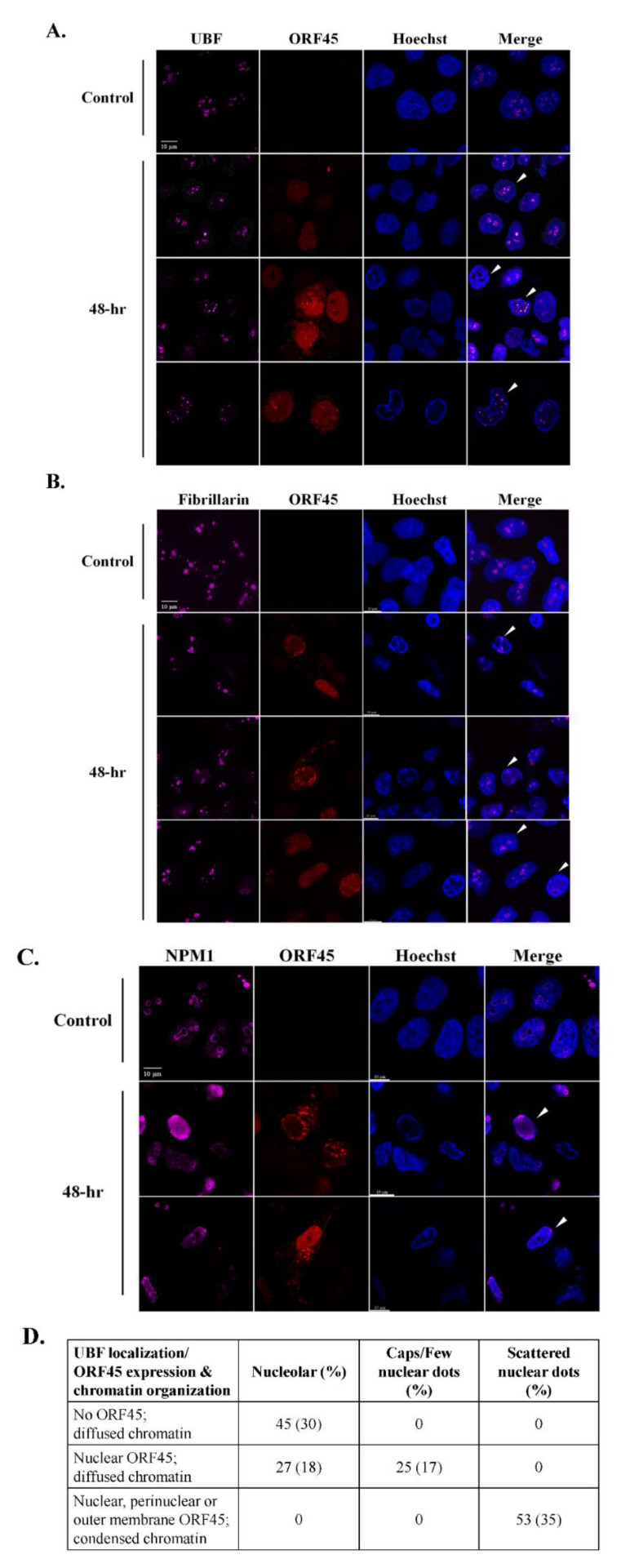
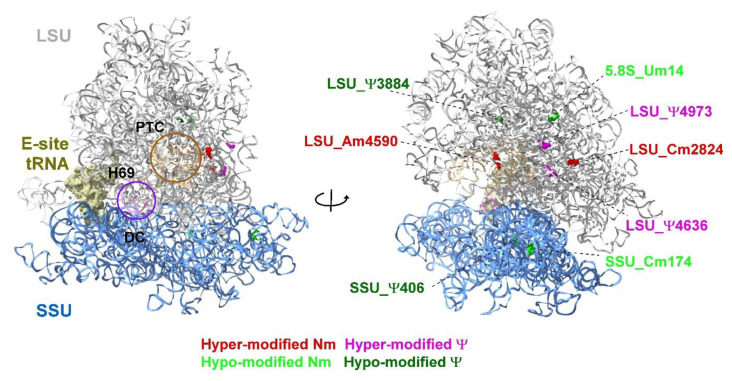
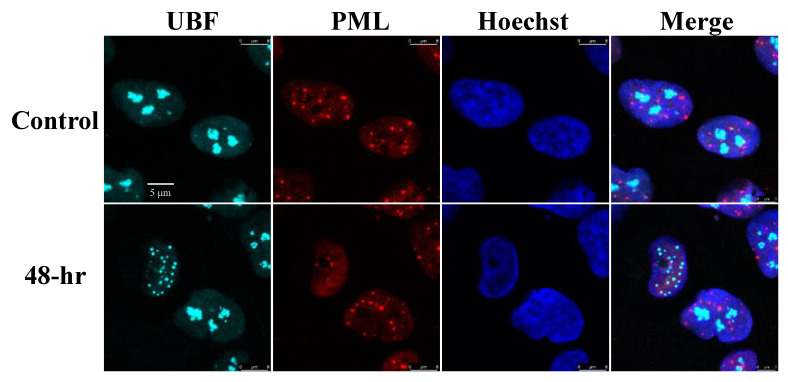
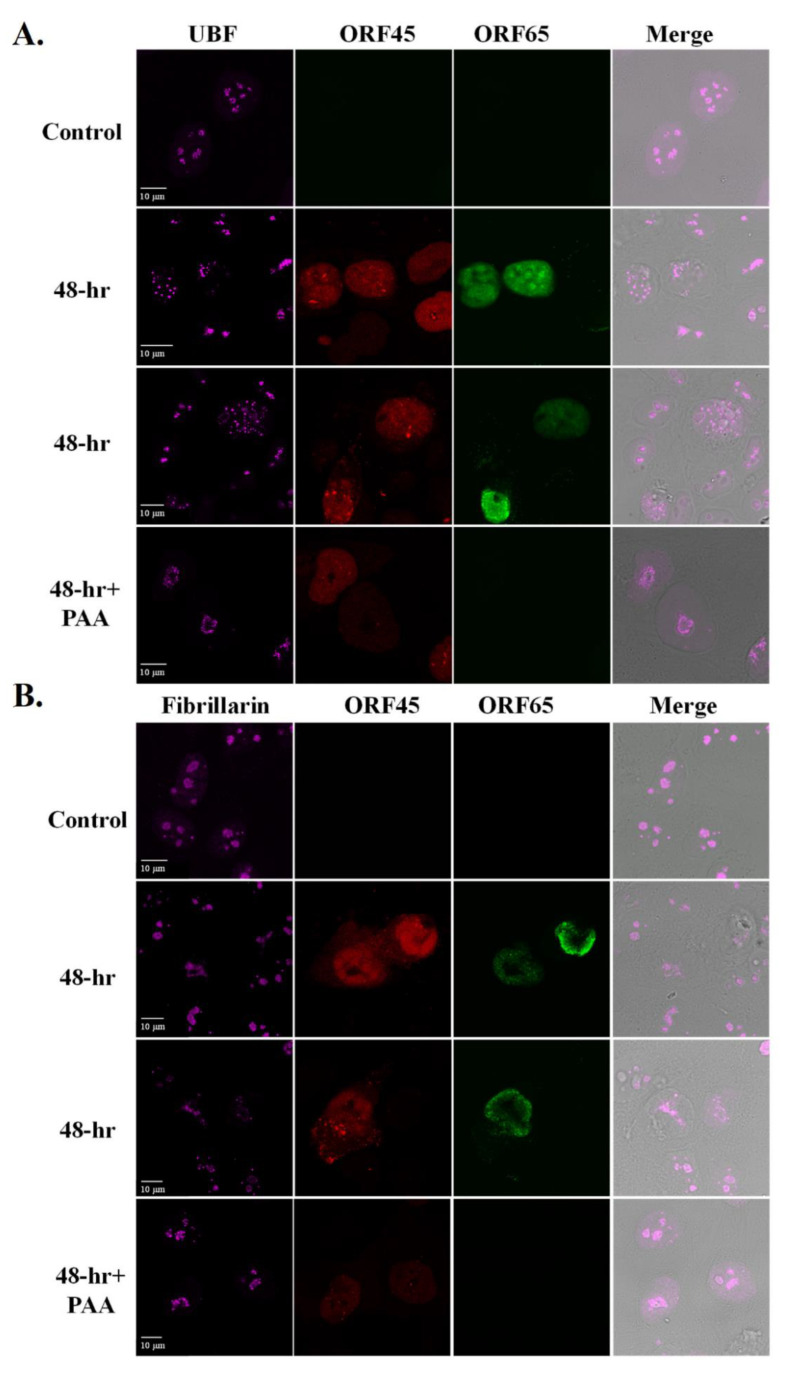
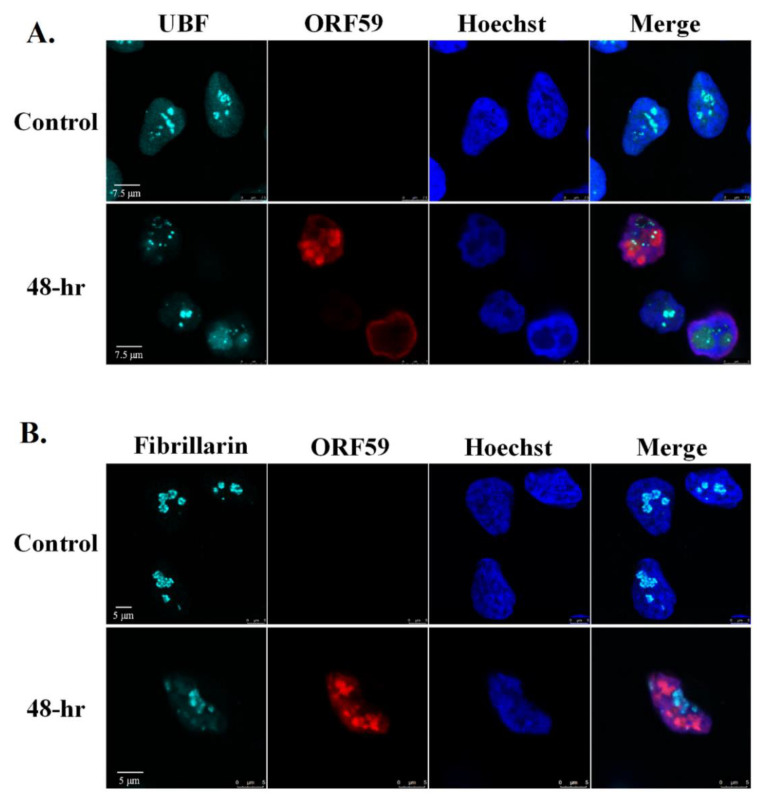
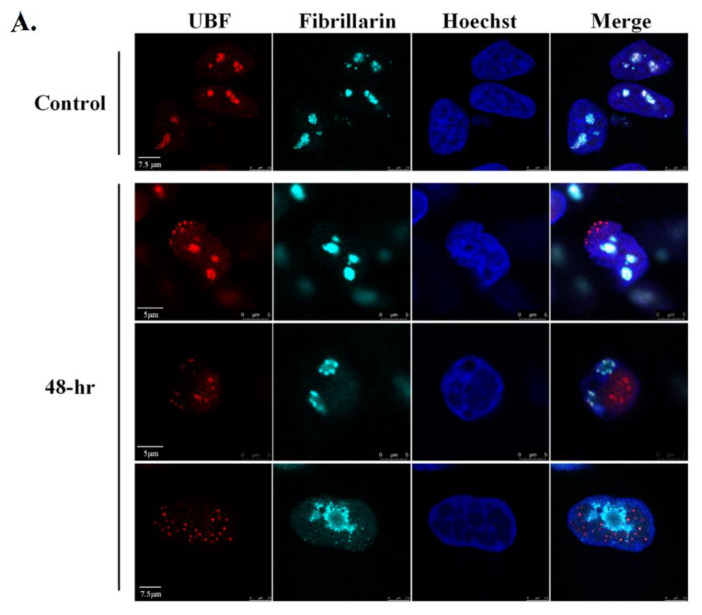
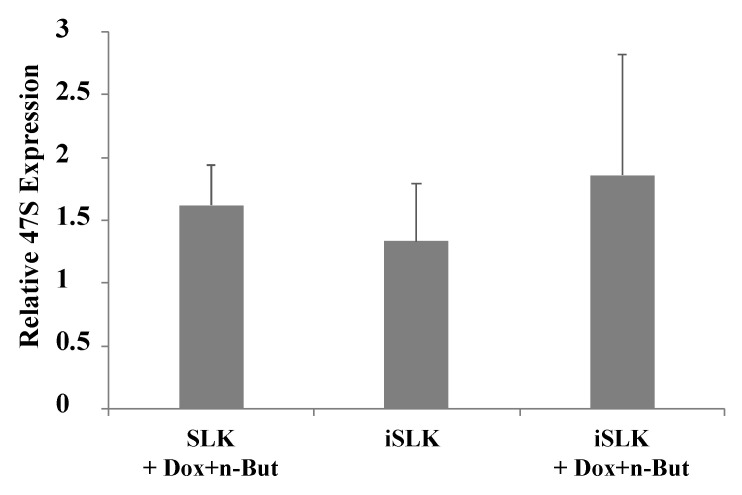
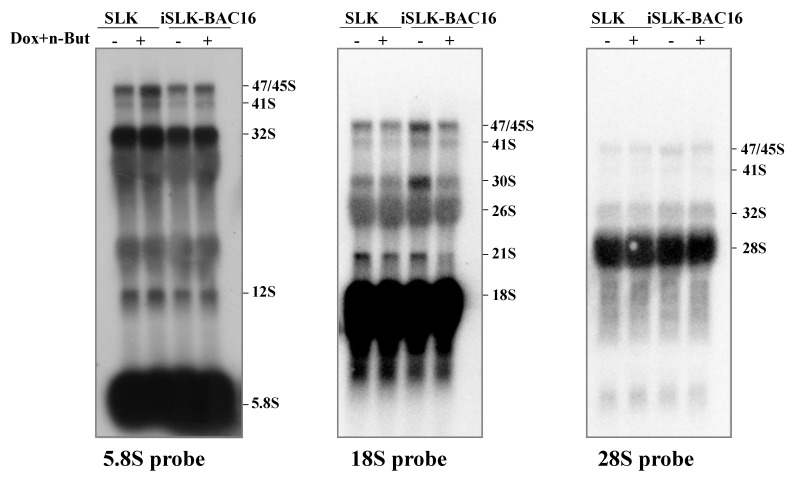
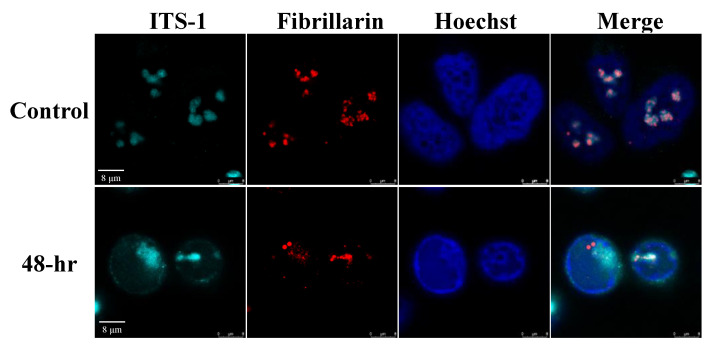
The nucleolus is a subnuclear compartment whose primary function is the biogenesis of ribosomal subunits. Certain viral infections affect the morphology and composition of the nucleolar compartment and influence ribosomal RNA (rRNA) transcription and maturation. However, no description of nucleolar morphology and function during infection with Kaposi's sarcoma-associated herpesvirus (KSHV) is available to date. Using immunofluorescence microscopy, we documented extensive destruction of the nuclear and nucleolar architecture during the lytic reactivation of KSHV. This was manifested by the redistribution of key nucleolar proteins, including the rRNA transcription factor UBF. Distinct delocalization patterns were evident; certain nucleolar proteins remained together whereas others dissociated, implying that nucleolar proteins undergo nonrandom programmed dispersion. Significantly, the redistribution of UBF was dependent on viral DNA replication or late viral gene expression. No significant changes in pre-rRNA levels and no accumulation of pre-rRNA intermediates were found by RT-qPCR and Northern blot analysis. Furthermore, fluorescent in situ hybridization (FISH), combined with immunofluorescence, revealed an overlap between Fibrillarin and internal transcribed spacer 1 (ITS1), which represents the primary product of the pre-rRNA, suggesting that the processing of rRNA proceeds during lytic reactivation. Finally, small changes in the levels of pseudouridylation (Ψ) and 2'--methylation (Nm) were documented across the rRNA; however, none were localized to the functional domain. Taken together, our results suggest that despite dramatic changes in the nucleolar organization, rRNA transcription and processing persist during lytic reactivation of KSHV. Whether the observed nucleolar alterations favor productive infection or signify cellular anti-viral responses remains to be determined.
核仁是亚核区室,其主要功能是核糖体亚基的生物发生。某些病毒感染会影响核仁区室的形态和组成,并影响核糖体 RNA(rRNA)转录和成熟。然而,目前尚无关于卡波西肉瘤相关疱疹病毒(KSHV)感染期间核仁形态和功能的描述。我们使用免疫荧光显微镜记录到,在 KSHV 的裂解性再激活过程中,核仁和核仁结构受到广泛破坏。这表现为关键核仁蛋白的重新分布,包括 rRNA 转录因子 UBF。明显的去定位模式是显而易见的;某些核仁蛋白仍然在一起,而其他蛋白则分离,这意味着核仁蛋白经历非随机程序性分散。重要的是,UBF 的重分布依赖于病毒 DNA 复制或晚期病毒基因表达。通过 RT-qPCR 和 Northern blot 分析发现,前 rRNA 水平没有显著变化,也没有发现前 rRNA 中间产物的积累。此外,荧光原位杂交(FISH)与免疫荧光相结合,揭示了 Fibrillarin 和内部转录间隔 1(ITS1)之间的重叠,这代表了前 rRNA 的主要产物,表明 rRNA 的加工在裂解性再激活过程中进行。最后,在 rRNA 上记录到假尿嘧啶化(Ψ)和 2'--甲基化(Nm)水平的微小变化;然而,没有一个定位于功能域。总之,我们的结果表明,尽管核仁组织发生了巨大变化,但在 KSHV 的裂解性再激活过程中,rRNA 转录和加工仍在继续。观察到的核仁改变是否有利于有性感染,或者是否代表细胞抗病毒反应,还有待确定。