Hallajzadeh Jamal, Safiri Saeid, Mansournia Mohammad Ali, Khoramdad Maliheh, Izadi Neda, Almasi-Hashiani Amir, Pakzad Reza, Ayubi Erfan, Sullman Mark J M, Karamzad Nahid
Department of Community Nutrition, Faculty of Nutrition Sciences and Food Technology, Shahid Beheshti University of Medical Sciences, Tehran, Iran.
Managerial Epidemiology Research Center, Department of Public Health, School of Nursing and Midwifery, Maragheh University of Medical Sciences, Maragheh, Iran.
PLoS One. 2017 Mar 23;12(3):e0170361. doi: 10.1371/journal.pone.0170361. eCollection 2017.
Estimating the current global prevalence of metabolic syndrome (MetS), and its components, among rheumatoid arthritis (RA) patients is necessary in order to formulate preventative strategies and to ensure there are adequate community resources available for these patients. Furthermore, the association between RA and MetS is controversial and has not previously been comprehensively assessed. Therefore, the present study aimed to: 1) determine the prevalence of MetS, and its components, among RA patients across the world 2) update the odds ratio of MetS in RA patients, compared to healthy controls, using a comprehensive systematic review and meta-analysis.
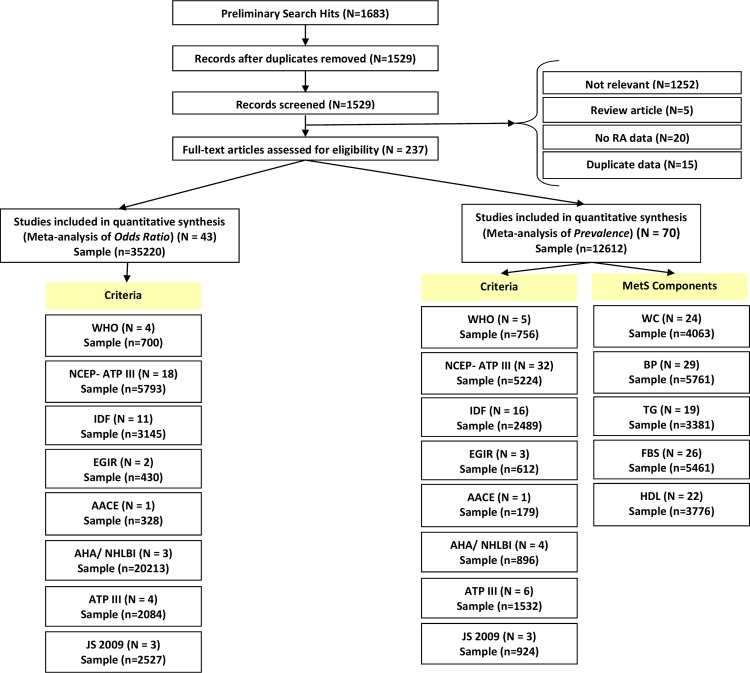
International databases, including: the Web of Science, PubMed, Scopus, Embase, CINAHL and other relevant databases were searched to identify English language articles which reported the prevalence and risk of MetS in RA patients between January 2000 and August 2016. The meta-analysis only included studies which clearly described the time and location of the study, utilised adequate sampling strategies, and appropriate statistical analyses.
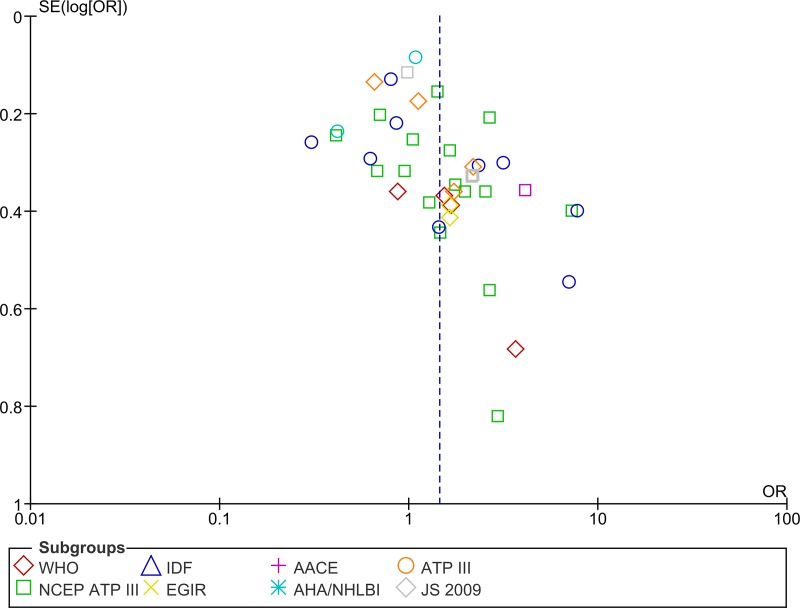
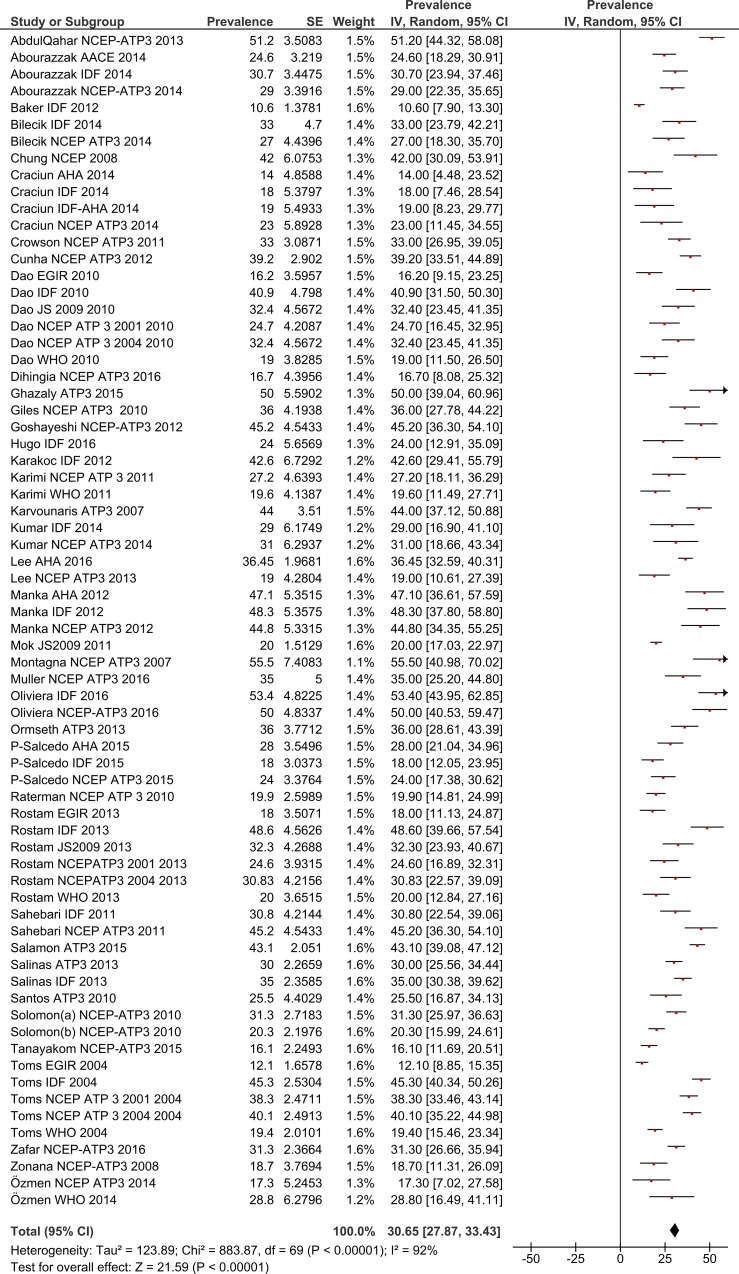
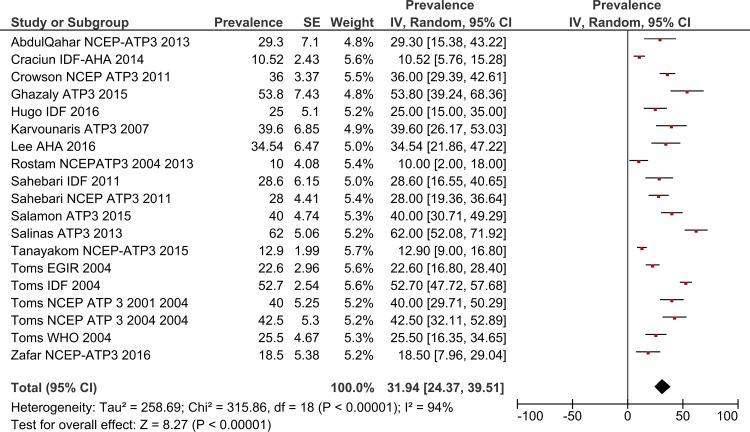
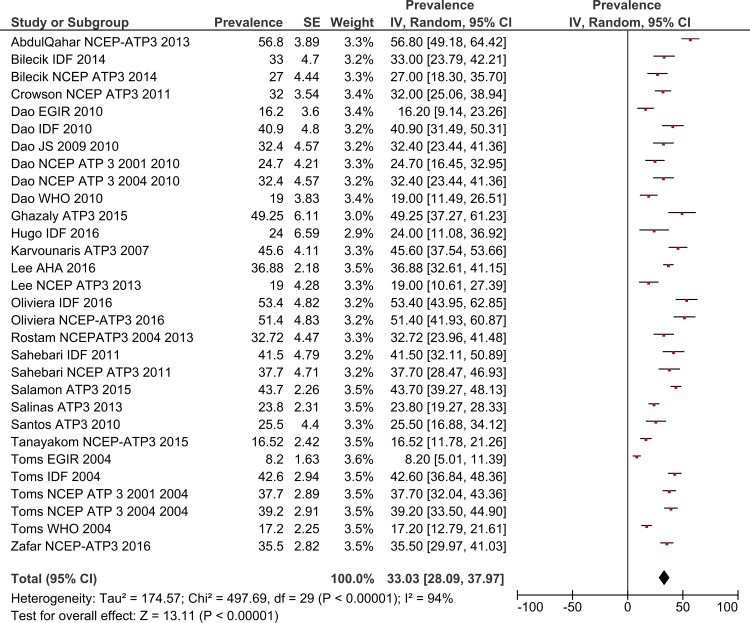
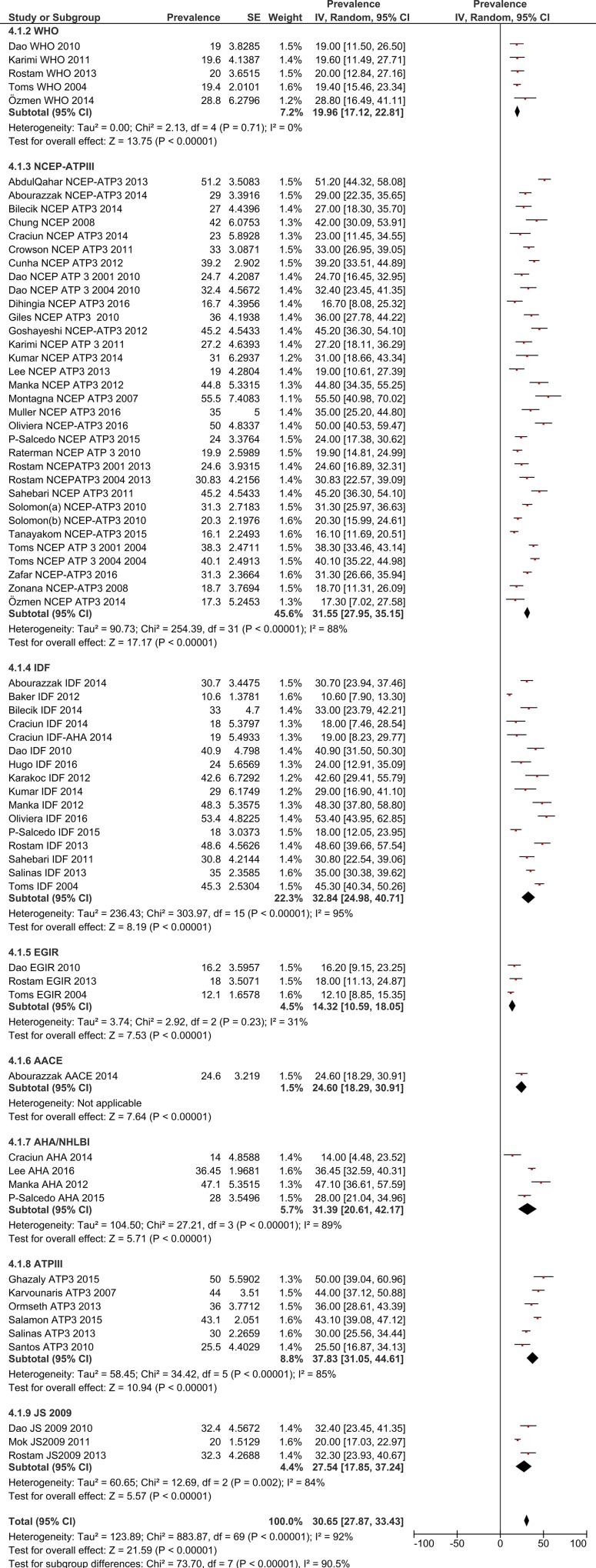
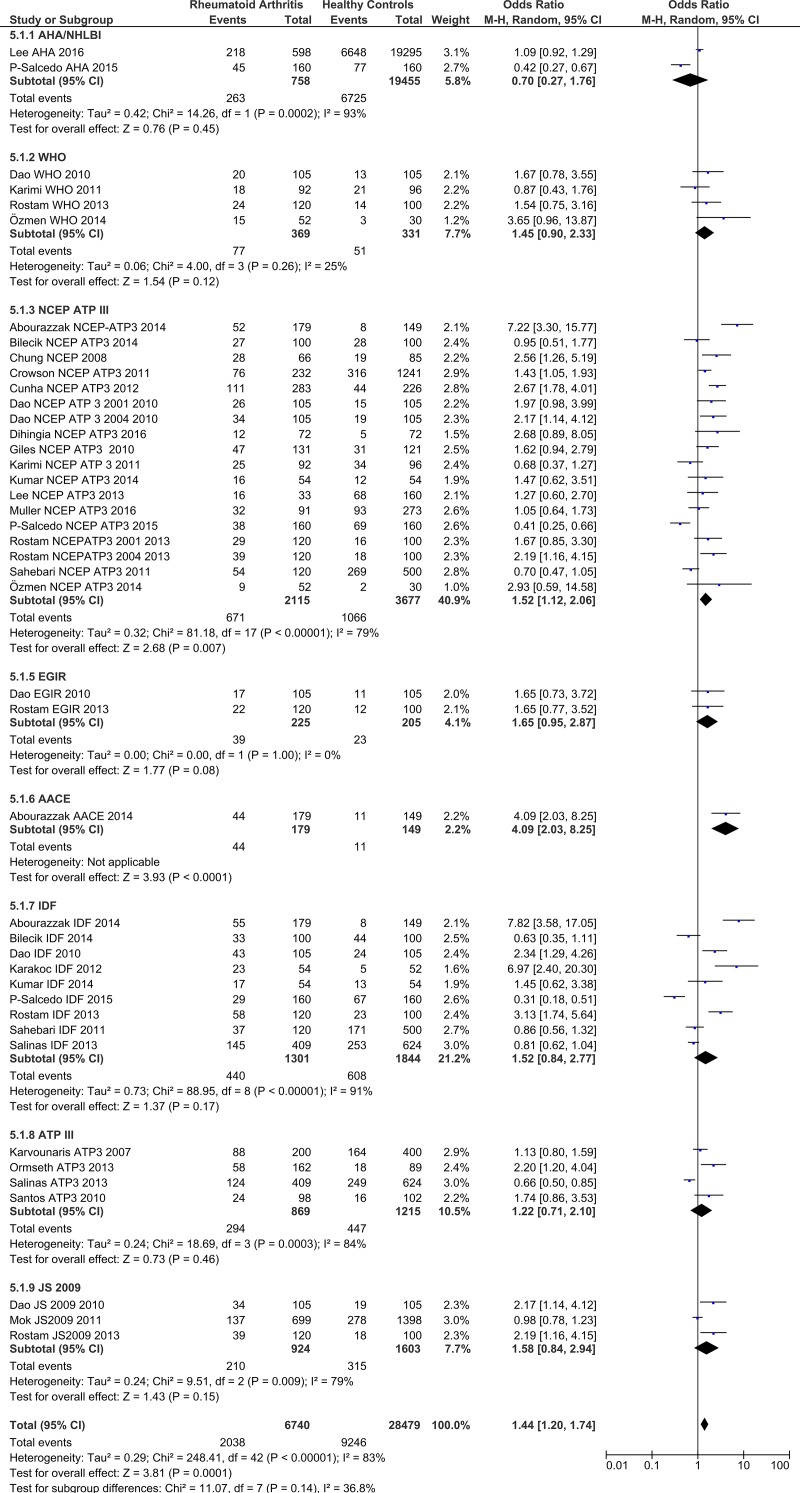
The meta-analyses of prevalence (70 studies [n = 12612]) and risk (43 studies [n = 35220]) of MetS in RA patients were undertaken separately. The overall pooled prevalence of MetS was 30.65% (95% CI: 27.87-33.43), but this varied from 14.32% (95% CI: 10.59-18.05) to 37.83% (95% CI: 31.05-44.61), based upon the diagnostic criteria used. The prevalence of MetS also varied slightly between males (31.94%, 95% CI: 24.37-39.51) and females (33.03%, 95% CI: 28.09-37.97), but this was not statistically significant. The overall pooled odds ratio (OR) of MetS in RA patients, compared to healthy controls, was 1.44 (95% CI: 1.20-1.74), but this ranged from 0.70 (95% CI: 0.27-1.76) to 4.09 (95% CI: 2.03-8.25), depending on the criteria used. The mean age and diagnostic criteria of MetS were identified as sources of heterogeneity in the estimated odds ratios between studies (P<0.05).
According to the high prevalence of MetS in RA patients, and high risk of MetS, measuring metabolic syndrome in RA patients is strongly recommended. Furthermore, as high waist circumference (WC) is the most common metabolic syndrome component, more attention must be paid to nutrition and weight loss among those with RA.
为制定预防策略并确保为类风湿关节炎(RA)患者提供足够的社区资源,有必要估算当前全球RA患者中代谢综合征(MetS)及其各组分的患病率。此外,RA与MetS之间的关联存在争议,且此前尚未得到全面评估。因此,本研究旨在:1)确定全球RA患者中MetS及其各组分的患病率;2)通过全面的系统评价和荟萃分析,更新RA患者与健康对照相比患MetS的比值比。
检索国际数据库,包括:科学网、PubMed、Scopus、Embase、CINAHL及其他相关数据库,以识别2000年1月至2016年8月间报告RA患者中MetS患病率和风险的英文文章。荟萃分析仅纳入那些清晰描述研究时间和地点、采用适当抽样策略及合适统计分析的研究。
分别对RA患者中MetS的患病率(70项研究[n = 12612])和风险(43项研究[n = 35220])进行荟萃分析。MetS的总体合并患病率为30.65%(95%CI:27.87 - 33.43),但根据所使用的诊断标准,该患病率在14.32%(95%CI:10.59 - 18.05)至37.83%(95%CI:31.05 - 44.61)之间变化。MetS的患病率在男性(31.94%,95%CI:24.37 - 39.51)和女性(33.03%,95%CI:28.09 - 37.97)之间也略有差异,但无统计学意义。与健康对照相比,RA患者中MetS的总体合并比值比(OR)为1.44(95%CI:1.20 - 1.74),但根据所使用的标准,该比值比在0.70(95%CI:0.27 - 1.76)至4.09(95%CI:2.03 - 8.25)之间。MetS的平均年龄和诊断标准被确定为研究间估计比值比异质性的来源(P<0.05)。
鉴于RA患者中MetS的高患病率和高风险,强烈建议对RA患者进行代谢综合征检测。此外,由于高腰围(WC)是最常见的代谢综合征组分,必须更加关注RA患者的营养和体重减轻问题。