Bixby Miriam, Baylis Kathy, Hoover Shelley E, Currie Rob W, Melathopoulos Andony P, Pernal Stephen F, Foster Leonard J, Guarna M Marta
Department of Biochemistry & Molecular Biology, University of British Columbia, 2125 East Mall, Vancouver, BC, Canada V6T 1Z4, (
Corresponding author, e-mail:
J Econ Entomol. 2017 Jun 1;110(3):816-825. doi: 10.1093/jee/tox077.
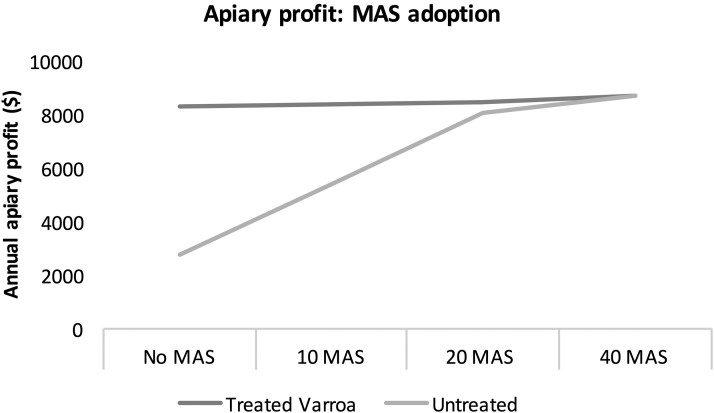
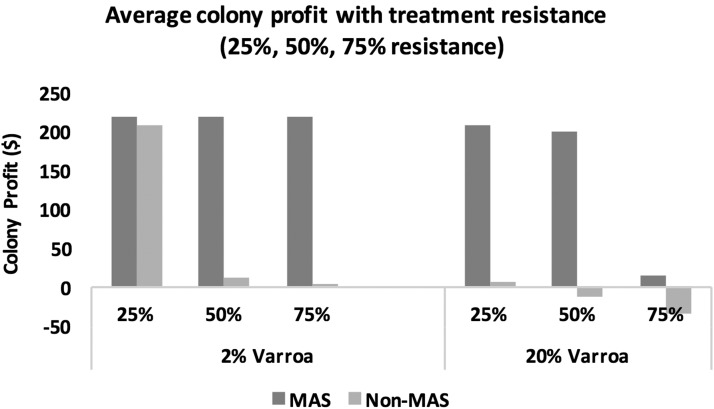
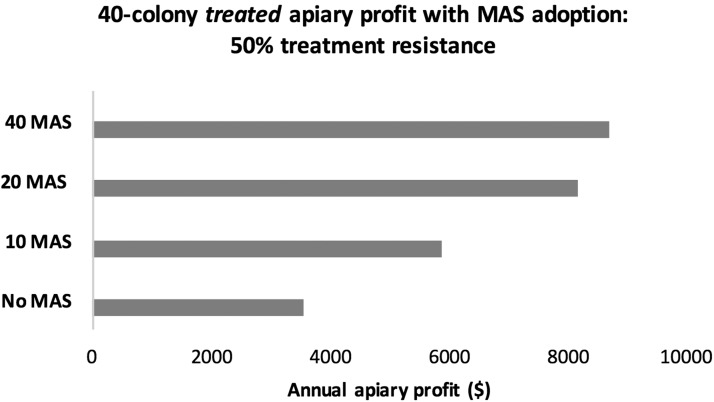
Over the past decade in North America and Europe, winter losses of honey bee (Hymenoptera: Apidae) colonies have increased dramatically. Scientific consensus attributes these losses to multifactorial causes including altered parasite and pathogen profiles, lack of proper nutrition due to agricultural monocultures, exposure to pesticides, management, and weather. One method to reduce colony loss and increase productivity is through selective breeding of queens to produce disease-, pathogen-, and mite-resistant stock. Historically, the only method for identifying desirable traits in honey bees to improve breeding was through observation of bee behavior. A team of Canadian scientists have recently identified markers in bee antennae that correspond to behavioral traits in bees and can be tested for in a laboratory. These scientists have demonstrated that this marker-assisted selection (MAS) can be used to produce hygienic, pathogen-resistant honey bee colonies. Based on this research, we present a beekeeping case study where a beekeeper's profit function is used to evaluate the economic impact of adopting colonies selected for hygienic behavior using MAS into an apiary. Our results show a net profit gain from an MAS colony of between 2% and 5% when Varroa mites are effectively treated. In the case of ineffective treatment, MAS generates a net profit benefit of between 9% and 96% depending on the Varroa load. When a Varroa mite population has developed some treatment resistance, we show that MAS colonies generate a net profit gain of between 8% and 112% depending on the Varroa load and degree of treatment resistance.
在过去十年中,北美和欧洲的蜜蜂(膜翅目:蜜蜂科)蜂群冬季损失急剧增加。科学共识将这些损失归因于多方面原因,包括寄生虫和病原体状况改变、农业单一栽培导致缺乏适当营养、接触杀虫剂、管理因素以及天气因素。减少蜂群损失并提高生产力的一种方法是通过对蜂王进行选择性育种,以培育出抗病、抗病原体和抗螨的蜂种。历史上,在蜜蜂中识别理想性状以改进育种的唯一方法是通过观察蜜蜂行为。一组加拿大科学家最近在蜜蜂触角中发现了与蜜蜂行为特征相对应的标记,并且可以在实验室中进行检测。这些科学家已经证明,这种标记辅助选择(MAS)可用于培育出具有卫生习性、抗病的蜜蜂蜂群。基于这项研究,我们呈现一个养蜂案例研究,其中养蜂人的利润函数用于评估将通过MAS选择的具有卫生行为的蜂群引入蜂场的经济影响。我们的结果表明,当有效地处理瓦螨时,MAS蜂群的净利润增益在2%至5%之间。在处理无效的情况下,根据瓦螨数量,MAS产生的净利润收益在9%至96%之间。当瓦螨种群产生一定程度的抗药性时,我们表明,根据瓦螨数量和抗药程度,MAS蜂群的净利润增益在8%至112%之间。