Grimes Carley A, Szymlek-Gay Ewa A, Nicklas Theresa A
Deakin University, Institute for Physical Activity and Nutrition Research, School of Exercise and Nutrition Sciences, Locked Bag 20000, Waurn Ponds, Geelong VIC 3000, Australia.
Children's Nutrition Research Center, Baylor College of Medicine, 1100 Bates Ave, Houston, TX 77030, USA.
Nutrients. 2017 Mar 13;9(3):264. doi: 10.3390/nu9030264.
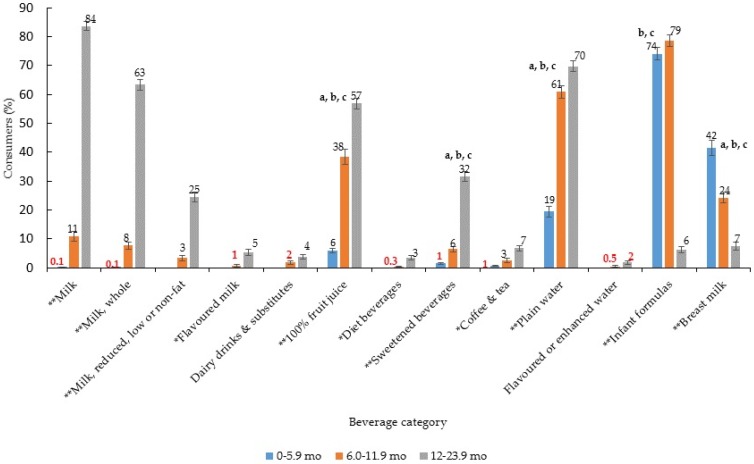
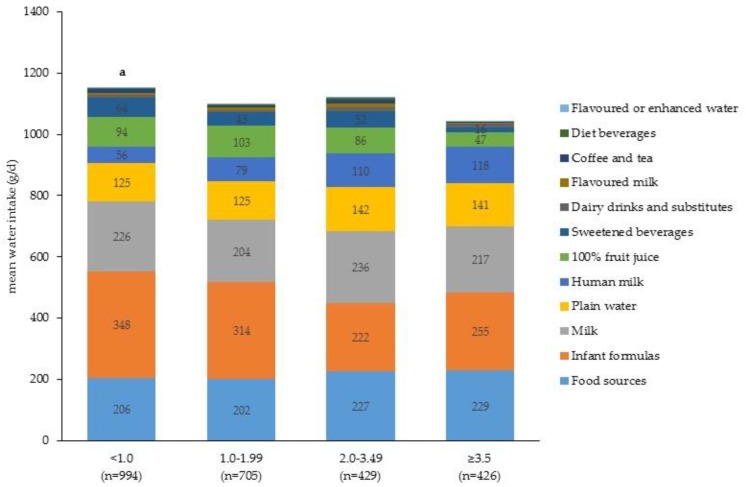
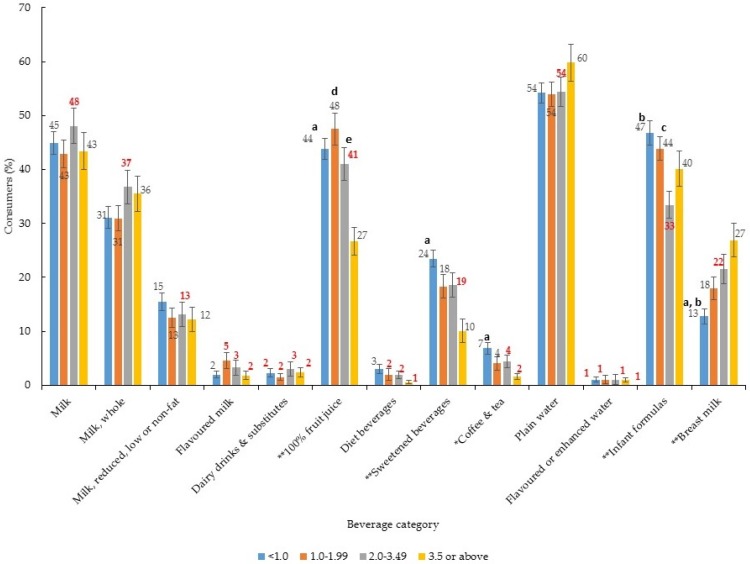
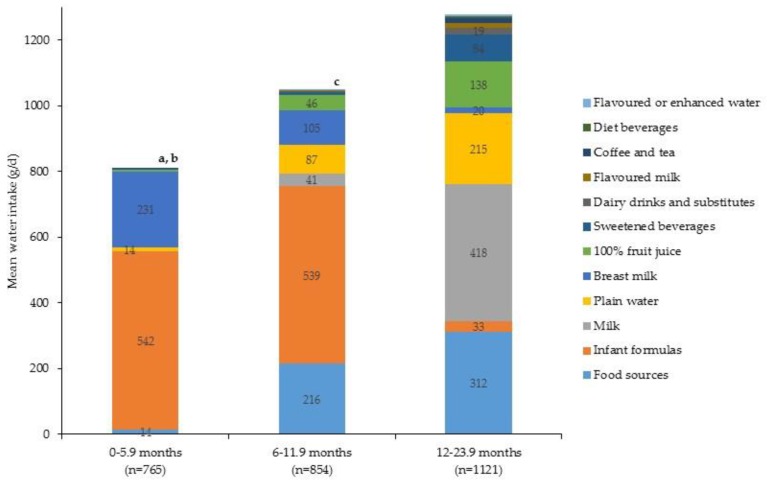
Data on beverage consumption patterns in early life are limited. The aim of this study was to describe beverage consumption by sociodemographic characteristics, along with water intake and sources of water among U.S. children aged 0-24 months. Data from 2740 children in the 2005-2012 NHANES were analysed. Food intake was determined via one 24-h dietary recall. Beverages were categorised according to What We Eat In America groups. Poverty-Income ratio was used to define household income. During infancy (0-5.9 months and 6-11.9 months) infant formulas were the most commonly consumed beverage, 74.1% and 78.6% of children consuming, respectively. Comparatively fewer children, 41.6% and 24.3%, consumed breast milk. In toddlers (12-24 months), the most commonly consumed beverages were plain milk (83.6% of children consuming), water (68.6%), 100% fruit juice (51.8%) and sweetened beverages (31.2%). Non-Hispanic black and Mexican-American children were more likely to consume sweetened beverages, 100% fruit juice and infant formula than Non-Hispanic white children. Children from lower income households were more likely to consume sweetened beverages and 100% fruit juice and less likely to consume breast milk than children from higher income households. Total water intake increased with age and the contribution of water from food and beverage sources was ~20% and ~80% for all children, respectively. Disparities in beverage consumption by race/ethnicity and income level are apparent in early life.
关于生命早期饮料消费模式的数据有限。本研究的目的是描述美国0至24个月儿童按社会人口学特征划分的饮料消费情况,以及水的摄入量和水源。对2005 - 2012年美国国家健康与营养检查调查(NHANES)中2740名儿童的数据进行了分析。通过一次24小时饮食回顾确定食物摄入量。饮料根据“美国饮食指南”中的类别进行分类。贫困收入比用于定义家庭收入。在婴儿期(0至5.9个月和6至11.9个月),婴儿配方奶粉是最常饮用的饮料,分别有74.1%和78.6%的儿童饮用。相比之下,饮用母乳的儿童较少,分别为41.6%和24.3%。在幼儿期(12至24个月),最常饮用的饮料是纯牛奶(83.6%的儿童饮用)、水(68.6%)、100%果汁(51.8%)和甜味饮料(31.2%)。非西班牙裔黑人儿童和墨西哥裔美国儿童比非西班牙裔白人儿童更有可能饮用甜味饮料、100%果汁和婴儿配方奶粉。与高收入家庭的儿童相比,低收入家庭的儿童更有可能饮用甜味饮料和100%果汁,而饮用母乳的可能性较小。所有儿童的总水摄入量随年龄增长而增加,食物和饮料来源的水贡献分别约为20%和80%。生命早期按种族/族裔和收入水平划分的饮料消费差异明显。