Wang Taiwu, Xu Cong, Pan Keli, Xiong Hongyan
Department of Epidemiology, College of Preventive Medicine, Third Military Medical University, Gaotanyan Road 30, Shapingba District, Chongqing, 400038, China.
BMC Complement Altern Med. 2017 Mar 23;17(1):163. doi: 10.1186/s12906-017-1647-x.
As the etiology of chronic fatigue syndrome (CFS) is unclear and the treatment is still a big issue. There exists a wide range of literature about acupuncture and moxibustion (AM) for CFS in traditional Chinese medicine (TCM). But there are certain doubts as well in the effectiveness of its treatment due to the lack of a comprehensive and evidence-based medical proof to dispel the misgivings. Current study evaluated systematically the effectiveness of acupuncture and moxibustion treatments on CFS, and clarified the difference among them and Chinese herbal medicine, western medicine and sham-acupuncture.
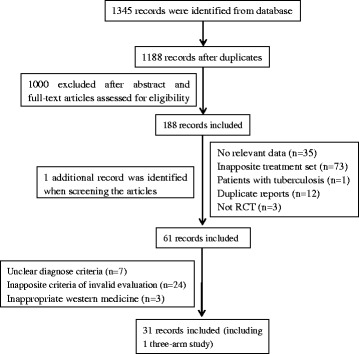
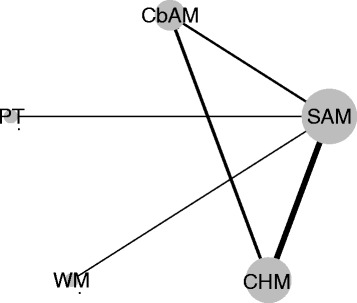
We comprehensively reviewed literature including PubMed, EMBASE, Cochrane library, CBM (Chinese Biomedical Literature Database) and CNKI (China National Knowledge Infrastructure) up to May 2016, for RCT clinical research on CFS treated by acupuncture and moxibustion. Traditional direct meta-analysis was adopted to analyze the difference between AM and other treatments. Analysis was performed based on the treatment in experiment and control groups. Network meta-analysis was adopted to make comprehensive comparisons between any two kinds of treatments. The primary outcome was total effective rate, while relative risks (RR) and 95% confidence intervals (CI) were used as the final pooled statistics.
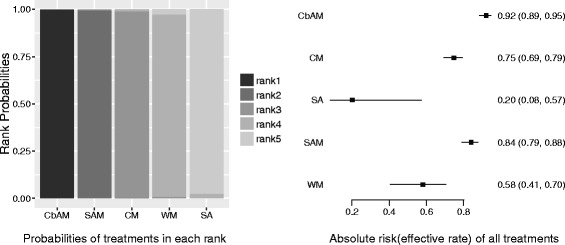
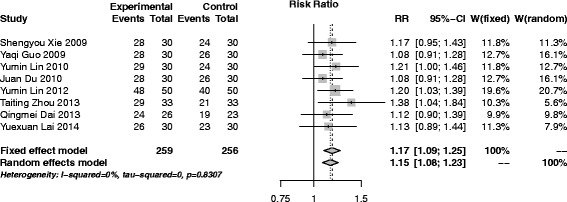
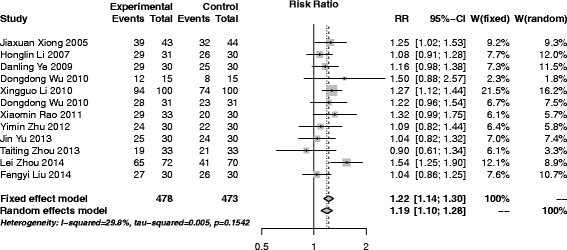
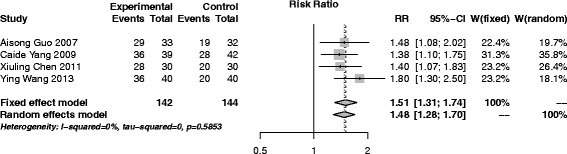
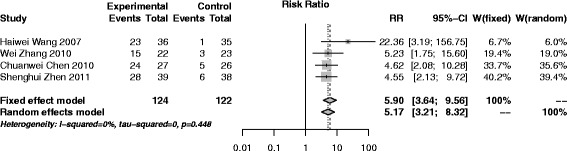
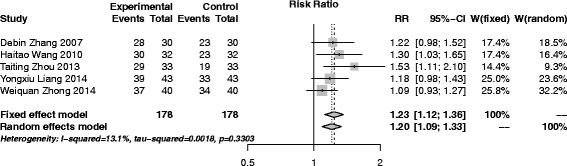
A total of 31 randomized controlled trials (RCTs) were enrolled in analyses. In traditional direct meta-analysis, we found that in comparison to Chinese herbal medicine, CbAM (combined acupuncture and moxibustion, which meant two or more types of acupuncture and moxibustion were adopted) had a higher total effective rate (RR (95% CI), 1.17 (1.09 ~ 1.25)). Compared with Chinese herbal medicine, western medicine and sham-acupuncture, SAM (single acupuncture or single moxibustion) had a higher total effective rate, with RR (95% CI) of 1.22 (1.14 ~ 1.30), 1.51 (1.31-1.74), 5.90 (3.64-9.56). In addition, compared with SAM, CbAM had a higher total effective rate (RR (95% CI), 1.23 (1.12 ~ 1.36)). In network meta-analyses, similar results were recorded. Subsequently, we ranked all treatments from high to low effective rate and the order was CbAM, SAM, Chinese herbal medicine, western medicine and sham-acupuncture.
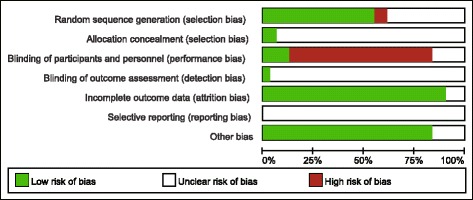
In the treatment of CFS, CbAM and SAM may have better effect than other treatments. However, the included trials have relatively poor quality, hence high quality studies are needed to confirm our finding.
慢性疲劳综合征(CFS)的病因尚不明确,其治疗仍是一个重大问题。中医领域存在大量关于针灸治疗CFS的文献。但由于缺乏全面且基于循证医学的证据来消除疑虑,其治疗效果也存在一定质疑。本研究系统评价了针灸治疗CFS的有效性,并阐明了其与中药、西药及假针灸之间的差异。
我们全面检索了截至2016年5月的文献,包括PubMed、EMBASE、Cochrane图书馆、中国生物医学文献数据库(CBM)和中国知网(CNKI),以获取关于针灸治疗CFS的随机对照试验(RCT)临床研究。采用传统直接Meta分析来分析针灸与其他治疗方法之间的差异。分析基于试验组和对照组的治疗情况进行。采用网状Meta分析对任意两种治疗方法进行全面比较。主要结局指标为总有效率,最终汇总统计量采用相对危险度(RR)和95%置信区间(CI)。
共有31项随机对照试验纳入分析。在传统直接Meta分析中,我们发现与中药相比,联合针灸(CbAM,即采用两种或更多种针灸方式)的总有效率更高(RR(95%CI),1.17(1.09~1.25))。与中药、西药及假针灸相比,单针或单灸(SAM)的总有效率更高,RR(95%CI)分别为1.22(1.14~1.30)、1.51(1.31 - 1.74)、5.90(3.64 - 9.56)。此外,与SAM相比,CbAM的总有效率更高(RR(95%CI),1.23(1.12~1.36))。在网状Meta分析中,记录到了相似的结果。随后,我们将所有治疗方法按有效率从高到低排序,顺序为CbAM、SAM、中药、西药和假针灸。
在CFS的治疗中,CbAM和SAM可能比其他治疗方法效果更好。然而纳入的试验质量相对较差,因此需要高质量研究来证实我们的发现。