Kovács-Öller Tamás, Debertin Gábor, Balogh Márton, Ganczer Alma, Orbán József, Nyitrai Miklós, Balogh Lajos, Kántor Orsolya, Völgyi Béla
Department of Experimental Zoology and Neurobiology, University of PécsPécs, Hungary; János Szentágothai Research CenterPécs, Hungary; Retinal Electrical Synapses Research Group, Hungarian Academy of Sciences (MTA-PTE NAP B)Pécs, Hungary.
János Szentágothai Research CenterPécs, Hungary; Department of Biophysics, University of PécsPécs, Hungary; High-Field Terahertz Research Group, Hungarian Academy of Sciences (MTA-PTE)Pécs, Hungary.
Front Cell Neurosci. 2017 Mar 9;11:65. doi: 10.3389/fncel.2017.00065. eCollection 2017.
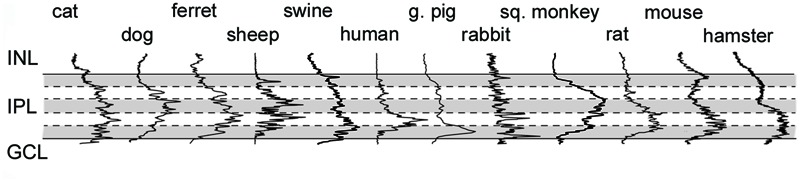
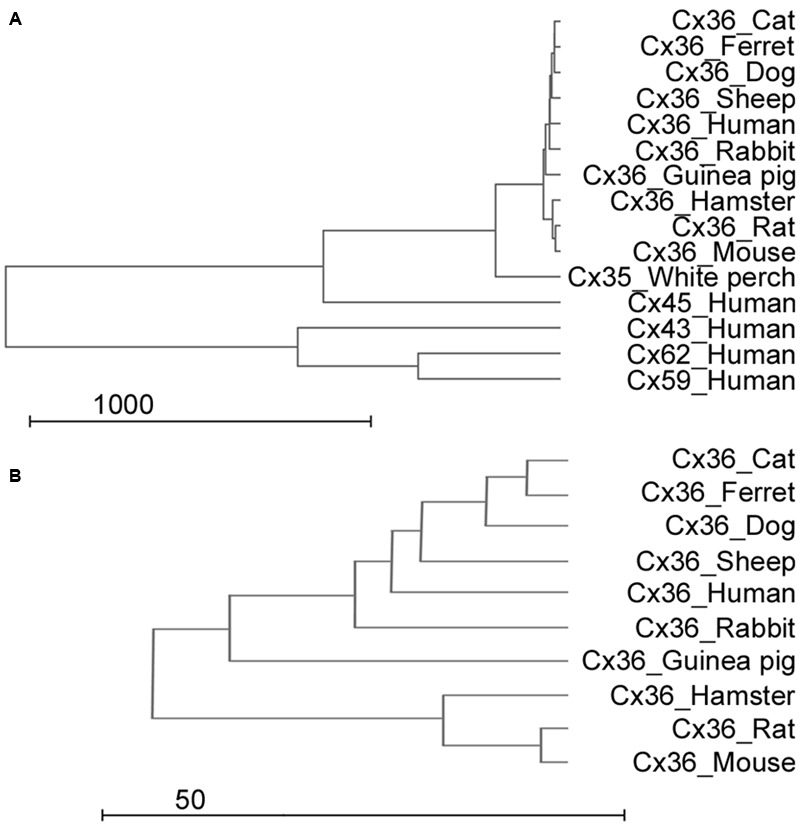
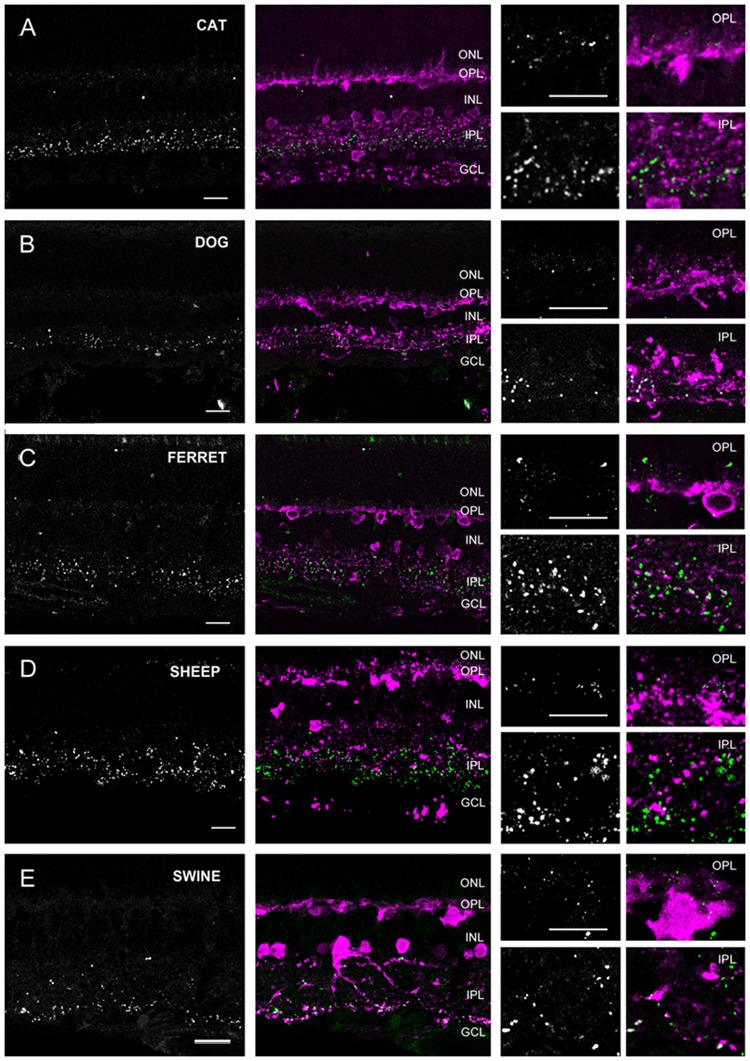
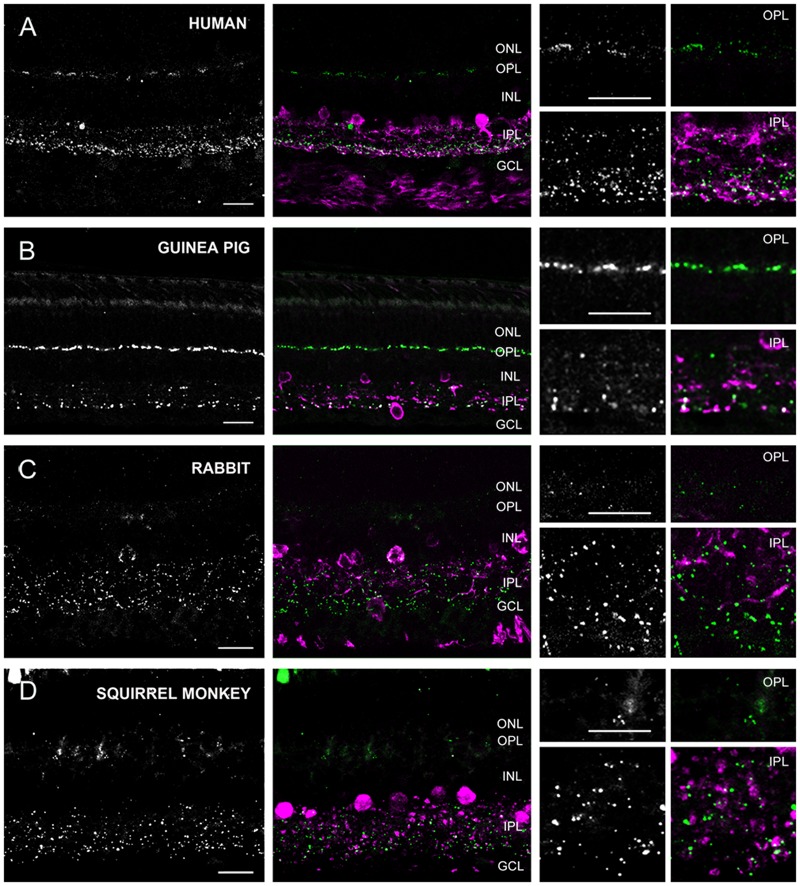
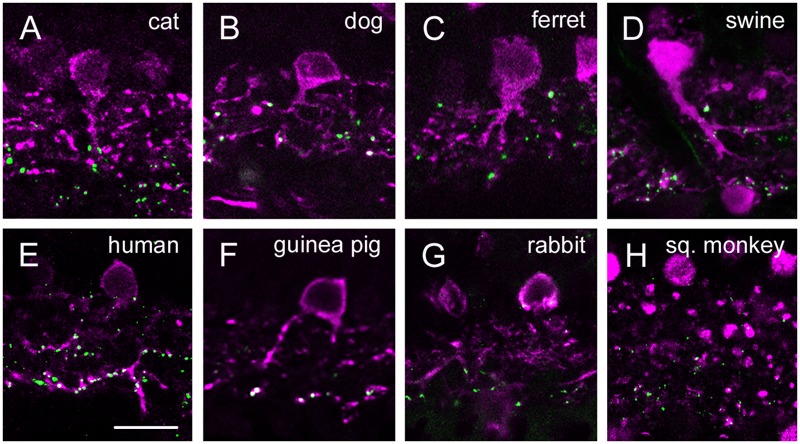
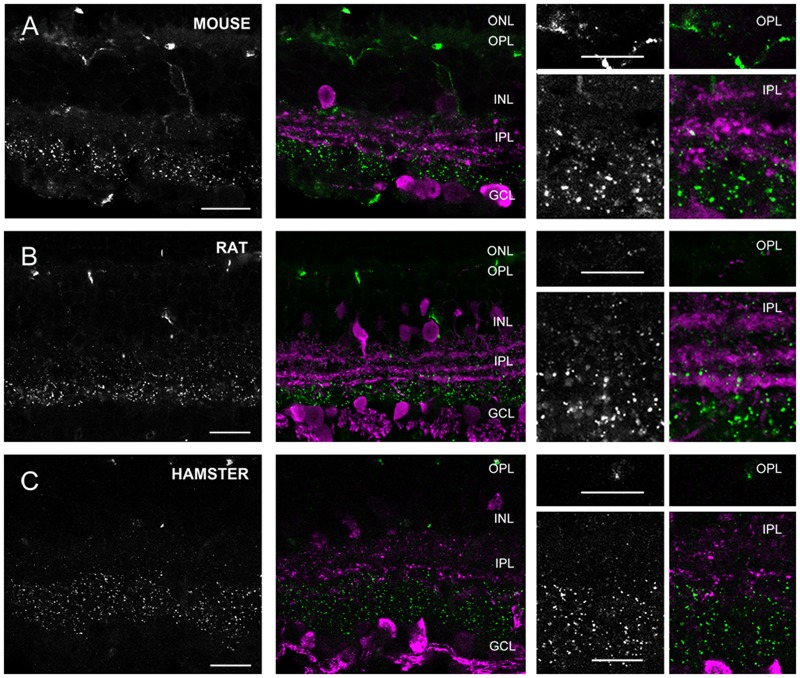
Much knowledge about interconnection of human retinal neurons is inferred from results on animal models. Likewise, there is a lack of information on human retinal electrical synapses/gap junctions (GJ). Connexin36 (Cx36) forms GJs in both the inner and outer plexiform layers (IPL and OPL) in most species including humans. However, a comparison of Cx36 GJ distribution in retinas of humans and popular animal models has not been presented. To this end a multiple-species comparison was performed in retinas of 12 mammals including humans to survey the Cx36 distribution. Areas of retinal specializations were avoided (e.g., fovea, visual streak, area centralis), thus observed Cx36 distribution differences were not attributed to these species-specific architecture of central retinal areas. Cx36 was expressed in both synaptic layers in all examined retinas. Cx36 plaques displayed an inhomogenous IPL distribution favoring the ON sublamina, however, this feature was more pronounced in the human, swine and guinea pig while it was less obvious in the rabbit, squirrel monkey, and ferret retinas. In contrast to the relative conservative Cx36 distribution in the IPL, the labels in the OPL varied considerably among mammals. In general, OPL plaques were rare and rather small in rod dominant carnivores and rodents, whereas the human and the cone rich guinea pig retinas displayed robust Cx36 labels. This survey presented that the human retina displayed two characteristic features, a pronounced ON dominance of Cx36 plaques in the IPL and prevalent Cx36 plaque conglomerates in the OPL. While many species showed either of these features, only the guinea pig retina shared both. The observed similarities and subtle differences in Cx36 plaque distribution across mammals do not correspond to evolutionary distances but may reflect accomodation to lifestyles of examined species.
关于人类视网膜神经元相互连接的许多知识是从动物模型的研究结果中推断出来的。同样,关于人类视网膜电突触/缝隙连接(GJ)的信息也很缺乏。连接蛋白36(Cx36)在包括人类在内的大多数物种的内、外丛状层(IPL和OPL)中形成缝隙连接。然而,尚未对人类和常用动物模型视网膜中Cx36缝隙连接的分布进行比较。为此,对包括人类在内的12种哺乳动物的视网膜进行了多物种比较,以研究Cx36的分布。避开了视网膜特化区域(如中央凹、视条纹、中央区),因此观察到的Cx36分布差异并非归因于这些视网膜中央区域的物种特异性结构。在所有检查的视网膜中,Cx36在两个突触层均有表达。Cx36斑块在IPL中的分布不均匀,偏向于ON亚层,然而,这一特征在人类、猪和豚鼠中更为明显,而在兔、松鼠猴和雪貂视网膜中则不太明显。与IPL中相对保守的Cx36分布不同,OPL中的标记在哺乳动物之间差异很大。一般来说,在以杆细胞为主的食肉动物和啮齿动物中,OPL斑块很少且相当小,而人类和富含视锥细胞的豚鼠视网膜则显示出强大的Cx36标记。这项研究表明,人类视网膜呈现出两个特征,IPL中Cx36斑块明显以ON为主,OPL中普遍存在Cx36斑块聚集。虽然许多物种表现出这些特征中的一种,但只有豚鼠视网膜同时具备这两种特征。在哺乳动物中观察到的Cx36斑块分布的相似性和细微差异并不对应于进化距离,而是可能反映了所研究物种对生活方式的适应。