Caponnetto Pasquale, Maglia Marilena, Cannella Maria Concetta, Inguscio Lucio, Buonocore Mariachiara, Scoglio Claudio, Polosa Riccardo, Vinci Valeria
Centro per la Prevenzione e Cura del Tabagismo, Azienda Ospedaliero-Universitaria "Policlinico-V. Emanuele," Università di CataniaCatania, Italy; Institute of Internal Medicine, G. Rodolico Hospital, Azienda Ospedaliero-Universitaria "Policlinico-V. Emanuele," Università di CataniaCatania, Italy; Institute for Social Marketing, University of StirlingStirling, UK.
Centro per la Prevenzione e Cura del Tabagismo, Azienda Ospedaliero-Universitaria "Policlinico-V. Emanuele," Università di Catania Catania, Italy.
Front Psychol. 2017 Mar 9;8:127. doi: 10.3389/fpsyg.2017.00127. eCollection 2017.
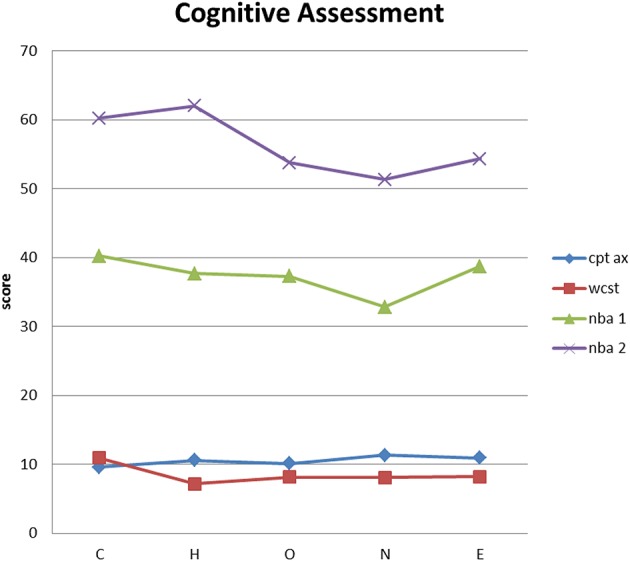
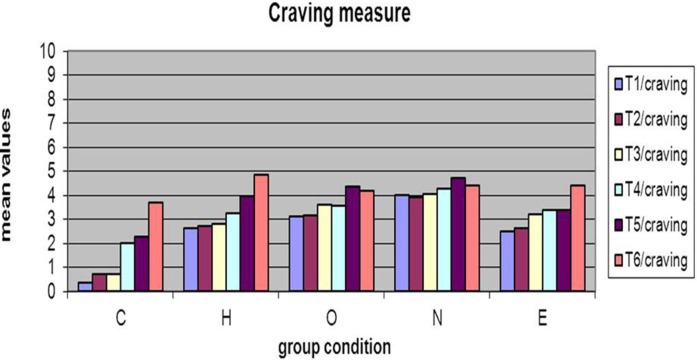
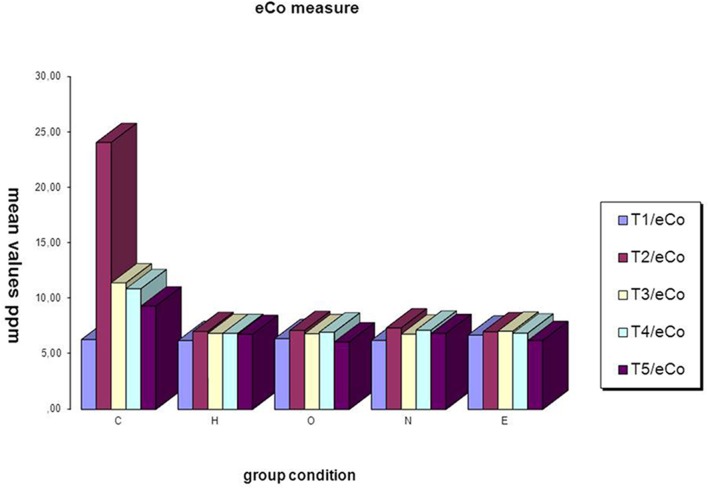
Most electronic-cigarettes (e-cigarette) are designed to look like traditional cigarettes and simulate the visual, sensory, and behavioral aspects of smoking traditional cigarettes. This research aimed to explore whether different e-cigarette models and smokers' usual classic cigarettes can impact on cognitive performances, craving and gesture. The study is randomized cross-over trial designed to compare cognitive performances, craving, and gesture in subjects who used first generation electronic cigarettes, second generation electronic cigarettes with their usual cigarettes. (Trial registration: ClinicalTrials.gov number NCT01735487). Cognitive performance was not affected by "group condition." repeated measures analyses showed a significant time effect, indicating an increase of participants' current craving measure in group "usual classic cigarettes (group C)," "disposable cigalike electronic cigarette loaded with cartridges with 24 mg nicotine (group H), second generation electronic cigarette, personal vaporizer model Ego C, loaded with liquid nicotine 24 mg (group E). Measures of gesture not differ over the course of the experiment for all the products under investigation All cognitive measures attention, executive function and working memory are not influenced by the different e-cigarette and gender showing that in general electronics cigarettes could become a strong support also from a cognitive point of view for those who decide to quit smoking. It seems that not only craving and other smoke withdrawal symptoms but also cognitive performance is not only linked to the presence of nicotine; this suggests that the reasons behind the dependence and the related difficulty to quit smoking needs to be looked into also other factors like the gesture.
www.ClinicalTrials.gov, identifier NCT01735487.
大多数电子烟的设计看起来像传统香烟,并模拟吸传统香烟的视觉、感官和行为方面。本研究旨在探讨不同型号的电子烟和吸烟者常用的传统香烟是否会对认知表现、烟瘾和手势产生影响。该研究是一项随机交叉试验,旨在比较使用第一代电子烟、第二代电子烟与他们常用香烟的受试者的认知表现、烟瘾和手势。(试验注册:ClinicalTrials.gov编号NCT01735487)。认知表现不受“分组情况”影响。重复测量分析显示出显著的时间效应,表明在“常用传统香烟组(C组)”、“装有24毫克尼古丁烟弹的一次性类似香烟电子烟组(H组)”、“第二代电子烟、个人雾化器型号Ego C、装有24毫克液体尼古丁组(E组)”中,参与者当前的烟瘾测量值有所增加。在所研究的所有产品中,手势测量在实验过程中没有差异。所有认知测量指标(注意力、执行功能和工作记忆)不受不同电子烟和性别的影响,这表明总体而言,电子烟从认知角度来看也可能成为那些决定戒烟者的有力支持。似乎不仅烟瘾和其他戒烟症状,而且认知表现不仅与尼古丁的存在有关;这表明需要研究除尼古丁之外的其他因素,如手势,来探究成瘾背后的原因以及相关戒烟困难。