Adriaens Karolien, Van Gucht Dinska, Declerck Paul, Baeyens Frank
Faculty of Psychology and Educational Sciences, KU Leuven-University of Leuven, Tiensestraat 102, 3000 Leuven, Belgium.
Department of Pharmaceutical and Pharmacological Sciences, KU Leuven-University of Leuven, O&N II Herestraat 49, 3000 Leuven, Belgium.
Int J Environ Res Public Health. 2014 Oct 29;11(11):11220-48. doi: 10.3390/ijerph111111220.
Smoking reduction remains a pivotal issue in public health policy, but quit rates obtained with traditional quit-smoking therapies remain disappointingly low. Tobacco Harm Reduction (THR), aiming at less harmful ways of consuming nicotine, may provide a more effective alternative. One promising candidate for THR are electronic cigarettes (e-cigs). The aim of this study was to investigate the efficacy of second-generation e-cigs both in terms of acute craving-reduction in the lab and in terms of smoking reduction and experienced benefits/complaints in an eight-month Randomized Controlled Trial (RCT).
RCT with three arms.
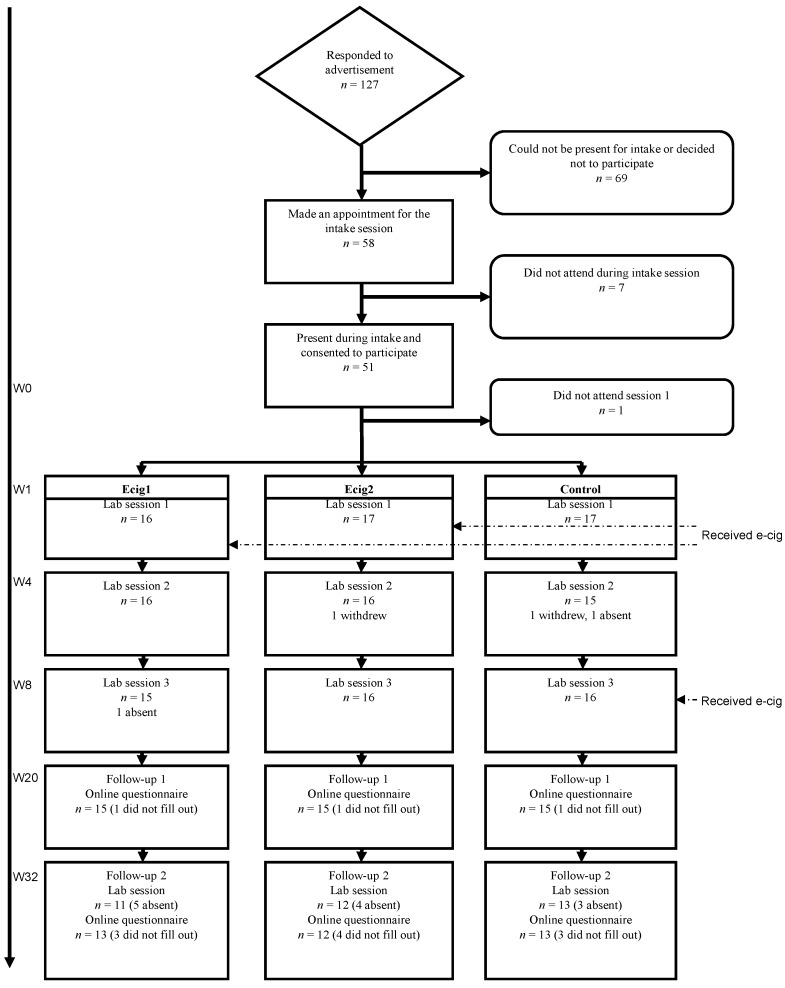
Participants (N = 48) unwilling to quit smoking were randomized into two e-cig groups and one control group. During three lab sessions (over two months) participants, who had been abstinent for four hours, vaped/smoked for five minutes, after which we monitored the effect on craving and withdrawal symptoms. eCO and saliva cotinine levels were also measured. In between lab sessions, participants in the e-cig groups could use e-cigs or smoke ad libitum, whereas the control group could only smoke. After the lab sessions, the control group also received an e-cig. The RCT included several questionnaires, which repeatedly monitored the effect of ad libitum e-cig use on the use of tobacco cigarettes and the experienced benefits/complaints up to six months after the last lab session.
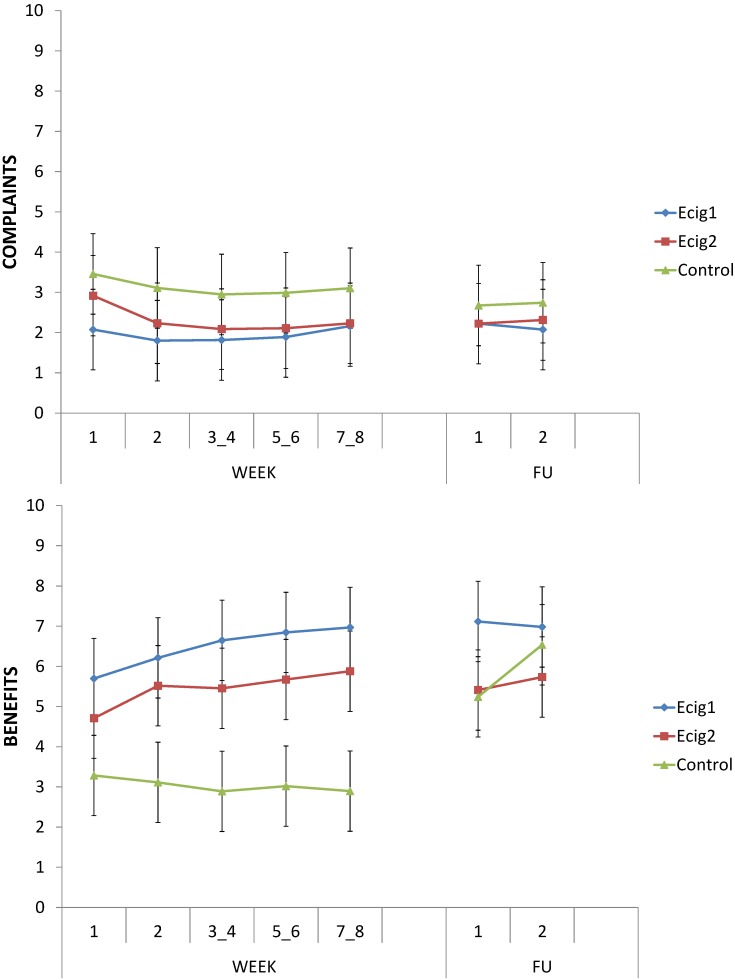
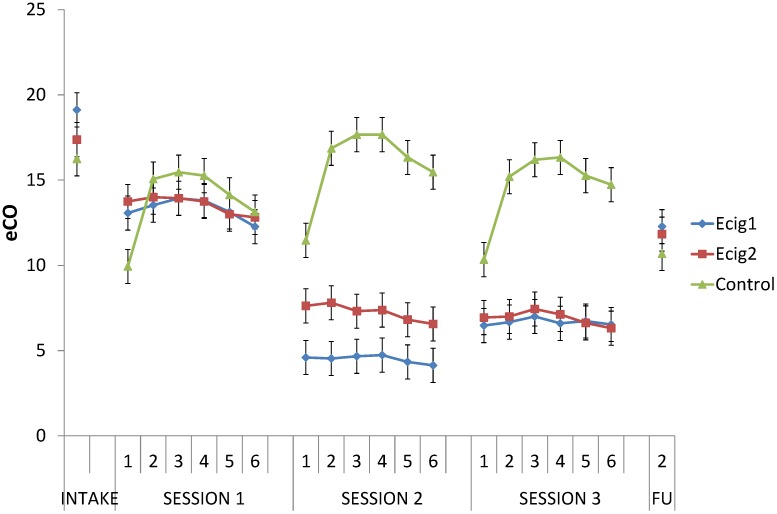
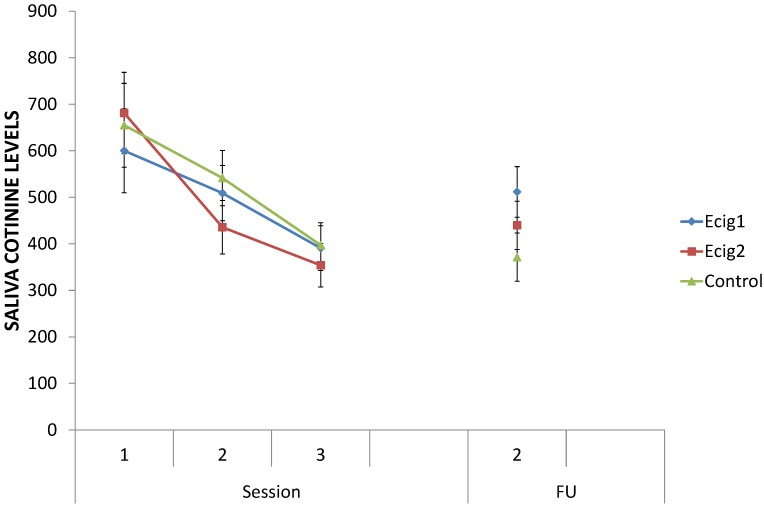
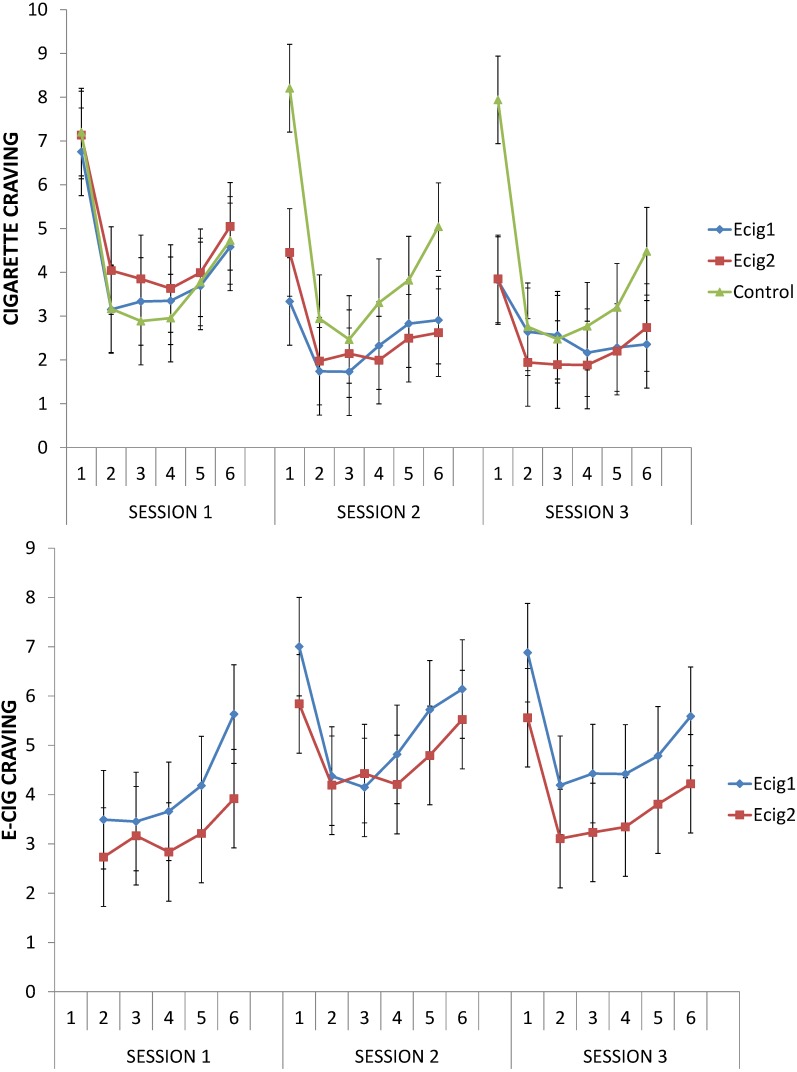
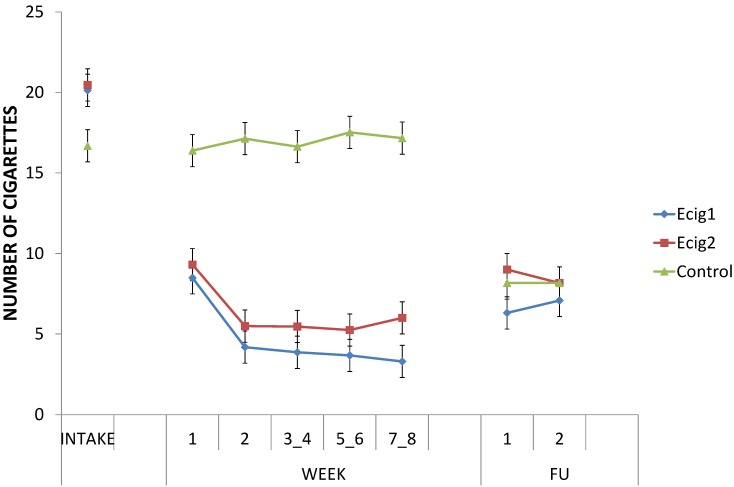
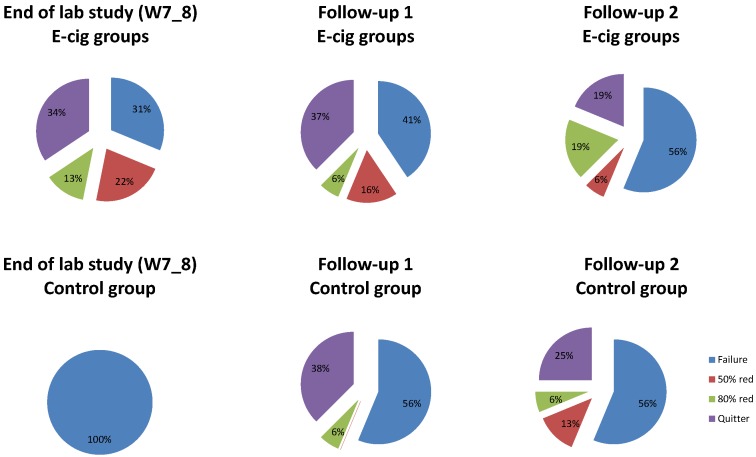
From the first lab session on, e-cig use after four hours of abstinence resulted in a reduction in cigarette craving which was of the same magnitude as when a cigarette was smoked, while eCO was unaffected. After two months, we observed that 34% of the e-cig groups had stopped smoking tobacco cigarettes, versus 0% of the control group. After five months, the e-cig groups demonstrated a total quit-rate of 37%, whereas the control group showed a quit rate of 38% three months after initiating e-cig use. At the end of the eight-month study, 19% of the e-cig groups and 25% of the control group were totally abstinent from smoking, while an overall reduction of 60% in the number of cigarettes smoked per day was observed (compared to intake). eCO levels decreased, whereas cotinine levels were the same in all groups at each moment of measurement. Reported benefits far outweighed the reported complaints.
In a series of controlled lab sessions with e-cig naïve tobacco smokers, second generation e-cigs were shown to be immediately and highly effective in reducing abstinence induced cigarette craving and withdrawal symptoms, while not resulting in increases in eCO. Remarkable (>50 pc) eight-month reductions in, or complete abstinence from tobacco smoking was achieved with the e-cig in almost half (44%) of the participants.
减少吸烟仍然是公共卫生政策中的一个关键问题,但传统戒烟疗法的戒烟率仍然低得令人失望。旨在采用危害较小的方式摄入尼古丁的烟草危害降低(THR)可能提供一种更有效的替代方法。电子烟(e-cigs)是THR的一个有前景的候选产品。本研究的目的是在实验室中调查第二代电子烟在急性减少渴望方面的效果,以及在一项为期八个月的随机对照试验(RCT)中在减少吸烟和体验到的益处/不适方面的效果。
有三个组的随机对照试验。
48名不愿戒烟的参与者被随机分为两个电子烟组和一个对照组。在三个实验室环节(持续两个月)中,已经戒烟四小时的参与者吸食/抽了五分钟,之后我们监测对渴望和戒断症状的影响。还测量了呼气一氧化碳(eCO)和唾液可替宁水平。在实验室环节之间,电子烟组的参与者可以随意使用电子烟或吸烟,而对照组只能吸烟。在实验室环节之后,对照组也收到了一支电子烟。该随机对照试验包括几份问卷,这些问卷反复监测了随意使用电子烟对香烟使用的影响以及在最后一次实验室环节后长达六个月内体验到的益处/不适。
从第一个实验室环节开始,戒烟四小时后使用电子烟导致对香烟的渴望减少,其程度与吸一支烟时相同,而呼气一氧化碳不受影响。两个月后,我们观察到电子烟组中有34%的人停止吸烟,而对照组为0%。五个月后,电子烟组的总戒烟率为37%,而对照组在开始使用电子烟三个月后的戒烟率为38%。在为期八个月的研究结束时,电子烟组中有19%的人完全戒烟,对照组中有25%的人完全戒烟,同时观察到每天吸烟数量总体减少了60%(与摄入量相比)。呼气一氧化碳水平下降,而在每个测量时刻所有组的可替宁水平相同。报告的益处远远超过报告的不适。
在一系列针对初次使用电子烟的吸烟者的对照实验室环节中,第二代电子烟被证明在减少戒烟引起的香烟渴望和戒断症状方面立即且非常有效,同时不会导致呼气一氧化碳增加。几乎一半(44%)的参与者使用电子烟在八个月内实现了显著(>50%)的吸烟减少或完全戒烟。