Messina Valeria, Buccione Carla, Marotta Giulia, Ziccheddu Giovanna, Signore Michele, Mattia Gianfranco, Puglisi Rossella, Sacchetti Benedetto, Biancone Livia, Valtieri Mauro
Department of Infectious, Parasitic and Immune-Dependent Diseases, Istituto Superiore di Sanità, Rome, Italy.
Department of Hematology, Oncology and Molecular Medicine, Istituto Superiore di Sanità, Rome, Italy.
Stem Cells Int. 2017;2017:8482326. doi: 10.1155/2017/8482326. Epub 2017 Feb 28.
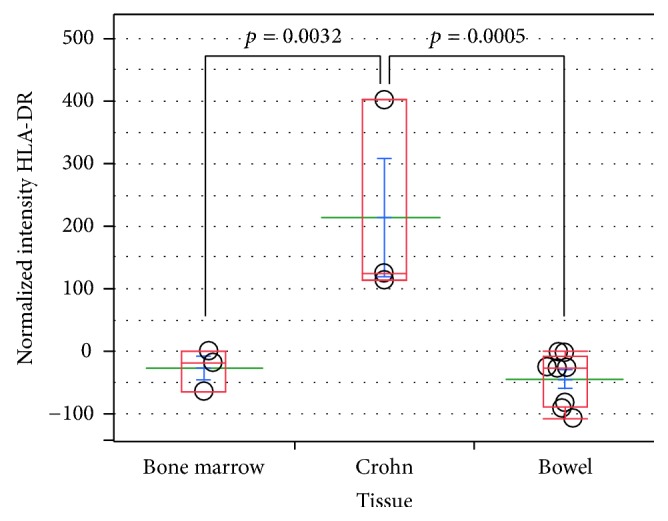
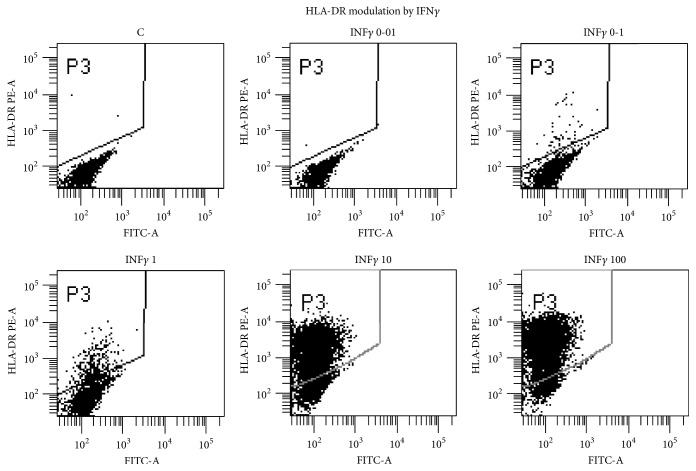
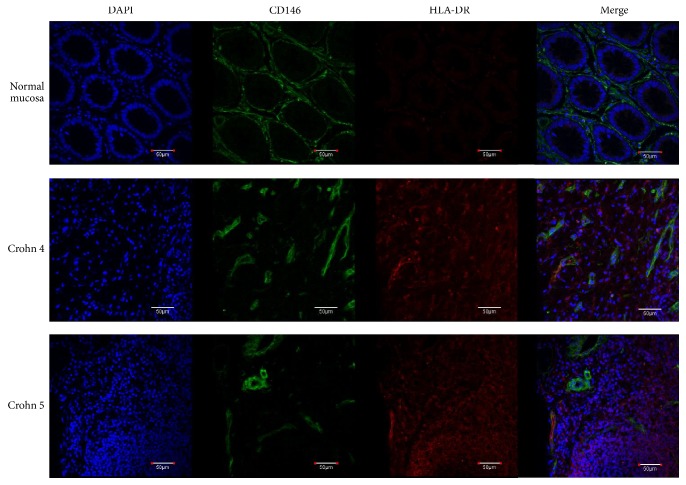
Mesenchymal stromal cells (MSCs), first found in bone marrow (BM), are the structural architects of all organs, participating in most biological functions. MSCs possess tissue-specific signatures that allow their discrimination according to their origin and location. Among their multiple functions, MSCs closely interact with immune cells, orchestrating their activity to maintain overall homeostasis. The phenotype of tissue MSCs residing in the bowel overlaps with myofibroblasts, lining the bottom walls of intestinal crypts (pericryptal) or interspersed within intestinal submucosa (intercryptal). In Crohn's disease, intestinal MSCs are tightly stacked in a chronic inflammatory milieu, which causes their enforced expression of Class II major histocompatibility complex (MHC). The absence of Class II MHC is a hallmark for immune-modulator and tolerogenic properties of normal MSCs and, vice versa, the expression of HLA-DR is peculiar to antigen presenting cells, that is, immune-activator cells. Interferon (IFN) is responsible for induction of Class II MHC expression on intestinal MSCs. The reversal of myofibroblasts/MSCs from an immune-modulator to an activator phenotype in Crohn's disease results in the formation of a fibrotic tube subverting the intestinal structure. Epithelial metaplastic areas in this context can progress to dysplasia and cancer.
间充质基质细胞(MSCs)最早在骨髓(BM)中被发现,是所有器官的结构构建者,参与大多数生物学功能。MSCs具有组织特异性特征,可根据其起源和位置进行区分。在其多种功能中,MSCs与免疫细胞密切相互作用,协调它们的活动以维持整体内环境稳定。存在于肠道中的组织MSCs的表型与肌成纤维细胞重叠,肌成纤维细胞排列在肠隐窝底部壁(隐窝周围)或散布在肠黏膜下层(隐窝间)。在克罗恩病中,肠道MSCs紧密堆积在慢性炎症环境中,这导致它们强制性表达II类主要组织相容性复合体(MHC)。II类MHC的缺失是正常MSCs免疫调节和致耐受性特性的标志,反之,HLA - DR的表达是抗原呈递细胞(即免疫激活细胞)所特有的。干扰素(IFN)负责诱导肠道MSCs上II类MHC的表达。在克罗恩病中,肌成纤维细胞/MSCs从免疫调节表型转变为激活表型会导致形成破坏肠道结构的纤维化管。在这种情况下,上皮化生区域可进展为发育异常和癌症。