Palmela Carolina, Velho Sónia, Agostinho Lisa, Branco Francisco, Santos Marta, Santos Maria Pia Costa, Oliveira Maria Helena, Strecht João, Maio Rui, Cravo Marília, Baracos Vickie E
Division of Gastroenterology, Surgical Department, Hospital Beatriz Ângelo, Loures, Portugal .
Nutrition Department, Hospital Beatriz Ângelo, Loures, Portugal .
J Gastric Cancer. 2017 Mar;17(1):74-87. doi: 10.5230/jgc.2017.17.e8. Epub 2017 Mar 14.
Neoadjuvant chemotherapy has been shown to improve survival in locally advanced gastric cancer, but it is associated with significant toxicity. Sarcopenia and sarcopenic obesity have been studied in several types of cancers and have been reported to be associated with higher chemotherapy toxicity and morbi-mortality. The aim of this study was to assess the prevalence of sarcopenia/sarcopenic obesity in patients with gastric cancer, as well as its association with chemotherapy toxicity and long-term outcomes.
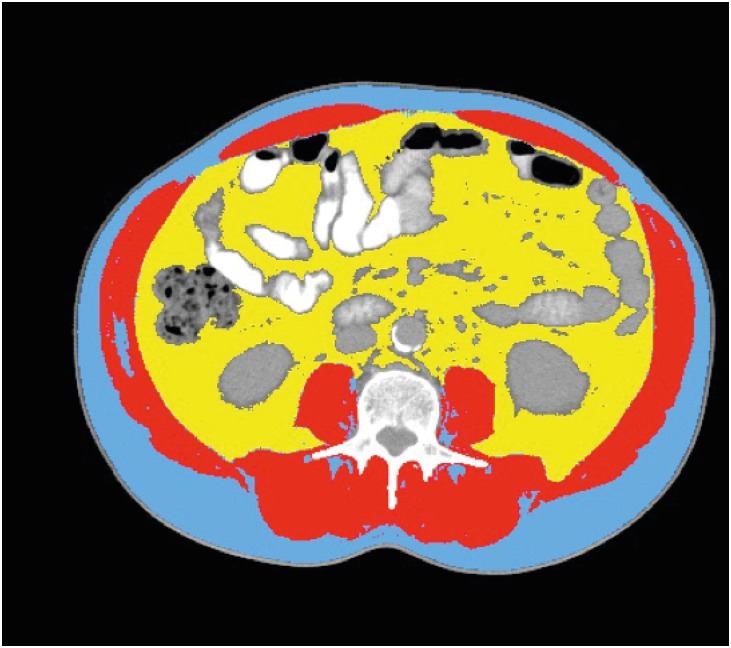
A retrospective analysis was performed using an academic cancer center patient cohort diagnosed with locally advanced gastric cancer between January 2012 and December 2014 and treated with neoadjuvant chemotherapy. We analyzed body composition (skeletal muscle and visceral fat index) in axial computed tomography images.
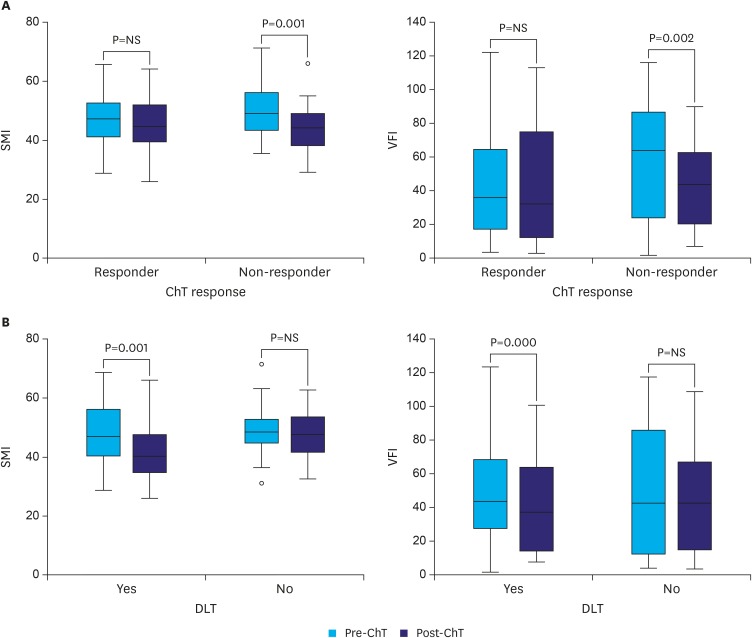
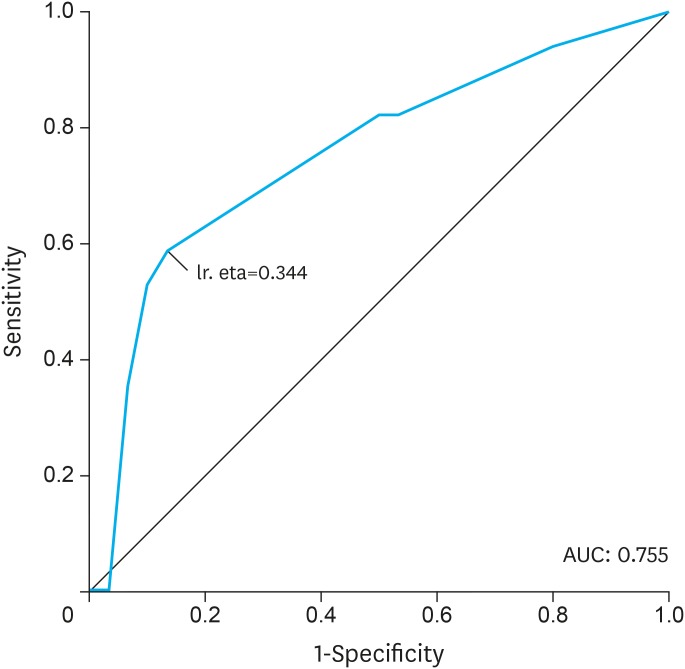
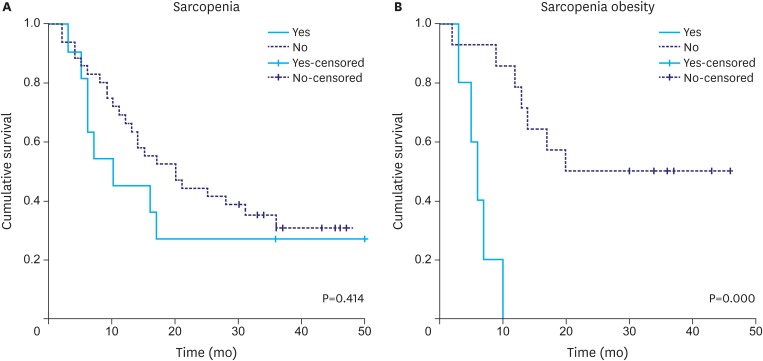
A total of 48 patients met the inclusion criteria. The mean age was 68±10 years, and 33 patients (69%) were men. Dose-limiting toxicity was observed in 22 patients (46%), and treatment was terminated early owing to toxicity in 17 patients (35%). Median follow-up was 17 months. Sarcopenia and sarcopenic obesity were found at diagnosis in 23% and 10% of patients, respectively. We observed an association between termination of chemotherapy and both sarcopenia (P=0.069) and sarcopenic obesity (P=0.004). On multivariate analysis, the odds of treatment termination were higher in patients with sarcopenia (odds ratio=4.23; P=0.050). Patients with sarcopenic obesity showed lower overall survival (median survival of 6 months [95% confidence interval {CI}=3.9-8.5] vs. 25 months [95% CI=20.2-38.2]; log-rank test P=0.000).
Sarcopenia and sarcopenic obesity were associated with early termination of neoadjuvant chemotherapy in patients with gastric cancer; additionally, sarcopenic obesity was associated with poor survival.
新辅助化疗已被证明可提高局部晚期胃癌患者的生存率,但它与显著的毒性相关。肌肉减少症和肌肉减少性肥胖已在多种癌症类型中得到研究,据报道与更高的化疗毒性和病死亡率相关。本研究的目的是评估胃癌患者中肌肉减少症/肌肉减少性肥胖的患病率,及其与化疗毒性和长期预后的关联。
对2012年1月至2014年12月期间在一家学术癌症中心被诊断为局部晚期胃癌并接受新辅助化疗的患者队列进行回顾性分析。我们在轴向计算机断层扫描图像中分析身体成分(骨骼肌和内脏脂肪指数)。
共有48例患者符合纳入标准。平均年龄为68±10岁,33例患者(69%)为男性。22例患者(46%)观察到剂量限制性毒性,17例患者(35%)因毒性而提前终止治疗。中位随访时间为17个月。分别有23%和10%的患者在诊断时发现肌肉减少症和肌肉减少性肥胖。我们观察到化疗终止与肌肉减少症(P=0.069)和肌肉减少性肥胖(P=0.004)均有关联。多因素分析显示,肌肉减少症患者治疗终止的几率更高(比值比=4.23;P=0.050)。肌肉减少性肥胖患者的总生存期较低(中位生存期为6个月[95%置信区间{CI}=3.9-8.5],而对照组为25个月[95%CI=20.2-38.2];对数秩检验P=0.000)。
肌肉减少症和肌肉减少性肥胖与胃癌患者新辅助化疗的早期终止有关;此外,肌肉减少性肥胖与生存不良有关。