Department of Epidemiology, Biostatistics, and Occupational Health, McGill University, Montreal, Quebec, H3A 1A2, Canada.
Department of Public Health Sciences, Queen's University, Kingston, Ontario, K7L 3N6, Canada.
Int J Epidemiol. 2017 Jun 1;46(3):939-949. doi: 10.1093/ije/dyw195.
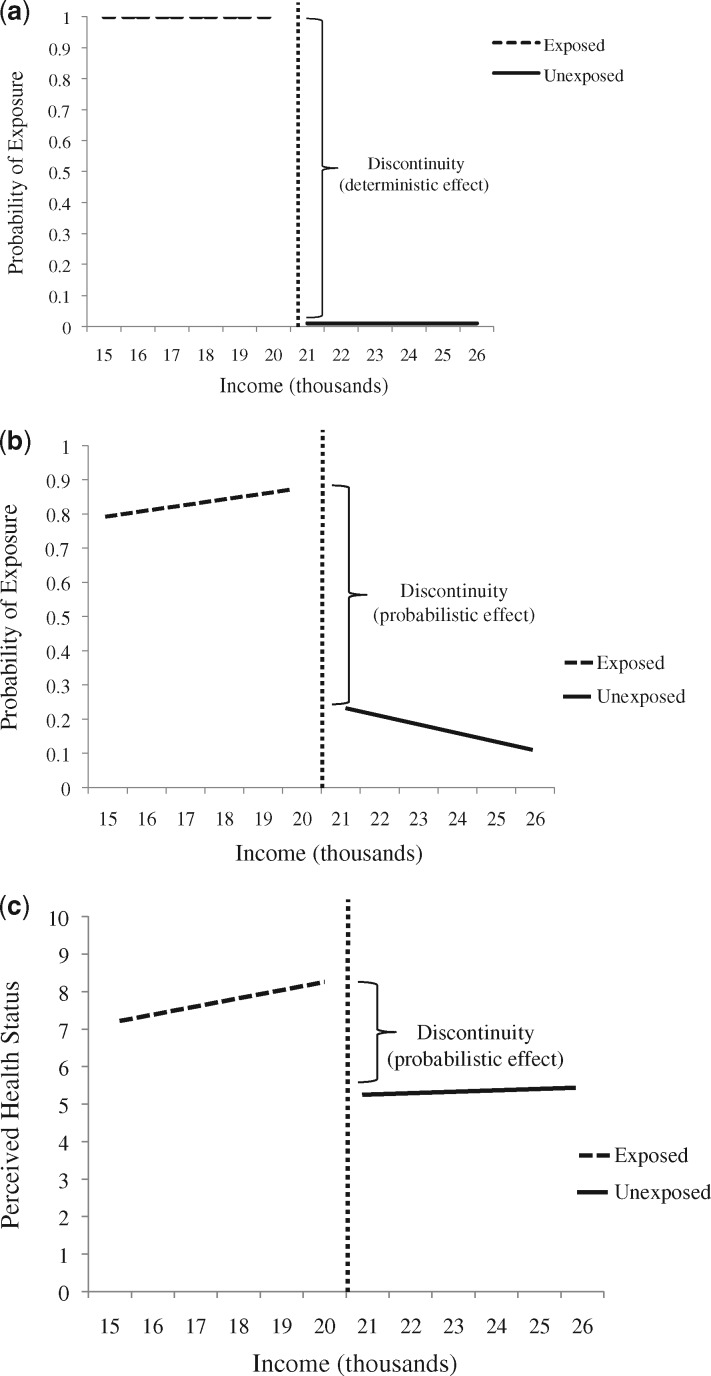
The regression discontinuity design (RDD) is a quasi-experimental approach used to avoid confounding bias in the assessment of new policies and interventions. It is applied specifically in situations where individuals are assigned to a policy/intervention based on whether they are above or below a pre-specified cut-off on a continuously measured variable, such as birth date, income or weight. The strength of the design is that, provided individuals do not manipulate the value of this variable, assignment to the policy/intervention is considered as good as random for individuals close to the cut-off. Despite its popularity in fields like economics, the RDD remains relatively unknown in epidemiology where its application could be tremendously useful.
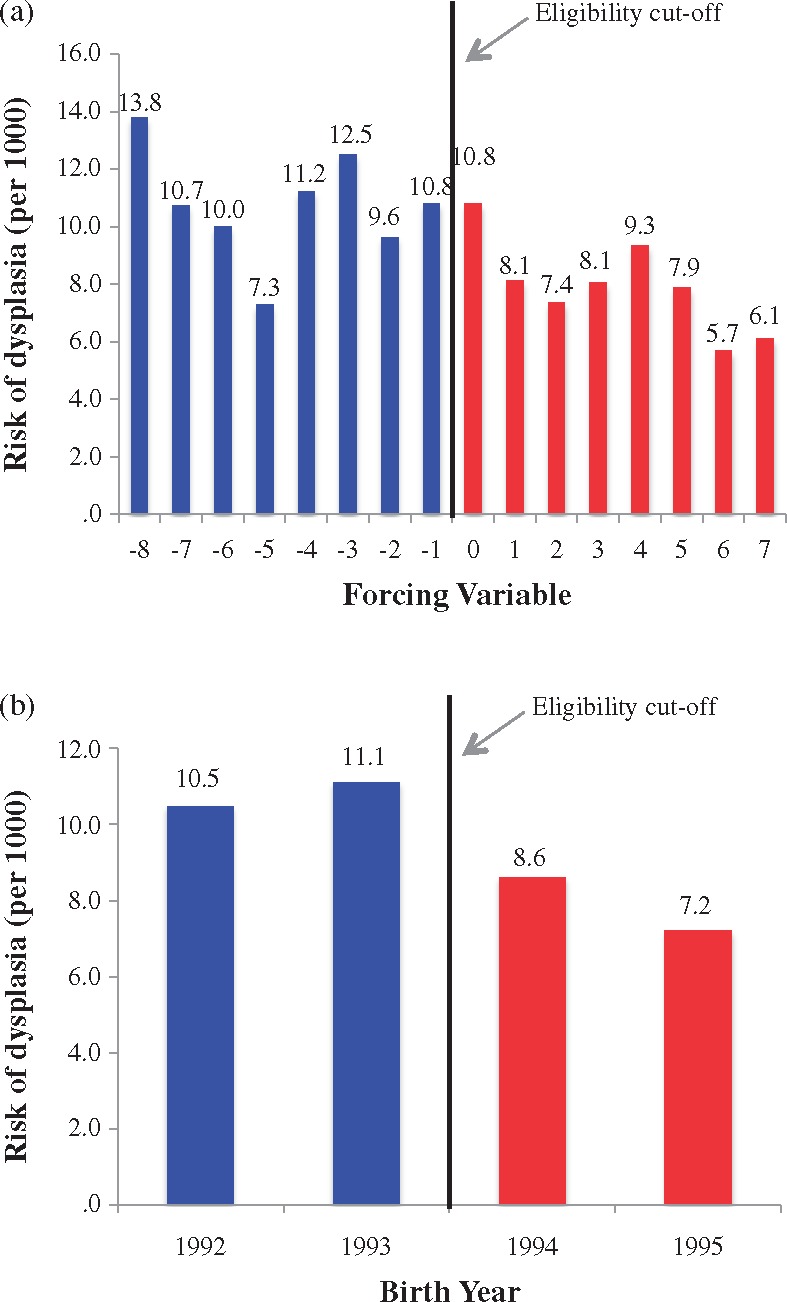
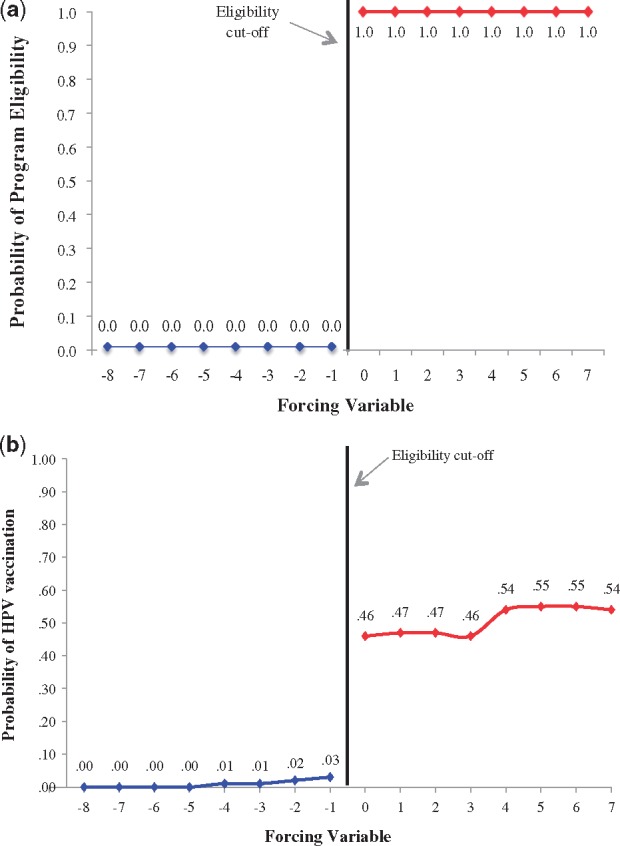
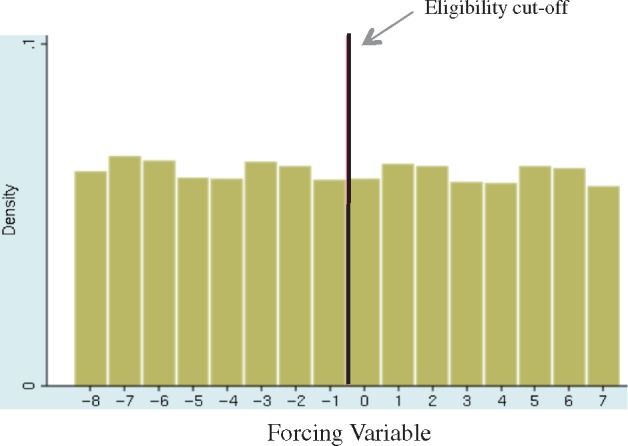
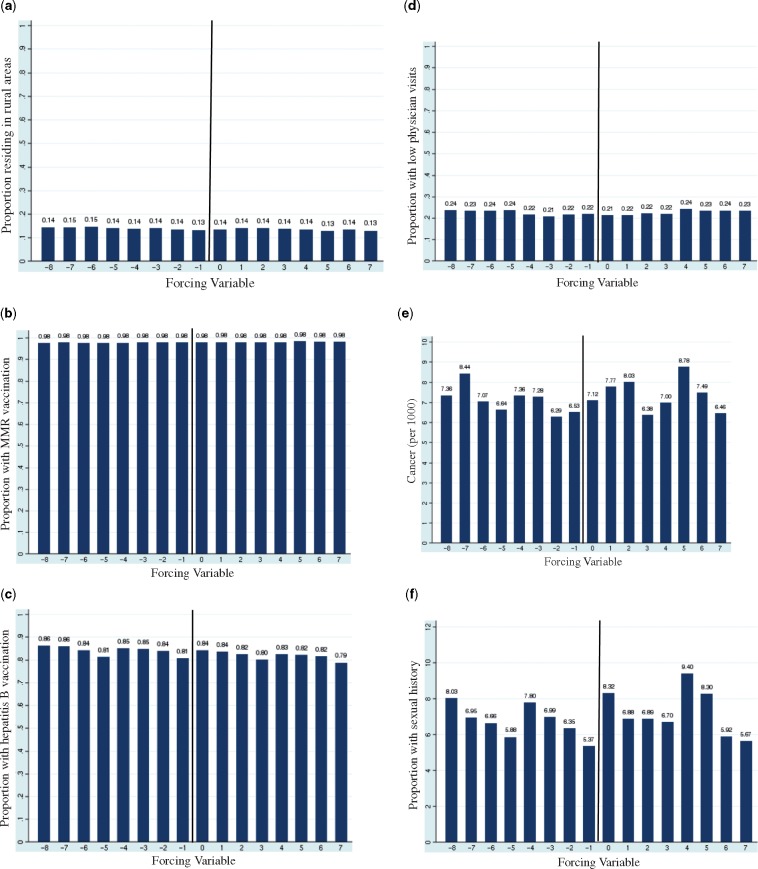
In this paper, we provide a practical introduction to the RDD for health researchers, describe four empirically testable assumptions of the design and offer strategies that can be used to assess whether these assumptions are met in a given study. For illustrative purposes, we implement these strategies to assess whether the RDD is appropriate for a study of the impact of human papillomavirus vaccination on cervical dysplasia.
We found that, whereas the assumptions of the RDD were generally satisfied in our study context, birth timing had the potential to confound our effect estimate in an unexpected way and therefore needed to be taken into account in the analysis.
Our findings underscore the importance of assessing the validity of the assumptions of this design, testing them when possible and making adjustments as necessary to support valid causal inference.
回归间断设计(RDD)是一种准实验方法,用于避免新政策和干预措施评估中的混杂偏差。它特别适用于这样的情况,即个体根据他们在连续测量变量(如出生日期、收入或体重)上的指定截止值之上或之下被分配到政策/干预措施。该设计的优势在于,只要个体不操纵该变量的值,那么对于接近截止值的个体来说,被分配到政策/干预措施就可以被认为是随机的。尽管它在经济学等领域非常流行,但在流行病学中,它的应用可能非常有用,但 RDD 仍然相对未知。
在本文中,我们为健康研究人员提供了 RDD 的实用介绍,描述了该设计的四个可经验检验的假设,并提供了可以用于评估在给定研究中这些假设是否得到满足的策略。为了说明目的,我们实施了这些策略来评估 RDD 是否适用于研究人乳头瘤病毒疫苗接种对宫颈发育不良的影响。
我们发现,虽然在我们的研究背景下,RDD 的假设通常得到满足,但出生时间有可能以意想不到的方式混淆我们的效应估计,因此需要在分析中加以考虑。
我们的研究结果强调了评估这种设计的假设有效性的重要性,在可能的情况下对其进行检验,并进行必要的调整,以支持有效的因果推断。