Department of Orthopedic Surgery, Changzheng Hospital, Second Military Medical University, 415 Fengyang Road, Shanghai, 200003, P. R. China.
Sci Rep. 2017 Mar 24;7(1):416. doi: 10.1038/s41598-017-00405-3.
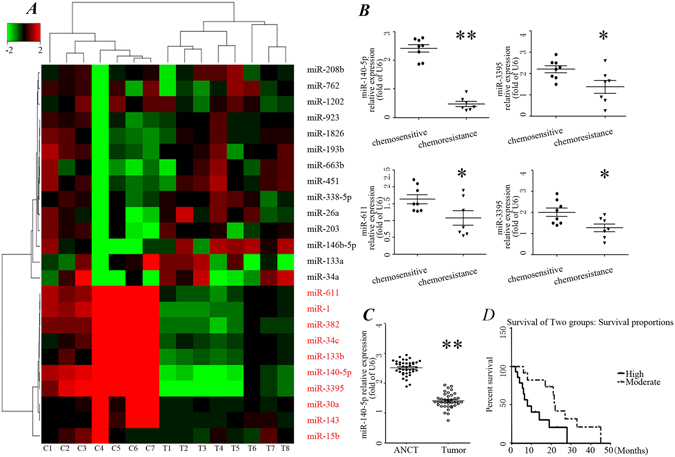
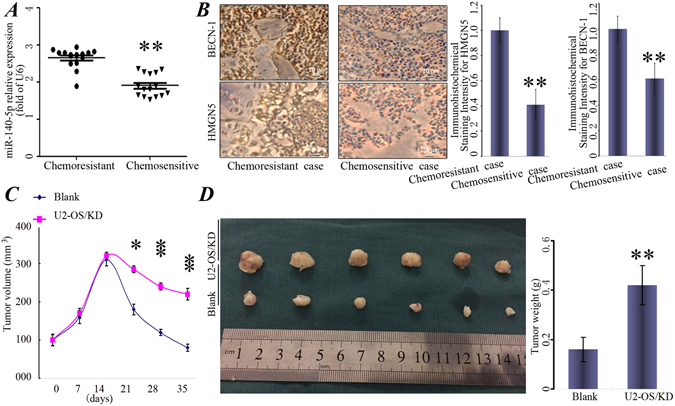
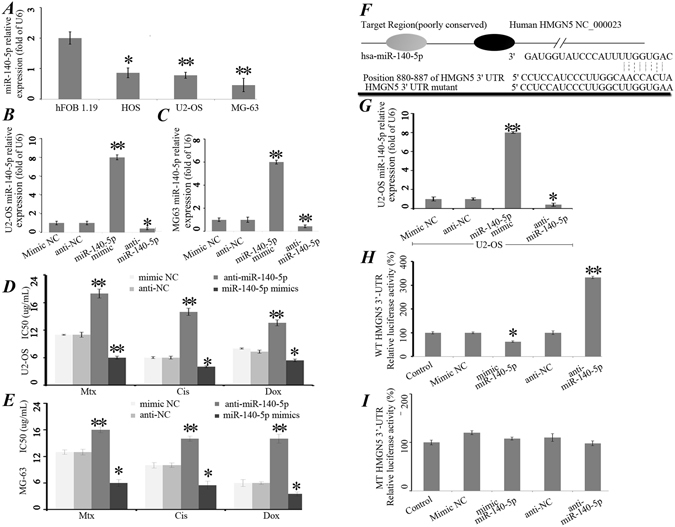
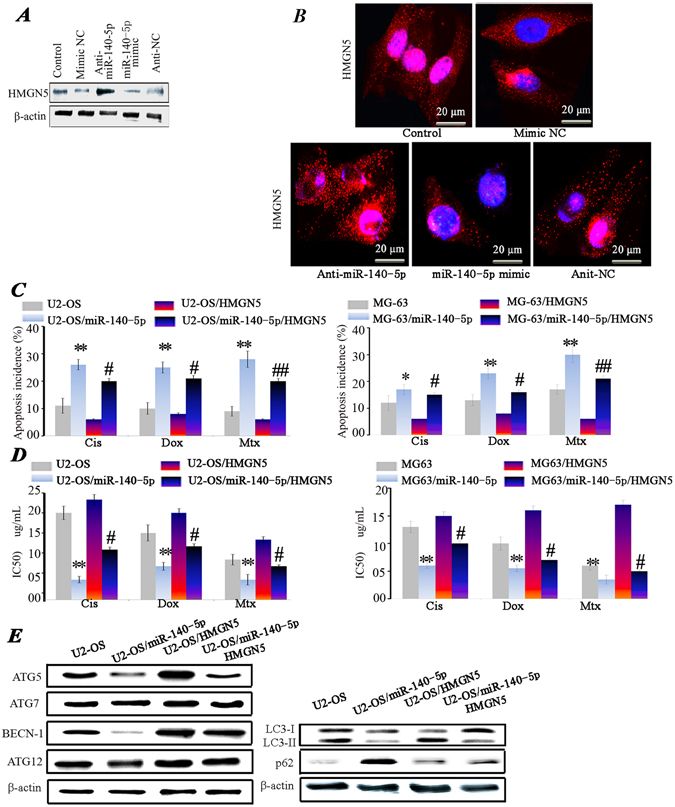
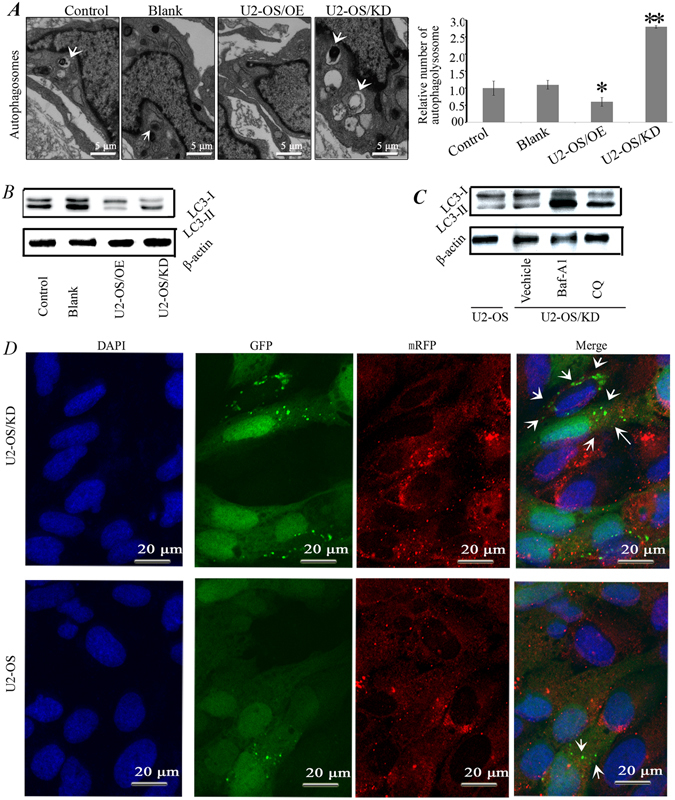
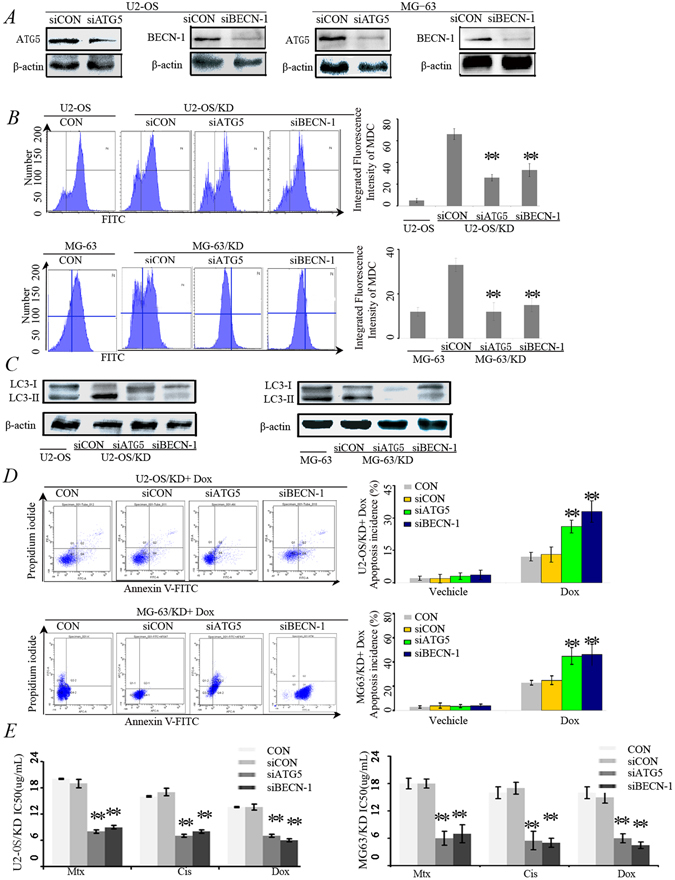
Chemotherapy is an important treatment modality for osteosarcoma. However, it often fails because of chemoresistance, especially multidrug resistance. Previously, we found several genes were involved in chemoresistance development. In this report, we used high-throughput microRNA (miRNA) expression analysis to reveal that expression of miR-140-5p was associated with chemosensitivity in osteosarcoma. The exact roles of miR-140-5p in the chemoresistance of osteosarcoma were then investigated, we found that knockdown of miR-140-5p enhanced osteosarcoma cells resistance to multiple chemotherapeutics while overexpression of miR-140-5p sensitized tumors to chemotherapy in vitro. Moreover, in vivo, knockdown of miR-140-5p also increased the osteosarcoma cells resistance to chemotherapy. Luciferase assay and Western blot analysis showed that HMGN5 was the direct target of miR-140-5p which could positively regulated autophagy. Silencing these target genes by siRNA or inhibition of autophagy sensitized osteosarcoma cells to chemotherapy. These findings suggest that a miR-140-5p/HMGN5/autophagy regulatory loop plays a critical role in chemoresistance in osteosarcoma. In conclusion, our data elucidated that miR-140-5p promoted autophagy mediated by HMGN5 and sensitized osteosarcoma cells to chemotherapy. These results suggest a potential application of miR-140-5p in overall survival, chemoresistance prognosis and treatment.
化疗是骨肉瘤的重要治疗方式。然而,由于化疗耐药性,尤其是多药耐药性,它常常失败。先前,我们发现了几个参与化疗耐药性发展的基因。在本报告中,我们使用高通量 microRNA(miRNA)表达分析来揭示 miR-140-5p 的表达与骨肉瘤的化疗敏感性相关。然后,我们进一步研究了 miR-140-5p 在骨肉瘤化疗耐药性中的确切作用,发现 miR-140-5p 的敲低增强了骨肉瘤细胞对多种化疗药物的耐药性,而过表达 miR-140-5p 则使肿瘤在体外对化疗敏感。此外,体内实验表明,miR-140-5p 的敲低也增加了骨肉瘤细胞对化疗的耐药性。荧光素酶测定和 Western blot 分析表明,HMGN5 是 miR-140-5p 的直接靶基因,可正向调节自噬。通过 siRNA 沉默这些靶基因或抑制自噬可使骨肉瘤细胞对化疗敏感。这些发现表明,miR-140-5p/HMGN5/自噬调控环在骨肉瘤的化疗耐药性中起着关键作用。总之,我们的数据阐明了 miR-140-5p 通过 HMGN5 促进自噬,并使骨肉瘤细胞对化疗敏感。这些结果表明 miR-140-5p 在总生存率、化疗耐药性预后和治疗方面具有潜在的应用价值。