Dowling David J, Scott Evan A, Scheid Annette, Bergelson Ilana, Joshi Sweta, Pietrasanta Carlo, Brightman Spencer, Sanchez-Schmitz Guzman, Van Haren Simon D, Ninković Jana, Kats Dina, Guiducci Cristiana, de Titta Alexandre, Bonner Daniel K, Hirosue Sachiko, Swartz Melody A, Hubbell Jeffrey A, Levy Ofer
Department of Medicine, Division of Infectious Diseases, Boston Children's Hospital, Boston, Mass; Harvard Medical School, Boston, Mass.
Department of Biomedical Engineering, Northwestern University, Evanston, Ill.
J Allergy Clin Immunol. 2017 Nov;140(5):1339-1350. doi: 10.1016/j.jaci.2016.12.985. Epub 2017 Mar 23.
Newborns display distinct immune responses, leaving them vulnerable to infections and impairing immunization. Targeting newborn dendritic cells (DCs), which integrate vaccine signals into adaptive immune responses, might enable development of age-specific vaccine formulations to overcome suboptimal immunization.
Small-molecule imidazoquinoline Toll-like receptor (TLR) 8 agonists robustly activate newborn DCs but can result in reactogenicity when delivered in soluble form. We used rational engineering and age- and species-specific modeling to construct and characterize polymer nanocarriers encapsulating a TLR8 agonist, allowing direct intracellular release after selective uptake by DCs.
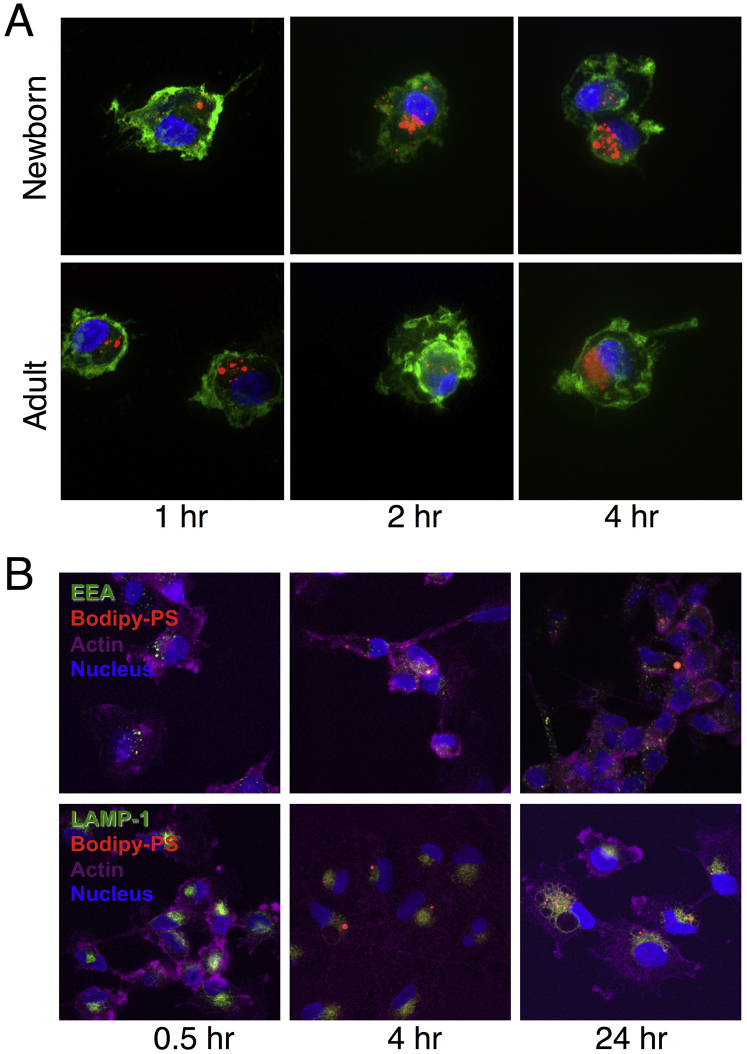
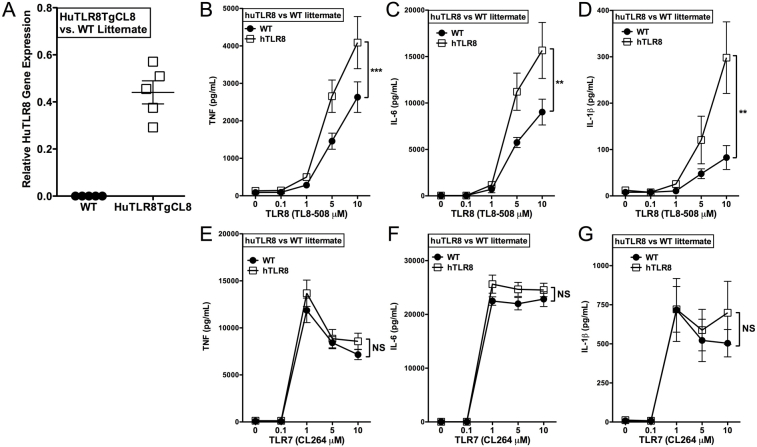
Chemically similar but morphologically distinct nanocarriers comprised of amphiphilic block copolymers were engineered for targeted uptake by murine DCs in vivo, and a range of TLR8 agonist-encapsulating polymersome formulations were then synthesized. Novel 96-well in vitro assays using neonatal human monocyte-derived DCs and humanized TLR8 mouse bone marrow-derived DCs enabled benchmarking of the TLR8 agonist-encapsulating polymersome formulations against conventional adjuvants and licensed vaccines, including live attenuated BCG vaccine. Immunogenicity of the TLR8 agonist adjuvanted antigen 85B (Ag85B)/peptide 25-loaded BCG-mimicking nanoparticle formulation was evaluated in vivo by using humanized TLR8 neonatal mice.
Although alum-adjuvanted vaccines induced modest costimulatory molecule expression, limited T-polarizing cytokine production, and significant cell death, BCG induced a robust adult-like maturation profile of neonatal DCs. Remarkably, TLR8 agonist polymersomes induced not only newborn DC maturation profiles similar to those induced by BCG but also stronger IL-12p70 production. On subcutaneous injection to neonatal mice, the TLR8 agonist-adjuvanted Ag85B peptide 25 formulation was comparable with BCG in inducing Ag85B-specific CD4 T-cell numbers.
TLR8 agonist-encapsulating polymersomes hold substantial potential for early-life immunization against intracellular pathogens. Overall, our study represents a novel approach for rational design of early-life vaccines.
新生儿表现出独特的免疫反应,这使他们易受感染并影响免疫接种效果。靶向新生儿树突状细胞(DCs),该细胞可将疫苗信号整合到适应性免疫反应中,可能有助于开发针对特定年龄的疫苗配方,以克服免疫接种效果不佳的问题。
小分子咪唑喹啉Toll样受体(TLR)8激动剂可强烈激活新生儿DCs,但以可溶性形式递送时可能会导致反应原性。我们利用合理的工程设计以及年龄和物种特异性建模,构建并表征了包裹TLR8激动剂的聚合物纳米载体,使其在被DCs选择性摄取后能直接在细胞内释放。
设计了由两亲性嵌段共聚物组成的化学性质相似但形态不同的纳米载体,用于在体内被小鼠DCs靶向摄取,然后合成了一系列包裹TLR8激动剂的聚合物囊泡制剂。使用新生儿人单核细胞衍生的DCs和人源化TLR8小鼠骨髓衍生的DCs进行的新型96孔体外试验,能够将包裹TLR8激动剂的聚合物囊泡制剂与传统佐剂和已获许可的疫苗(包括减毒活卡介苗)进行比较。通过使用人源化TLR8新生小鼠,在体内评估了TLR8激动剂佐剂化抗原85B(Ag85B)/肽25负载的卡介苗模拟纳米颗粒制剂的免疫原性。
虽然明矾佐剂疫苗诱导适度的共刺激分子表达、有限的T极化细胞因子产生以及显著的细胞死亡,但卡介苗诱导了新生儿DCs呈现出类似成人的强大成熟特征。值得注意的是,TLR8激动剂聚合物囊泡不仅诱导了与卡介苗诱导的相似的新生儿DC成熟特征,还诱导了更强的IL-12p70产生。皮下注射到新生小鼠体内后,TLR8激动剂佐剂化的Ag85B肽25制剂在诱导Ag85B特异性CD4 T细胞数量方面与卡介苗相当。
包裹TLR8激动剂的聚合物囊泡在针对细胞内病原体的早期免疫接种方面具有巨大潜力。总体而言,我们的研究代表了一种合理设计早期疫苗的新方法。