Department of Neurology, First Affiliated Hospital of Sun Yat-sen University, Guangzhou, Guangdong 510080, P.R. China; Department of Neurology, Seventh Affiliated Hospital of Sun Yat-sen University, Shenzhen, Guangdong 518017, P.R. China.
Department of Neurology, First Affiliated Hospital of Sun Yat-sen University, Guangzhou, Guangdong 510080, P.R. China; Department of Neurology, The Central Hospital of Wuhan, Tongji Medical College, Huazhong University of Science and Technology, Wuhan 430014, P.R. China.
Stem Cell Reports. 2017 Apr 11;8(4):883-893. doi: 10.1016/j.stemcr.2017.02.020. Epub 2017 Mar 23.
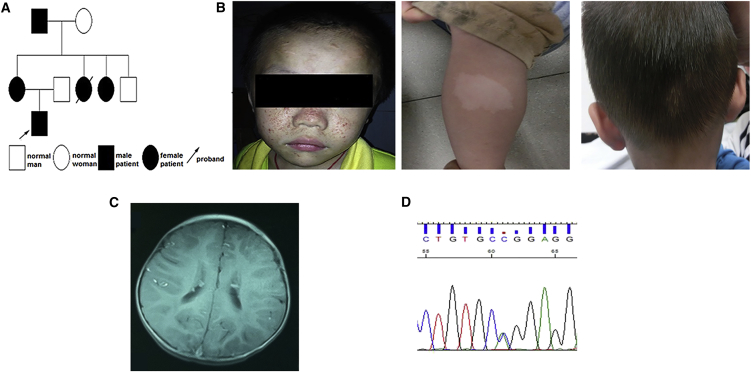
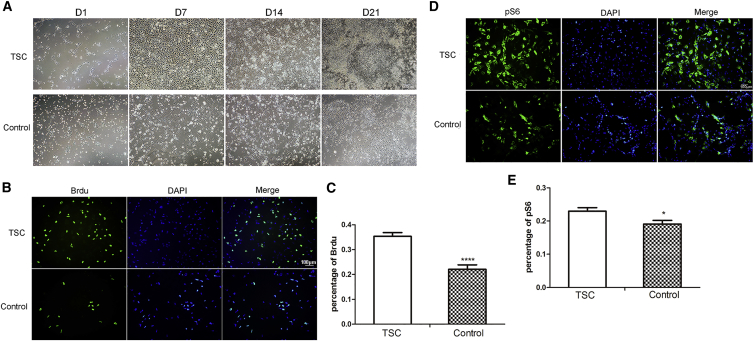
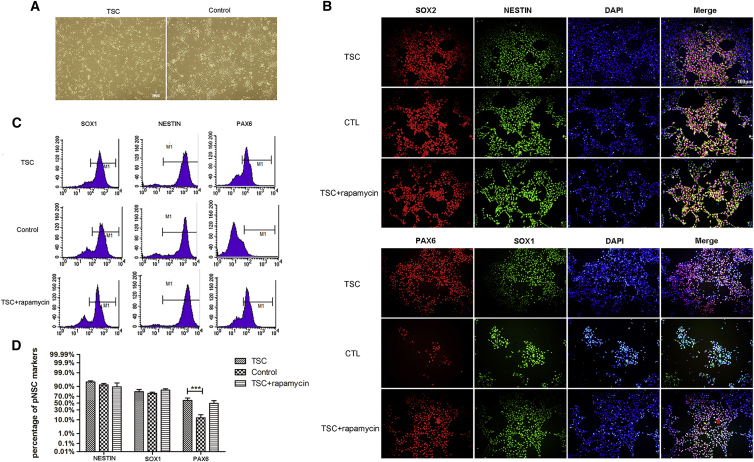
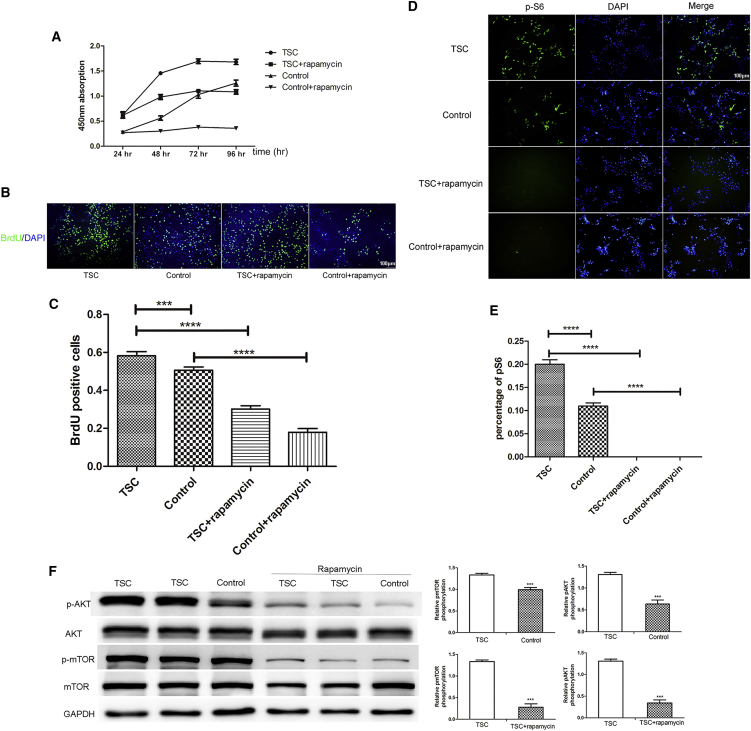
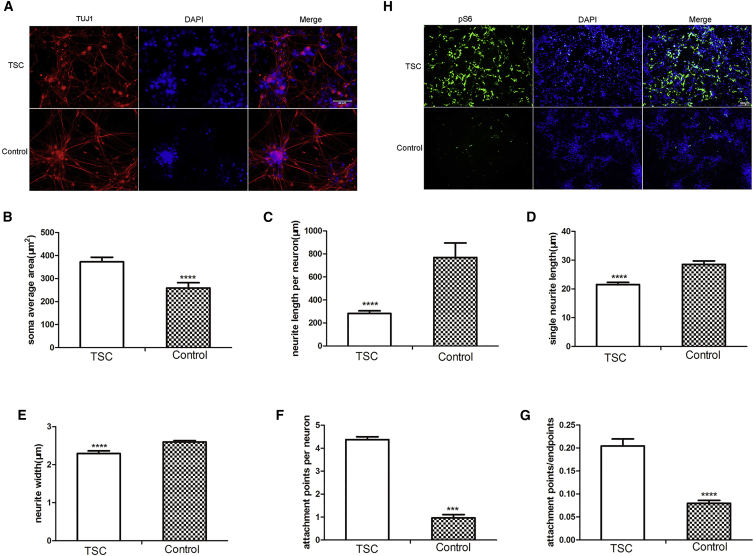
Tuberous sclerosis complex (TSC) is a disease featuring devastating and therapeutically challenging neurological abnormalities. However, there is a lack of specific neural progenitor cell models for TSC. Here, the pathology of TSC was studied using primitive neural stem cells (pNSCs) from a patient presenting a c.1444-2A>C mutation in TSC2. We found that TSC2 pNSCs had higher proliferative activity and increased PAX6 expression compared with those of control pNSCs. Neurons differentiated from TSC2 pNSCs showed enlargement of the soma, perturbed neurite outgrowth, and abnormal connections among cells. TSC2 astrocytes had increased saturation density and higher proliferative activity. Moreover, the activity of the mTOR pathway was enhanced in pNSCs and induced in neurons and astrocytes. Thus, our results suggested that TSC2 heterozygosity caused neurological malformations in pNSCs, indicating that its heterozygosity might be sufficient for the development of neurological abnormalities in patients.
结节性硬化症(TSC)是一种具有破坏性且治疗极具挑战性的神经异常疾病。然而,目前缺乏用于 TSC 的特定神经祖细胞模型。本研究使用携带 TSC2 c.1444-2A>C 突变的患者来源的原始神经干细胞(pNSCs)来研究 TSC 的病理学。我们发现与对照 pNSCs 相比,TSC2 pNSCs 具有更高的增殖活性和增加的 PAX6 表达。源自 TSC2 pNSCs 的神经元表现出胞体增大、突起生长紊乱以及细胞间异常连接。TSC2 星形胶质细胞的饱和密度增加,增殖活性增强。此外,mTOR 通路的活性在 pNSCs 中增强,并在神经元和星形胶质细胞中诱导。因此,我们的结果表明 TSC2 杂合性导致 pNSCs 中的神经畸形,表明其杂合性可能足以导致患者的神经发育异常。