Ota Satoshi, Yamazaki Naoya, Tomitaka Asahi, Yamada Tsutomu, Takemura Yasushi
Department of Electrical and Computer Engineering, Yokohama National University, Yokohama 240-8501, Japan.
Department of Materials Science and Engineering, University of Washington, Seattle, WA 98195, USA.
Nanomaterials (Basel). 2014 Apr 23;4(2):319-330. doi: 10.3390/nano4020319.
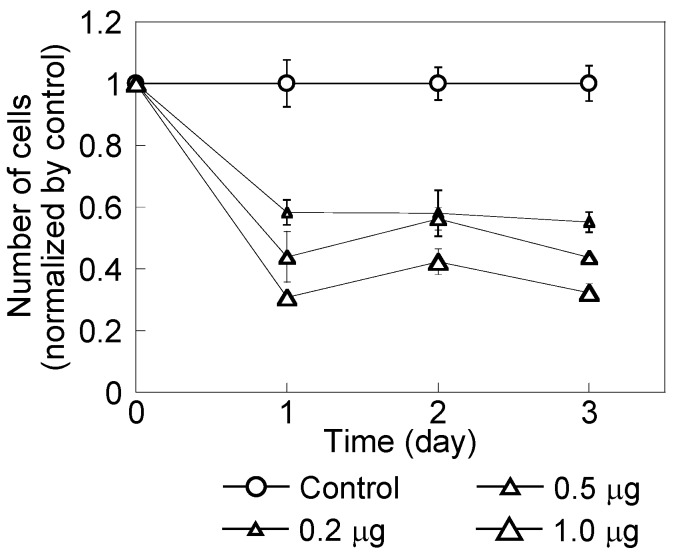
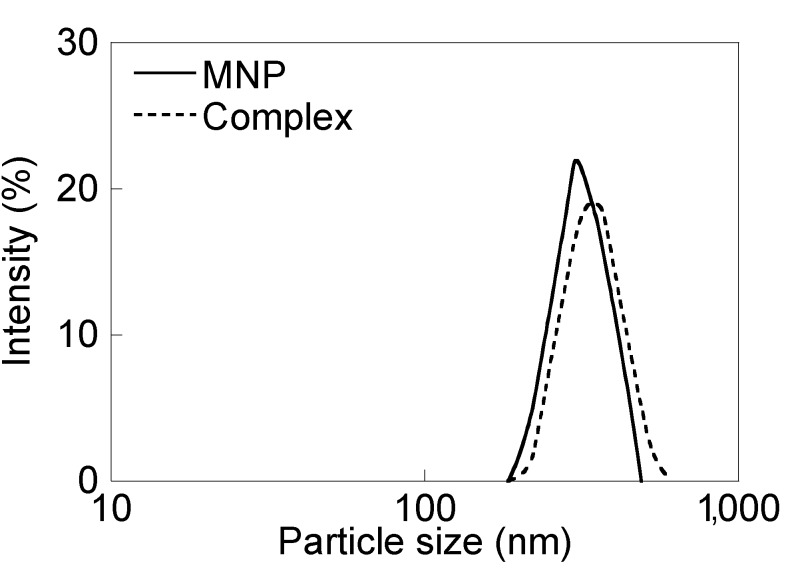
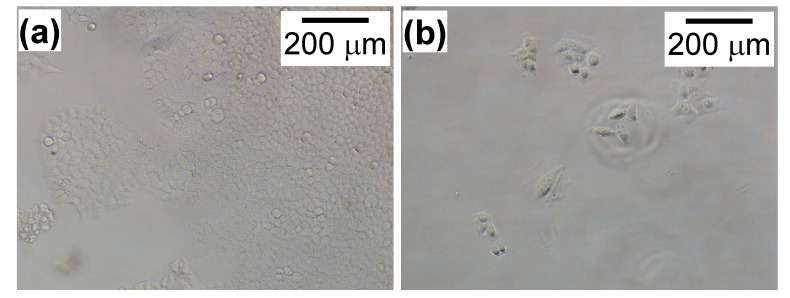
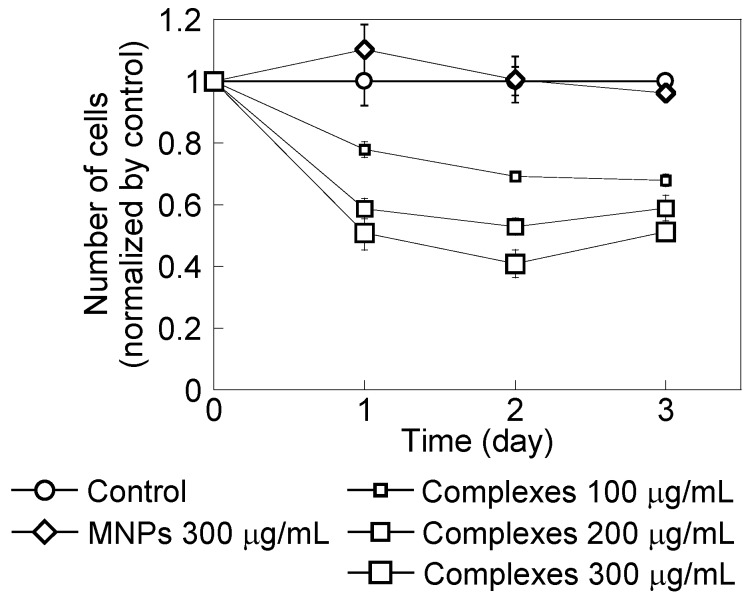
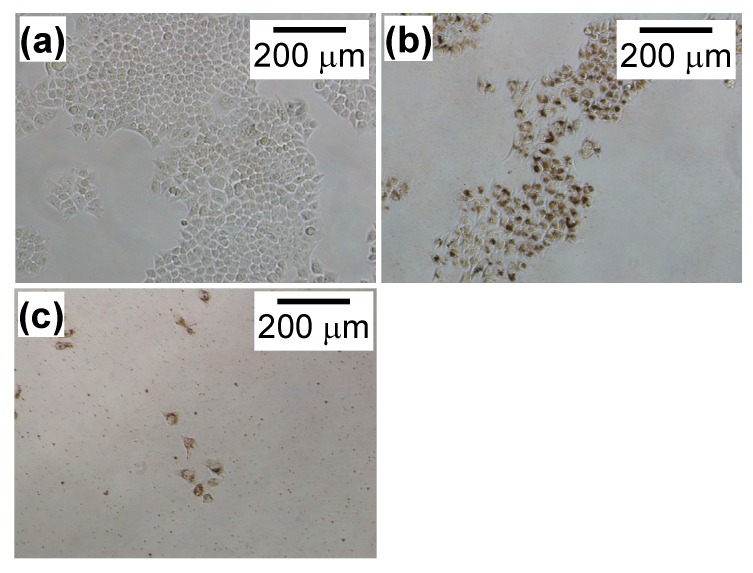
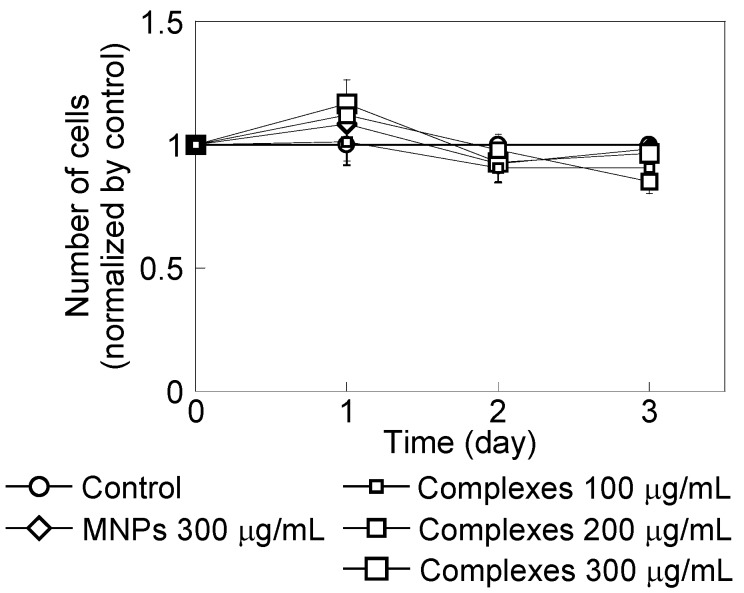
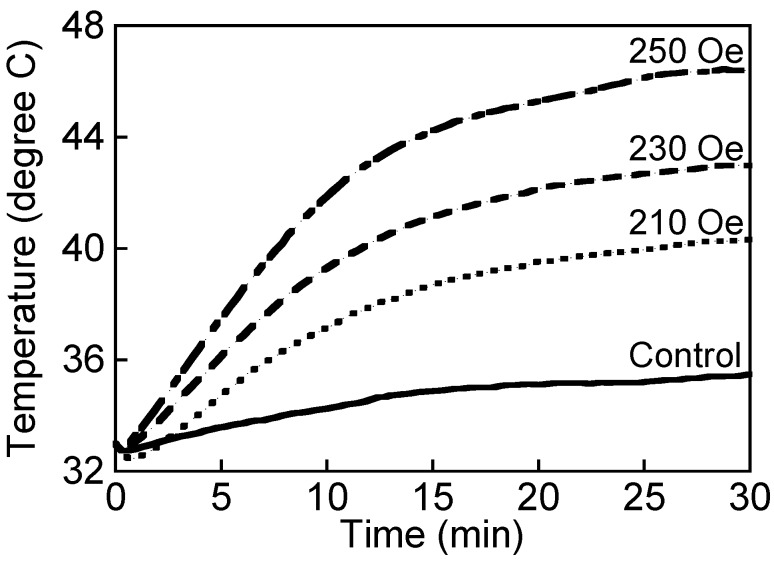
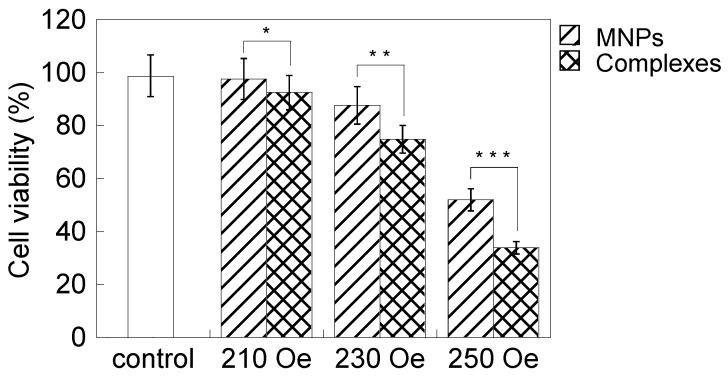
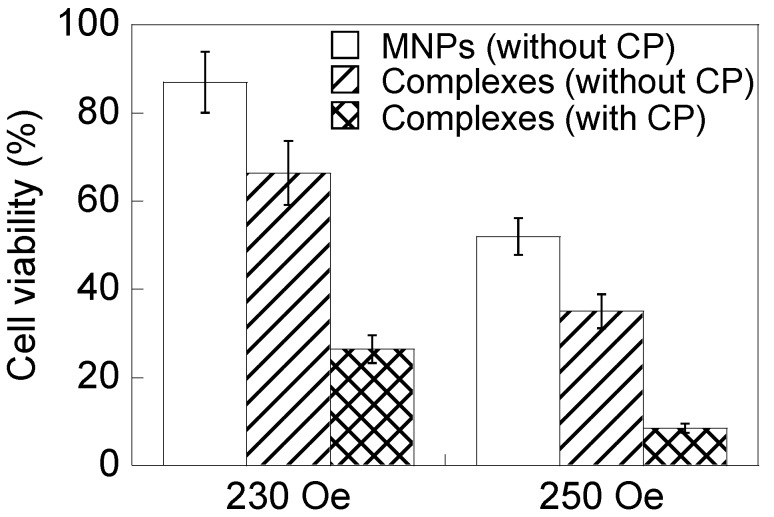
Heat dissipation by magnetic nanoparticles (MNPs) under an alternating magnetic field can be used to selectively treat cancer tissues. Antibodies conjugated to MNPs can enhance the therapeutic effects of hyperthermia by altering antibody-antigen interactions. Fe₃O₄ nanoparticles (primary diameter, 20-30 nm) coated with polyethylenimine (PEI) were prepared and conjugated with CH11, an anti-Fas monoclonal antibody. HeLa cell growth was then evaluated as a function of antibody and MNP/antibody complex doses. HeLa cell growth decreased with increased doses of the antibody and complexes. However, MNPs alone did not affect cell growth; thus, only the antibody affected cell growth. In hyperthermia experiments conducted using an alternating magnetic field frequency of 210 kHz, cell viability varied with the intensity of the applied alternating magnetic field, because the temperature increase of the culture medium with added complexes was dependent on magnetic field intensity. The HeLa cell death rate with added complexes was significantly greater as compared with that with MNPs alone. Cryptotanshinone, an anti-apoptotic factor blocker, was also added to cell cultures, which provided an additional anti-cancer cell effect. Thus, an anti-cancer cell effect using a combination of magnetic hyperthermia, an anti-Fas antibody and cryptotanshinone was established.
交变磁场下磁性纳米颗粒(MNPs)的散热可用于选择性治疗癌组织。与MNPs偶联的抗体可通过改变抗体-抗原相互作用增强热疗的治疗效果。制备了用聚乙烯亚胺(PEI)包覆的Fe₃O₄纳米颗粒(初级直径20 - 30 nm),并将其与抗Fas单克隆抗体CH11偶联。然后评估HeLa细胞生长作为抗体和MNP/抗体复合物剂量的函数。HeLa细胞生长随抗体和复合物剂量的增加而降低。然而,单独的MNPs不影响细胞生长;因此,只有抗体影响细胞生长。在使用210 kHz交变磁场频率进行的热疗实验中,细胞活力随所施加交变磁场的强度而变化,因为添加复合物的培养基温度升高取决于磁场强度。添加复合物时HeLa细胞的死亡率比单独使用MNPs时显著更高。隐丹参酮,一种抗凋亡因子阻滞剂,也被添加到细胞培养物中,它具有额外的抗癌细胞作用。因此,建立了一种使用磁热疗、抗Fas抗体和隐丹参酮联合的抗癌细胞效应。