van de Pol Jeroen A A, van Best Niels, Mbakwa Catherine A, Thijs Carel, Savelkoul Paul H, Arts Ilja C W, Hornef Mathias W, Mommers Monique, Penders John
Department of Epidemiology, Care and Public Health Research Institute, Maastricht UniversityMaastricht, Netherlands; Department of Epidemiology, Grow - School for Oncology and Developmental Biology, Maastricht UniversityMaastricht, Netherlands.
Department of Medical Microbiology, School of Nutrition and Translational Research in Metabolism, Maastricht University Medical CentreMaastricht, Netherlands; Institute of Medical Microbiology, RWTH Aachen University HospitalAachen, Germany.
Front Microbiol. 2017 Mar 10;8:355. doi: 10.3389/fmicb.2017.00355. eCollection 2017.
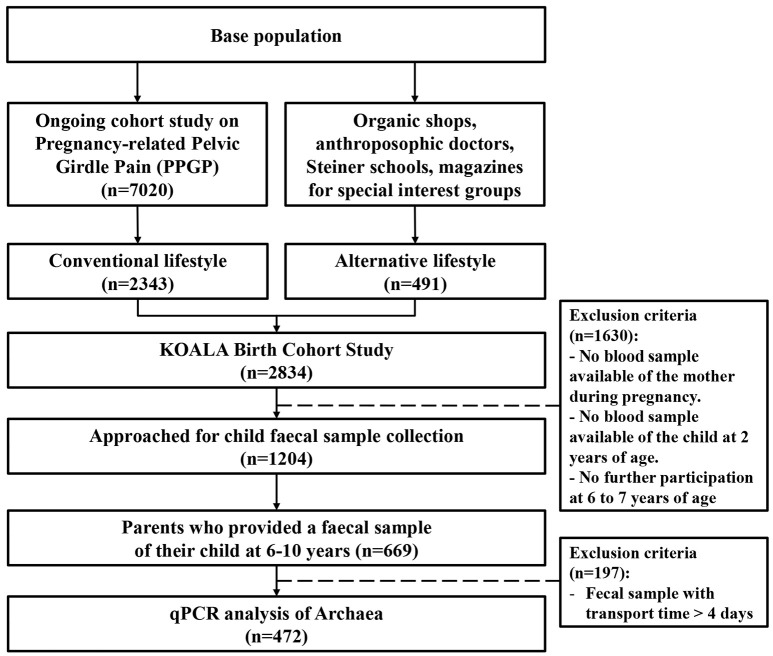
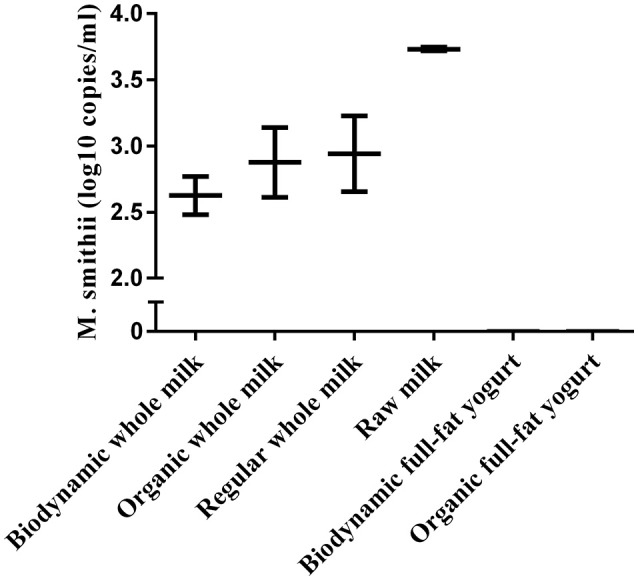
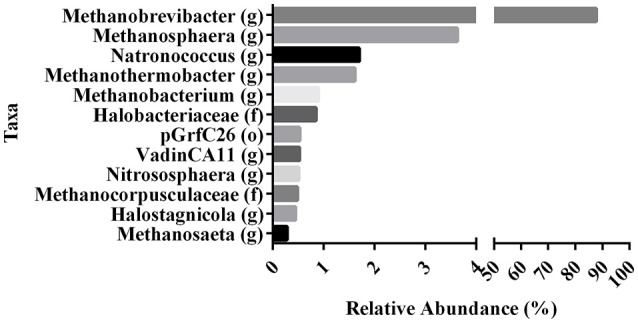
The gut microbiota represents a complex and diverse ecosystem with a profound impact on human health, promoting immune maturation, and host metabolism as well as colonization resistance. Important members that have often been disregarded are the methanogenic archaea. Methanogenic archaea reduce hydrogen levels via the production of methane, thereby stimulating food fermentation by saccharolytic bacteria. On the other hand, colonization by archaea has been suggested to promote a number of gastrointestinal and metabolic diseases such as colorectal cancer, inflammatory bowel disease, and obesity. Archaea have been shown to be absent during infancy while omnipresent in school-aged children, suggesting that colonization may result from environmental exposure during childhood. The factors that determine the acquisition of methanogenic archaea, however, have remained undefined. Therefore, we aimed to explore determinants associated with the acquisition of the two main gastrointestinal archaeal species, and , in children. Within the context of the KOALA Birth Cohort Study, fecal samples from 472 children aged 6-10 years were analyzed for the abundance of and using qPCR. Environmental factors such as diet, lifestyle, hygiene, child rearing, and medication were recorded by repeated questionnaires. The relationship between these determinants and the presence and abundance of archaea was analyzed by logistic and linear regression respectively. Three hundred and sixty-nine out of the 472 children (78.2%) were colonized by , and 39 out of the 472 children (8.3%) by . The consumption of organic yogurt (odds ratio: 4.25, CI95: 1.51; 11.95) and the consumption of organic milk (odds ratio: 5.58, CI95: 1.83; 17.01) were positively associated with the presence of . We subsequently screened raw milk, processed milk, and yogurt samples for methanogens. We identified milk products as possible source for , but not . In conclusion, seems present in milk products and their consumption may determine archaeal gut colonization in children. For the first time, a large variety of determinants have been explored in association with gut colonization by methanogenic archaea. Although more information is needed to confirm and unravel the mechanisms in detail, it provides new insights on microbial colonization processes in early life.
肠道微生物群代表了一个复杂多样的生态系统,对人类健康有着深远影响,可促进免疫成熟、宿主代谢以及定殖抗性。经常被忽视的重要成员是产甲烷古菌。产甲烷古菌通过产生甲烷降低氢气水平,从而刺激糖分解细菌进行食物发酵。另一方面,有研究表明古菌定殖会引发多种胃肠道和代谢疾病,如结直肠癌、炎症性肠病和肥胖症。研究显示,婴儿期不存在古菌,而在学龄儿童中普遍存在,这表明定殖可能源于儿童时期的环境暴露。然而,决定产甲烷古菌定殖的因素仍不明确。因此,我们旨在探索与儿童肠道中两种主要古菌物种—— 和 定殖相关的决定因素。在考拉出生队列研究中,我们使用定量聚合酶链反应(qPCR)分析了472名6至10岁儿童粪便样本中 和 的丰度。通过重复问卷调查记录了饮食、生活方式、卫生习惯、育儿方式和用药等环境因素。分别通过逻辑回归和线性回归分析了这些决定因素与古菌存在及丰度之间的关系。472名儿童中有369名(78.2%)被 定殖,472名儿童中有39名(8.3%)被 定殖。食用有机酸奶(优势比:4.25,95%置信区间:1.51;11.95)和食用有机牛奶(优势比:5.58,95%置信区间:1.83;17.01)与 的存在呈正相关。随后,我们对生牛奶、加工牛奶和酸奶样本进行了产甲烷菌筛查。我们确定乳制品可能是 的来源,但不是 的来源。总之, 似乎存在于乳制品中,食用乳制品可能决定儿童肠道中古菌的定殖。首次探索了与产甲烷古菌肠道定殖相关的多种决定因素。尽管需要更多信息来详细确认和阐明机制,但它为早期生命中的微生物定殖过程提供了新的见解。