Sadek Kadry M, Abouzed Tarek K, Abouelkhair Reham, Nasr Sherif
a Department of Biochemistry, Faculty of Veterinary Medicine , Damanhur University , Egypt.
b Department of Biochemistry, Faculty of Veterinary Medicine , Kafr elshiekh University , Egypt.
Pharm Biol. 2017 Dec;55(1):1458-1466. doi: 10.1080/13880209.2017.1306713.
Hepatocellular carcinoma (HCC) is among the most well-known threatening tumours around the world, and the outlook remains bleak. Moringa oleifera Lam. (Moringaceae) exhibits antitumor, antioxidant and hepatoprotective properties.
To assess the chemo-prophylactic proficiency and other likely activities of Moringa oleifera leaf ethanol extract (MOLEE) against diethyl nitrosamine (DEN)-induced HCC.
Wistar rats were gastrogavaged with MOLEE (500 mg/kg) for one week and then gastrogavaged with MOLEE and DEN (10 mg/kg) for the following 16 weeks. The progressions of the histological components, serum biomarkers and oxidation of DNA of the liver tissues were resolved to assess the prophylactic impacts. The lipid oxidative biomarker, the cancer prevention agent status and apoptotic proteins were surveyed to assess the potential mechanisms.
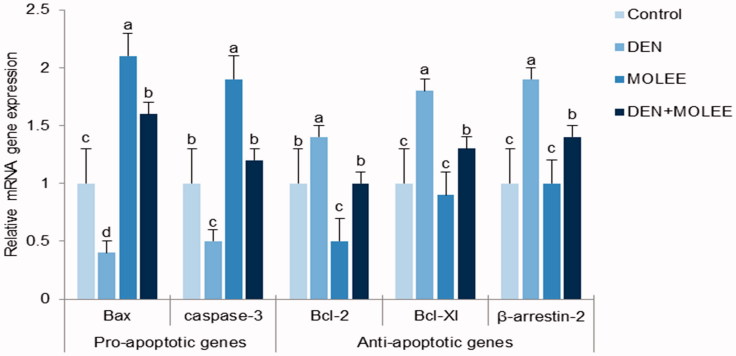
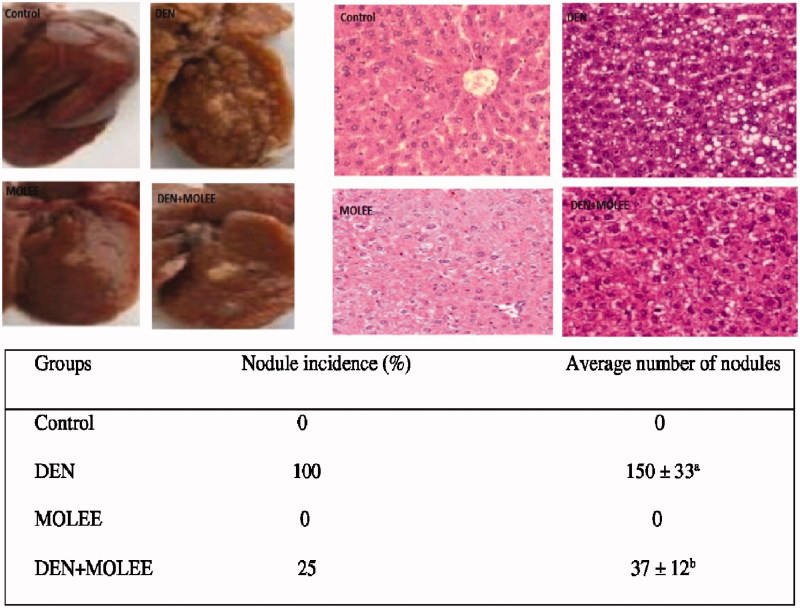
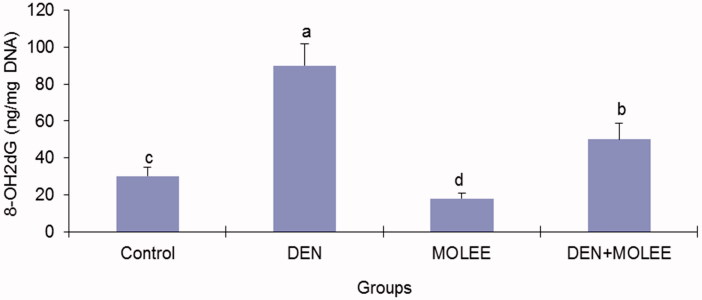
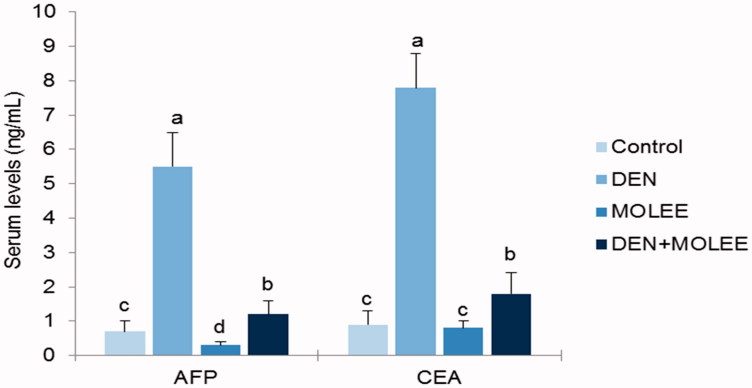
The MOLEE LD50 was estimated to be 5585 mg/kg. MOLEE (500 mg/kg) administration fundamentally repressed the expansion event of knobs and the normal knob number per knob-bearing livers prompted by DEN, enhanced hepatocellular appearance and altogether significantly decreased (p < 0.05) DEN-induced elevations in serum biochemical records and hepatic 8-hydroxy-2-deoxyguanosine (8-OHdG) levels by 29%. The robotic studies found that MOLEE disrupted the DEN-activated oxidative reactivity damage in rats by 46.8%. Curiously, the expression of Bcl-2, Bcl-xl and β-arrestin-2 were fundamentally diminished (p < 0.05); however, the expression of Bax and caspase-3 were essentially (p < 0.05) upregulated.
The outcomes presume that MOLEE inspired critical defensive impacts against DEN-induced hepatocarcinogenesis that might be identified with the implementation of antioxidant activity and actuation of apoptosis.
肝细胞癌(HCC)是全球最知名的威胁性肿瘤之一,预后仍然不容乐观。辣木(辣木科)具有抗肿瘤、抗氧化和保肝特性。
评估辣木叶乙醇提取物(MOLEE)对二乙基亚硝胺(DEN)诱导的肝癌的化学预防效果及其他可能的作用。
用MOLEE(500mg/kg)对Wistar大鼠进行一周的灌胃,然后在接下来的16周内用MOLEE和DEN(10mg/kg)进行灌胃。通过分析肝组织的组织学成分、血清生物标志物和DNA氧化情况来评估预防效果。检测脂质氧化生物标志物、抗氧化剂状态和凋亡蛋白以评估潜在机制。
MOLEE的半数致死剂量(LD50)估计为5585mg/kg。给予MOLEE(500mg/kg)能显著抑制由DEN诱导的瘤结的生长及每个带瘤肝脏的瘤结平均数,改善肝细胞形态,并且使DEN诱导的血清生化指标和肝脏8-羟基-2'-脱氧鸟苷(8-OHdG)水平显著降低(p<0.05),降幅达29%。机制研究发现,MOLEE使大鼠体内DEN激活的氧化反应损伤减少了46.8%。有趣的是,Bcl-2、Bcl-xl和β-抑制蛋白2的表达显著降低(p<0.05);然而,Bax和半胱天冬酶-3的表达显著上调(p<0.05)。
结果表明,MOLEE对DEN诱导的肝癌发生具有显著的保护作用,这可能与抗氧化活性的发挥和细胞凋亡的激活有关。