Taylor E, Alqadri N, Dodgson L, Mason D, Lyulcheva E, Messina G, Bennett D
Department of Biochemistry, Institute of Integrative Biology, University of Liverpool, Liverpool, UK.
Centre for Cell Imaging, Biosciences Building, University of Liverpool, Liverpool, UK.
Oncogene. 2017 Jul 27;36(30):4311-4322. doi: 10.1038/onc.2017.68. Epub 2017 Mar 27.
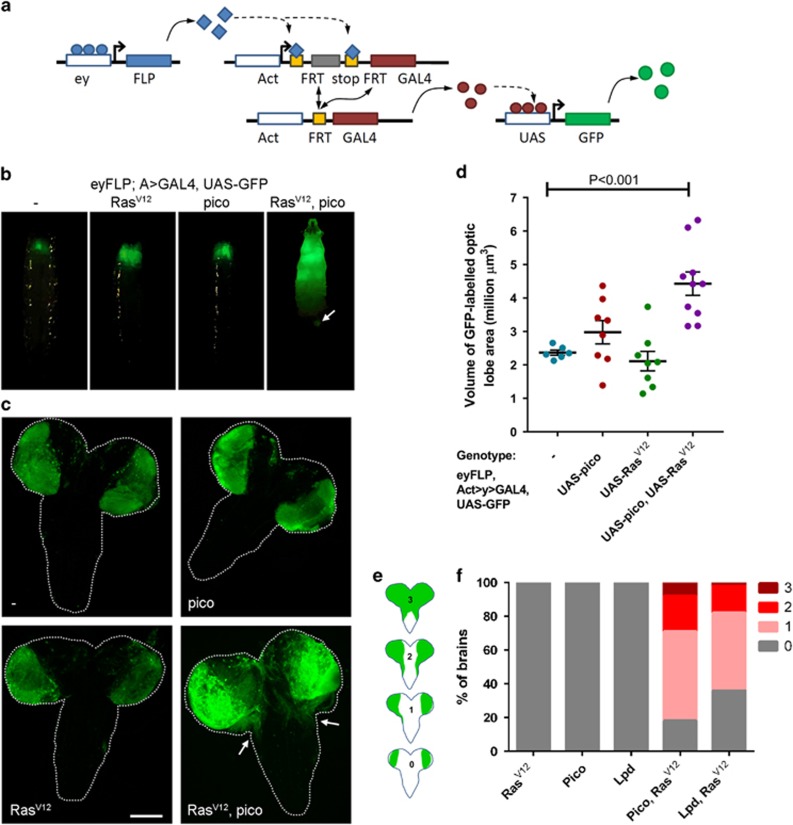
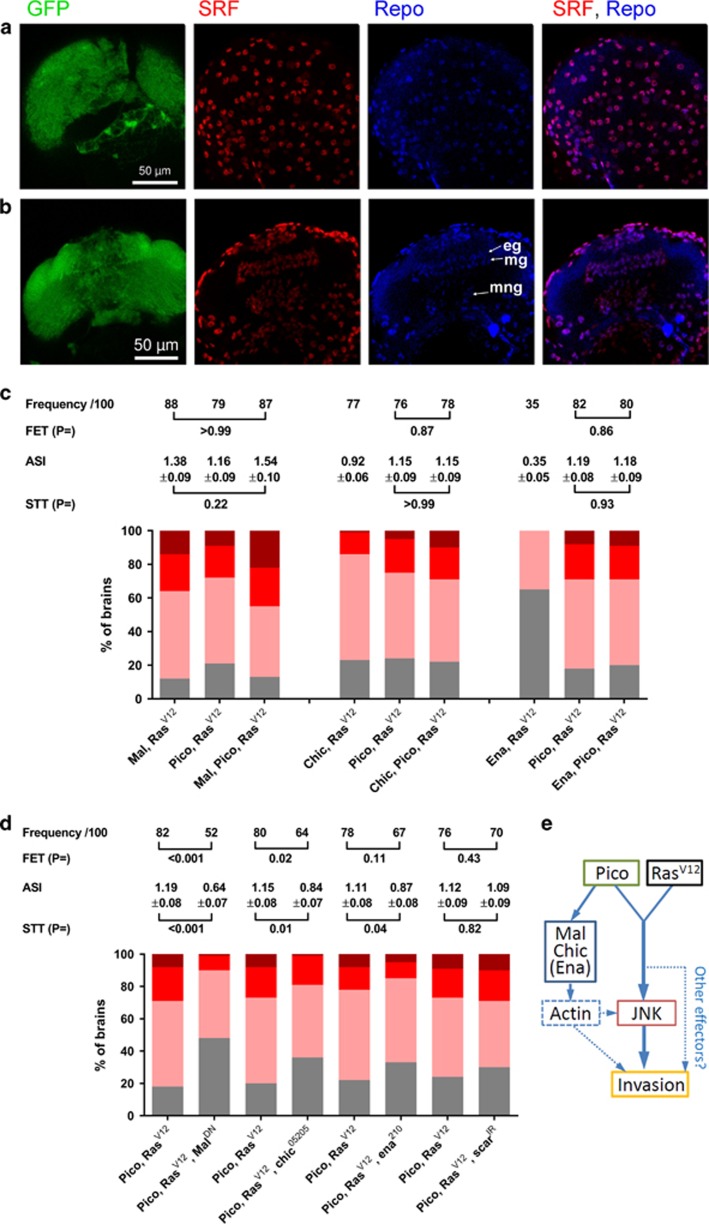
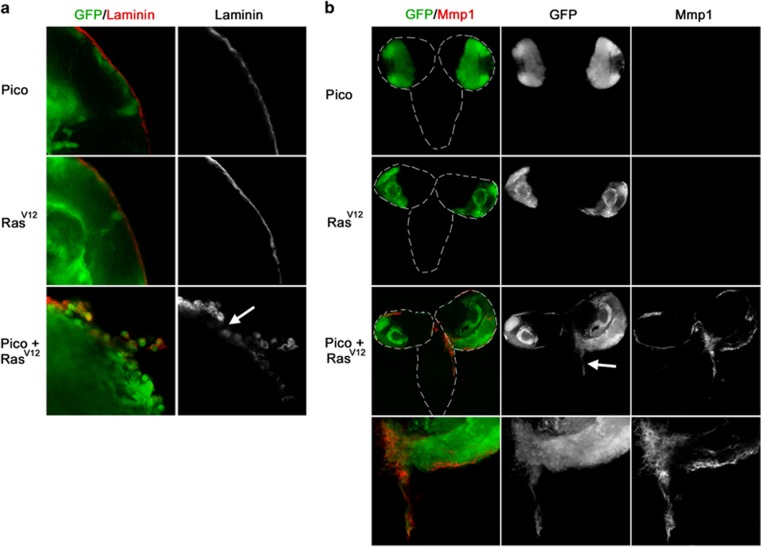
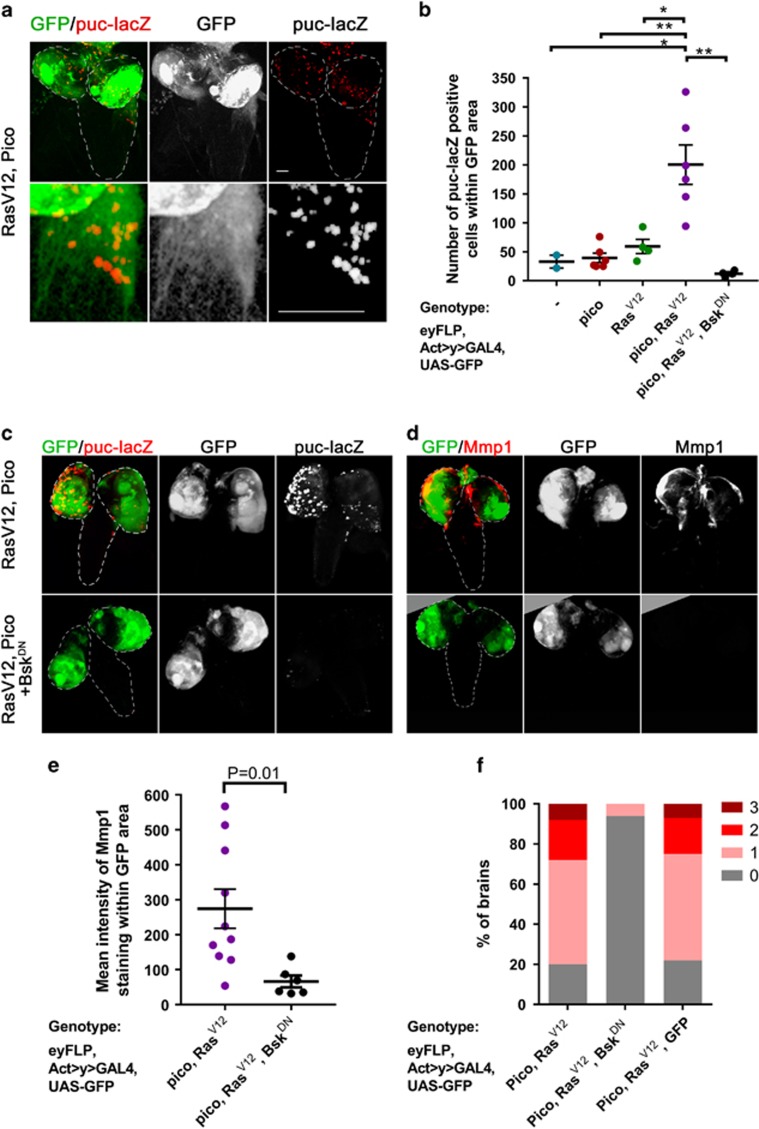
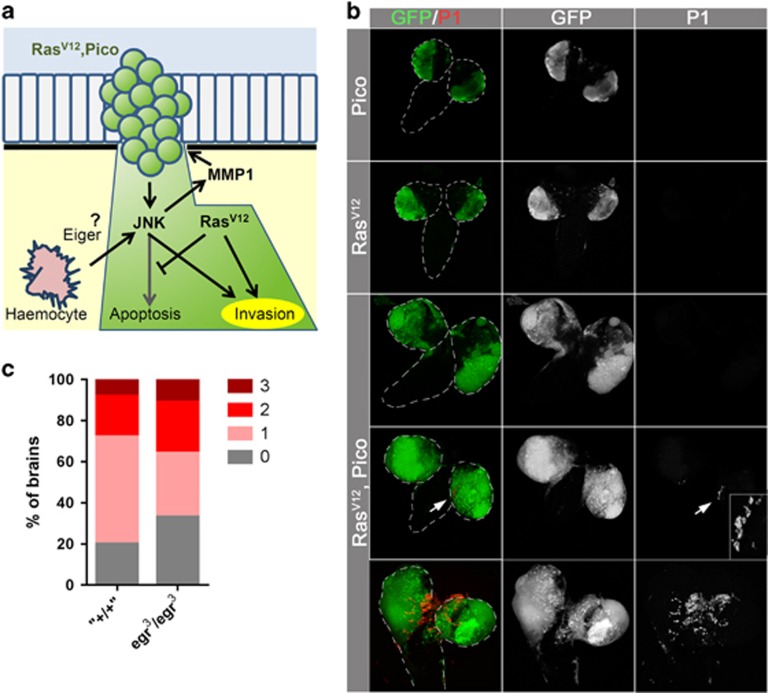
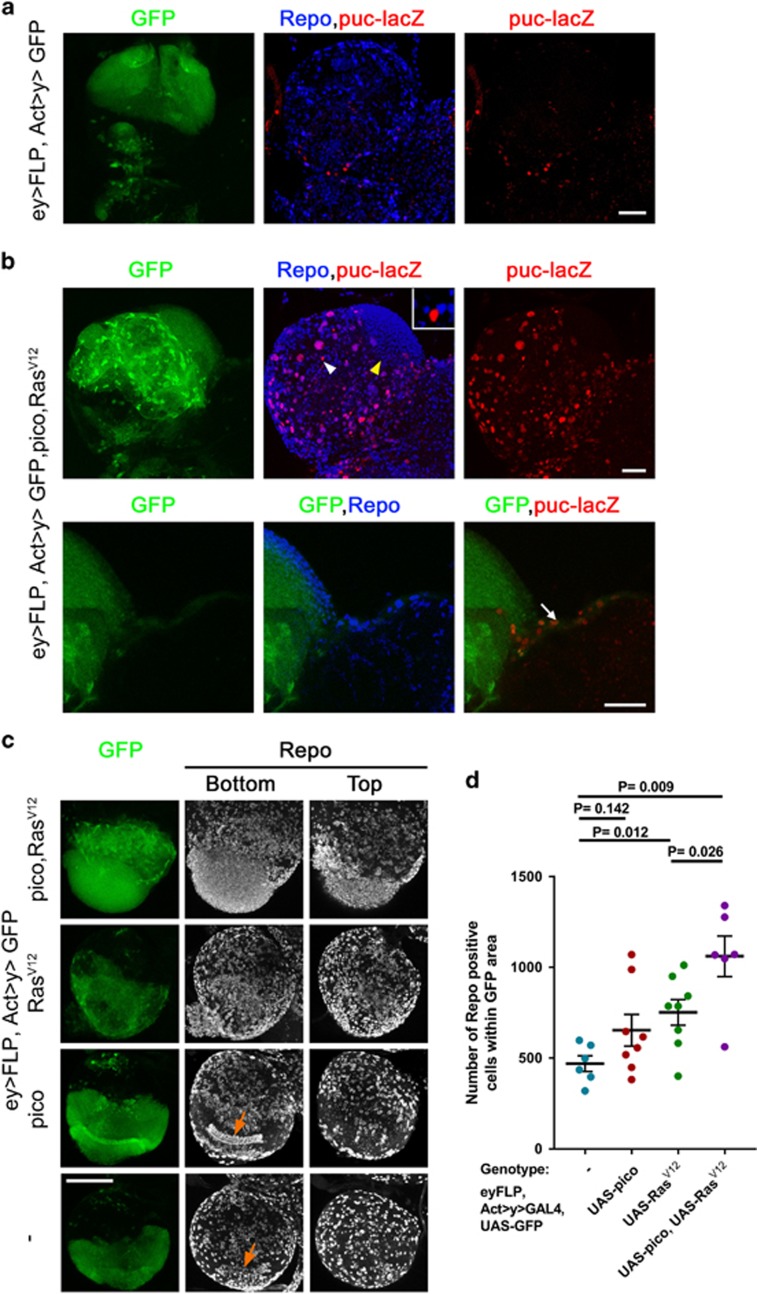
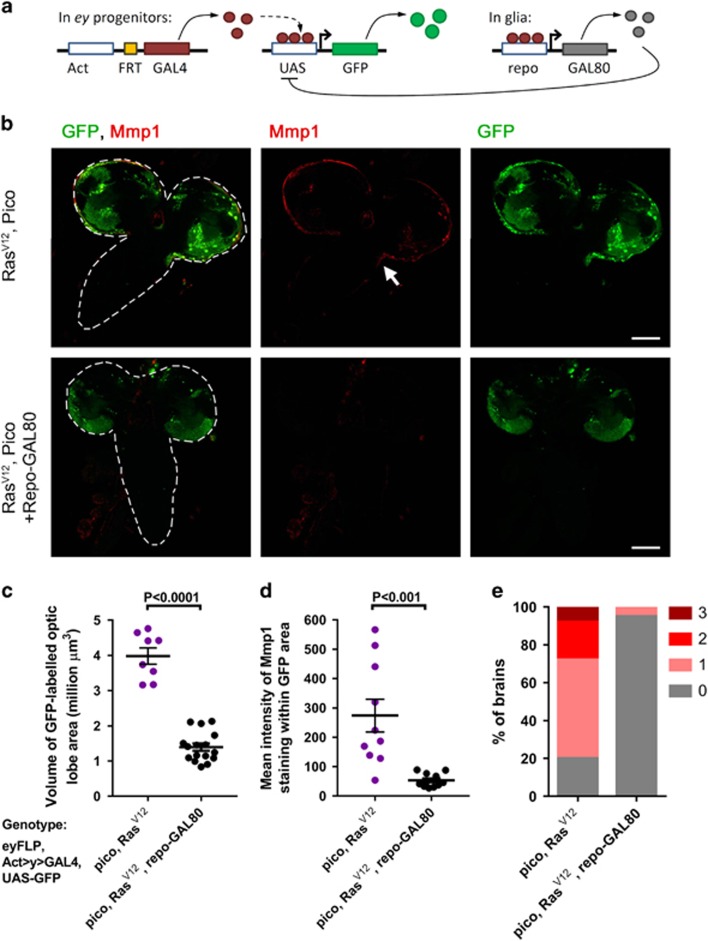
The Mig10/RIAM/Lpd (MRL) adapter protein Lpd regulates actin dynamics through interactions with Scar/WAVE and Ena/VASP proteins to promote the formation of cellular protrusions and to stimulate invasive migration. However, the ability of MRL proteins to interact with multiple actin regulators and to promote serum response factor (SRF) signalling has raised the question of whether MRL proteins employ alternative downstream mechanisms to drive oncogenic processes in a context-dependent manner. Here, using a Drosophila model, we show that overexpression of either human Lpd or its Drosophila orthologue Pico can promote growth and invasion of Ras-induced cell tumours in the brain. Notably, effects were restricted to two populations of Repo-positive glial cells: an invasive population, characterized by JNK-dependent elevation of Mmp1 expression, and a hyperproliferative population lacking elevated JNK signalling. JNK activation was not triggered by reactive immune cell signalling, implicating the involvement of an intrinsic stress response. The ability to promote dissemination of Ras-induced tumours was shared by a subset of actin regulators, including, most prominently, Chicadee/Profilin, which directly interacts with Pico, and, Mal, a cofactor for serum response factor that responds to changes in G:F actin dynamics. Suppression of Mal activity partially abrogated the ability of pico to promote invasion of Ras tumours. Furthermore, we found that larval glia are enriched for serum response factor expression, explaining the apparent sensitivity of glial cells to Pico/Ras overexpression. Taken together, our findings indicate that MRL proteins cooperate with oncogenic Ras to promote formation of glial tumours, and that, in this context, Mal/serum response factor activation is rate-limiting for tumour dissemination.
Mig10/RIAM/Lpd(MRL)衔接蛋白Lpd通过与Scar/WAVE和Ena/VASP蛋白相互作用来调节肌动蛋白动力学,以促进细胞突起的形成并刺激侵袭性迁移。然而,MRL蛋白与多种肌动蛋白调节因子相互作用并促进血清反应因子(SRF)信号传导的能力,引发了一个问题,即MRL蛋白是否采用替代的下游机制以依赖于上下文的方式驱动致癌过程。在这里,我们使用果蝇模型表明,人Lpd或其果蝇同源物Pico的过表达均可促进Ras诱导的脑肿瘤细胞的生长和侵袭。值得注意的是,这些效应仅限于Repo阳性胶质细胞的两个群体:一个侵袭性群体,其特征是Mmp1表达依赖JNK升高;另一个是缺乏JNK信号升高的过度增殖群体。JNK激活不是由反应性免疫细胞信号触发的,这意味着存在内在应激反应的参与。促进Ras诱导肿瘤扩散的能力为一部分肌动蛋白调节因子所共有,其中最突出的包括直接与Pico相互作用的Chicadee/Profilin,以及作为血清反应因子辅助因子的Mal,其对G:F肌动蛋白动力学变化作出反应。抑制Mal活性部分消除了pico促进Ras肿瘤侵袭的能力。此外,我们发现幼虫胶质细胞中血清反应因子表达丰富,这解释了胶质细胞对Pico/Ras过表达明显敏感的原因。综上所述,我们的研究结果表明,MRL蛋白与致癌性Ras协同作用以促进胶质肿瘤的形成,并且在这种情况下,Mal/血清反应因子激活是肿瘤扩散的限速因素。