Li Tianzhu, Liu Tongtong, Zheng Chengyu, Kang Chunsheng, Yang Zichao, Yao Xiaotong, Song Fengbin, Zhang Runzhi, Wang Xuerong, Xu Ning, Zhang Chunyi, Li Wei, Li Shumin
Resource and Environmental College, Northeast Agricultural University, Harbin, China.
Research Development and Evaluation Center of Laboratory, Harbin, China.
PLoS One. 2017 Mar 27;12(3):e0173923. doi: 10.1371/journal.pone.0173923. eCollection 2017.
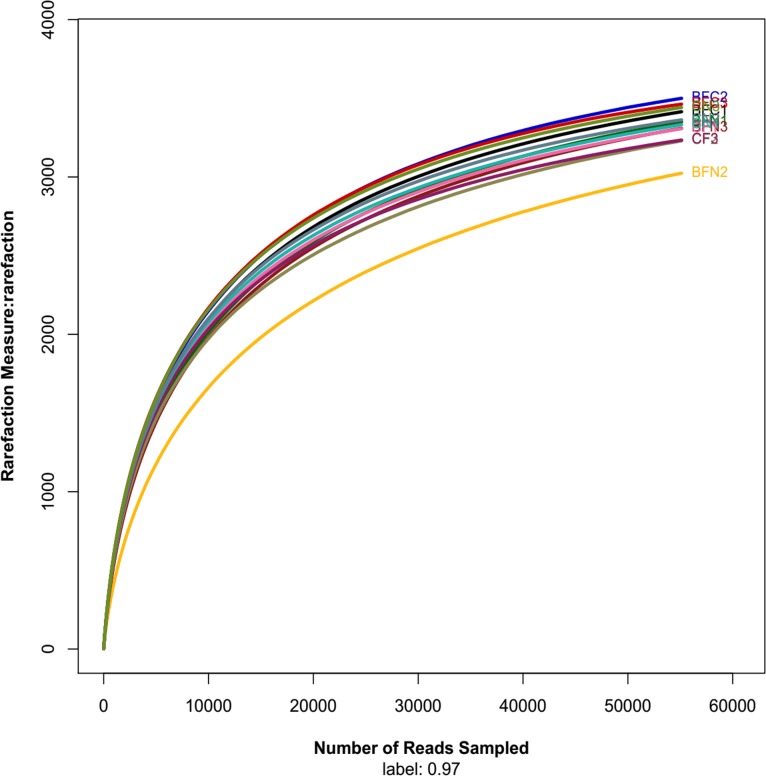
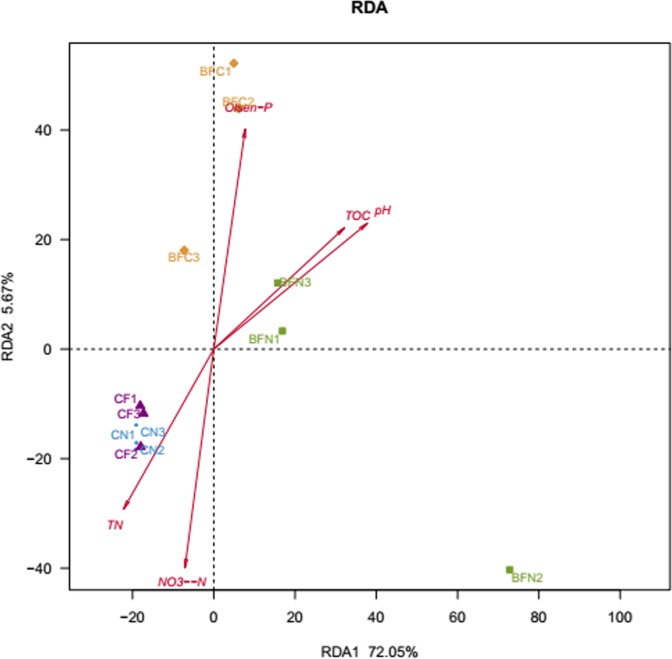
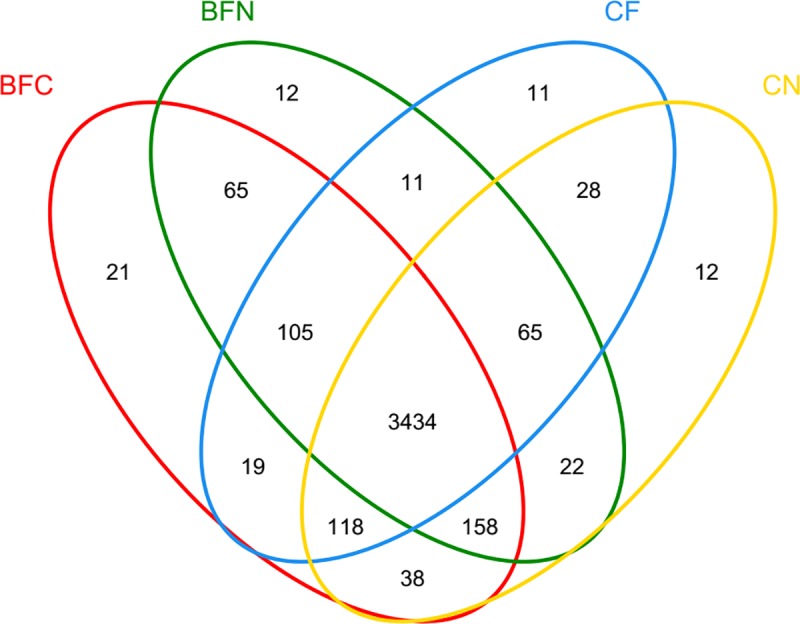
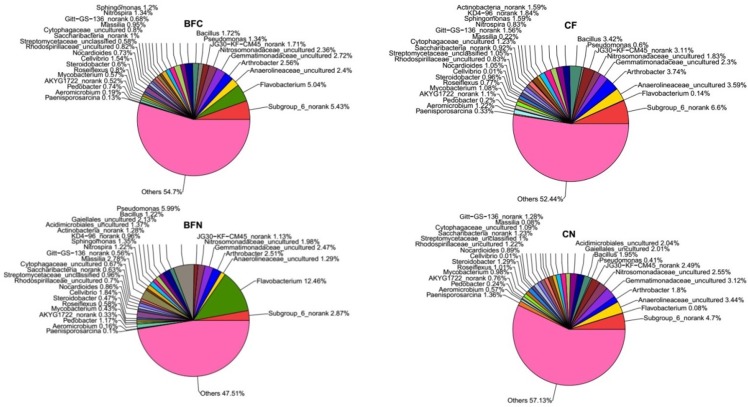
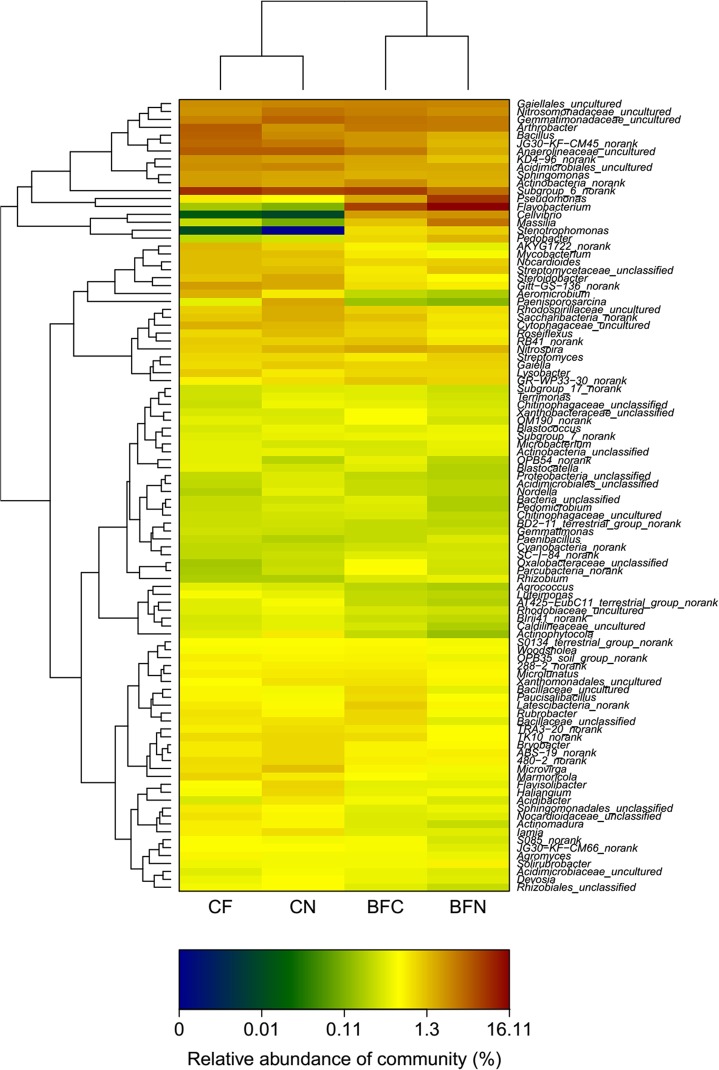
Greenhouse eggplant monocropping in China has contributed to the aggravation of soil-borne diseases, reductions in crop quality and yield, and the degradation of physical and chemical soil properties. Crop rotation is one effective way of alleviating the problems of continuous cropping worldwide; however, few studies have reported changes in soil bacterial community structures and physical and chemical soil properties after Brassica vegetables had been rotated with eggplant in greenhouses. In this experiment, mustard-eggplant (BFN) and oilseed rape-eggplant (BFC) rotations were studied to identify changes in the physicochemical properties and bacterial community structure in soil that was previously subject to monocropping. Samples were taken after two types of Brassica plants incorporated into soil for 15 days to compare with continually planted eggplant (control, CN) and chemical disinfection of soil (CF) in greenhouses. MiSeq pyrosequencing was used to analyze soil bacterial diversity and structure in the four different treatments. A total of 55,129 reads were identified, and rarefaction analysis showed that the soil treatments were equally sampled. The bacterial richness of the BFC treatment and the diversity of the BFN treatment were significantly higher than those of the other treatments. Further comparison showed that the bacterial community structures of BFC and BFN treatments were also different from CN and CF treatments. The relative abundance of several dominant bacterial genera in the BFC and BFN treatments (such as Flavobacteria, Stenotrophomonas, Massilia and Cellvibrio, which played different roles in improving soil fertility and advancing plant growth) was distinctly higher than the CN or CF treatments. Additionally, the total organic matter and Olsen-P content of the BFC and BFN treatments were significantly greater than the CN treatment. We conclude that Brassica vegetables-eggplant crop rotations could provide a more effective means of solving the problems of greenhouse eggplant monocultures.
中国温室茄子连作导致了土传病害加剧、作物品质和产量下降以及土壤理化性质退化。轮作是全球缓解连作问题的有效方法之一;然而,关于温室中茄子与十字花科蔬菜轮作后土壤细菌群落结构以及土壤理化性质变化的研究报道较少。本试验研究了芥菜-茄子(BFN)和油菜-茄子(BFC)轮作,以确定先前连作土壤的理化性质和细菌群落结构的变化。在两种十字花科植物融入土壤15天后取样,与温室中连作茄子(对照,CN)和土壤化学消毒(CF)进行比较。采用MiSeq焦磷酸测序分析四种不同处理的土壤细菌多样性和结构。共鉴定出55,129条 reads,稀疏分析表明土壤处理取样均衡。BFC处理的细菌丰富度和BFN处理的多样性显著高于其他处理。进一步比较表明,BFC和BFN处理的细菌群落结构也与CN和CF处理不同。BFC和BFN处理中几个优势细菌属(如黄杆菌属、嗜麦芽窄食单胞菌属、马赛菌属和纤维弧菌属,它们在提高土壤肥力和促进植物生长中发挥不同作用)的相对丰度明显高于CN或CF处理。此外,BFC和BFN处理的总有机质和有效磷含量显著高于CN处理。我们得出结论,十字花科蔬菜-茄子轮作可为解决温室茄子连作问题提供更有效的方法。