He Karen Y, Wang Heming, Cade Brian E, Nandakumar Priyanka, Giri Ayush, Ware Erin B, Haessler Jeffrey, Liang Jingjing, Smith Jennifer A, Franceschini Nora, Le Thu H, Kooperberg Charles, Edwards Todd L, Kardia Sharon L R, Lin Xihong, Chakravarti Aravinda, Redline Susan, Zhu Xiaofeng
Department of Epidemiology and Biostatistics, Case Western Reserve University, Cleveland, Ohio, United States of America.
Division of Sleep and Circadian Disorders, Brigham and Women's Hospital, Boston, Massachusetts, United States of America.
PLoS Genet. 2017 Mar 27;13(3):e1006678. doi: 10.1371/journal.pgen.1006678. eCollection 2017 Mar.
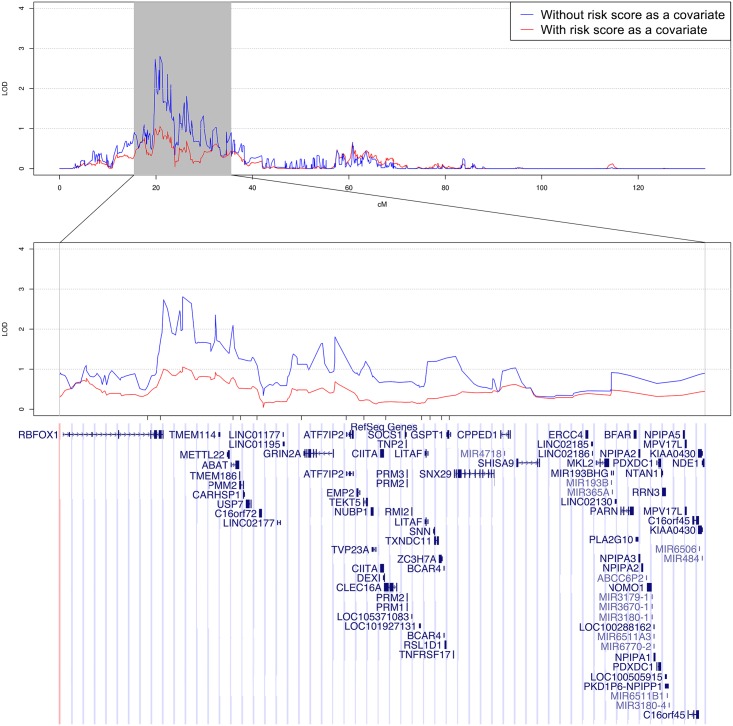
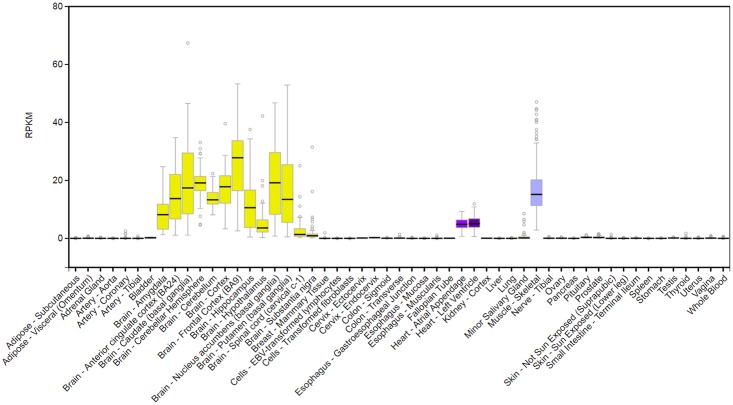
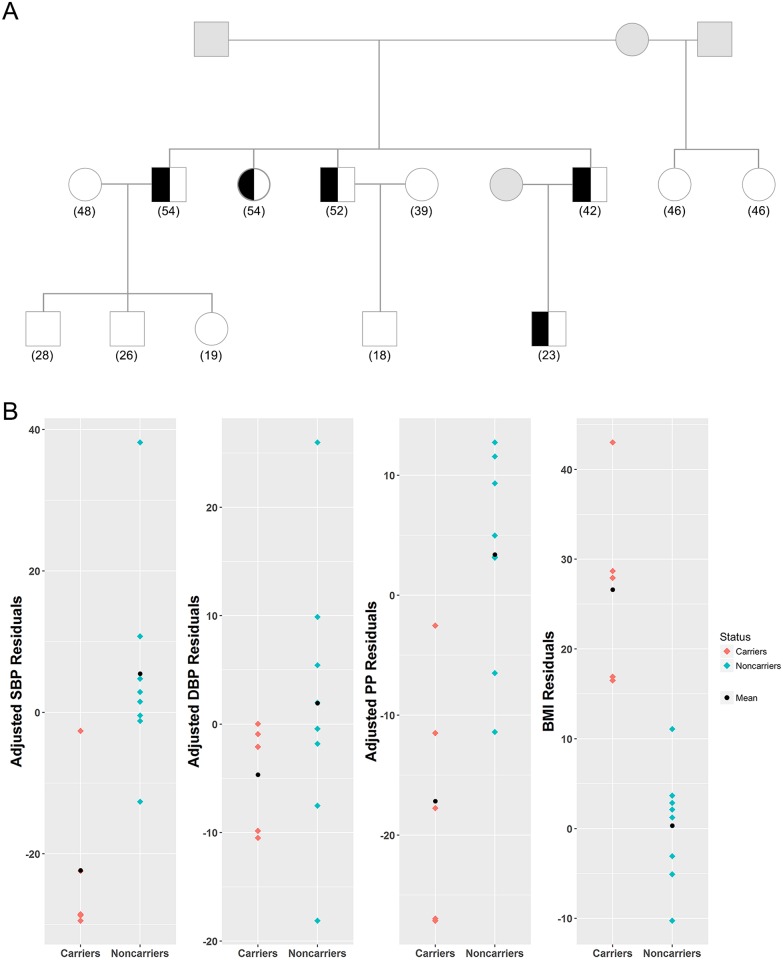
Many large genome-wide association studies (GWAS) have identified common blood pressure (BP) variants. However, most of the identified BP variants do not overlap with the linkage evidence observed from family studies. We thus hypothesize that multiple rare variants contribute to the observed linkage evidence. We performed linkage analysis using 517 individuals in 130 European families from the Cleveland Family Study (CFS) who have been genotyped on the Illumina OmniExpress Exome array. The largest linkage peak was observed on chromosome 16p13 (MLOD = 2.81) for systolic blood pressure (SBP). Follow-up conditional linkage and association analyses in the linkage region identified multiple rare, coding variants in RBFOX1 associated with reduced SBP. In a 17-member CFS family, carriers of the missense variant rs149974858 are normotensive despite being obese (average BMI = 60 kg/m2). Gene-based association test of rare variants using SKAT-O showed significant association with SBP (p-value = 0.00403) and DBP (p-value = 0.0258) in the CFS participants and the association was replicated in large independent replication studies (N = 57,234, p-value = 0.013 for SBP, 0.0023 for PP). RBFOX1 is expressed in brain tissues, the atrial appendage and left ventricle in the heart, and in skeletal muscle tissues, organs/tissues which are potentially related to blood pressure. Our study showed that associations of rare variants could be efficiently detected using family information.
许多大型全基因组关联研究(GWAS)已经确定了常见的血压(BP)变异。然而,大多数已确定的血压变异与家族研究中观察到的连锁证据并不重叠。因此,我们假设多个罕见变异导致了观察到的连锁证据。我们使用来自克利夫兰家族研究(CFS)的130个欧洲家庭中的517名个体进行了连锁分析,这些个体已在Illumina OmniExpress外显子阵列上进行了基因分型。收缩压(SBP)在16号染色体p13区域观察到最大的连锁峰(MLOD = 2.81)。在连锁区域进行的后续条件连锁和关联分析确定了RBFOX1中多个与SBP降低相关的罕见编码变异。在一个有17名成员的CFS家族中,错义变异rs149974858的携带者尽管肥胖(平均BMI = 60 kg/m2),但血压正常。使用SKAT - O对罕见变异进行的基因分型关联测试显示,在CFS参与者中与SBP(p值 = 0.00403)和舒张压(DBP)(p值 = 0.0258)有显著关联,并且该关联在大型独立重复研究中得到了重复(N = 57,234,SBP的p值 = 0.013,脉压的p值 = 0.0023)。RBFOX1在脑组织、心脏的心耳和左心室以及骨骼肌组织中表达,这些器官/组织可能与血压有关。我们的研究表明,利用家族信息可以有效地检测罕见变异的关联。