Roth J, Zuber C, Wagner P, Taatjes D J, Weisgerber C, Heitz P U, Goridis C, Bitter-Suermann D
Biocenter, University of Basle, Switzerland.
Proc Natl Acad Sci U S A. 1988 May;85(9):2999-3003. doi: 10.1073/pnas.85.9.2999.
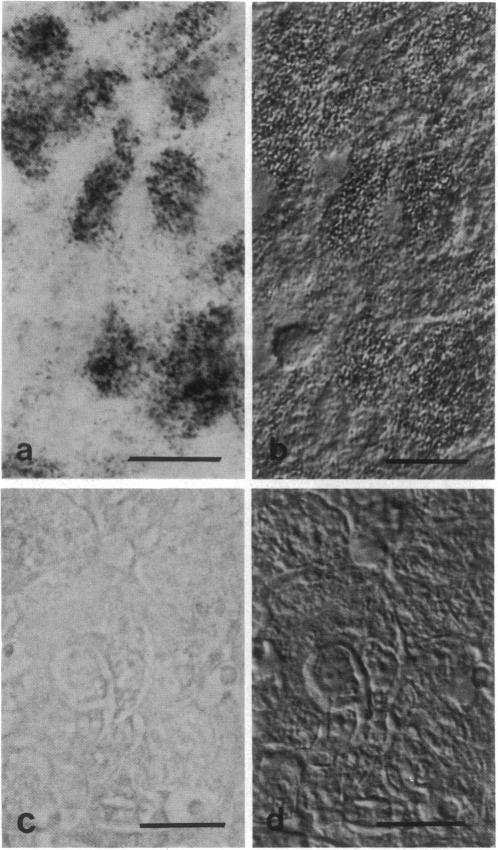
A unique structural feature of the neural cell adhesion molecule N-CAM is the presence of homopolymers of alpha (2----8)-linked sialic acid units. We have used two specific probes for the detection of poly(sialic acid) in normal human kidney and Wilms tumor: a monoclonal antibody against meningococci group B capsular polysaccharide (homopolymers of alpha (2----8)-linked sialic acid units), which shows no crossreactivity with polynucleotides and denaturated DNA, and bacteriophage-induced endosialidases specifically hydrolyzing alpha (2----8)-linked poly(sialic acid) units. Additionally, for the detection of N-CAM, antibodies recognizing the polypeptide portion of the molecule and biotinylated antisense RNA transcribed from a cDNA clone for N-CAM were applied. Poly(sialic acid) was regionally detectable in human embryonic kidney but undetectable in normal adult kidney, as already reported for rat kidney. The malignant Wilms tumor, which is characterized by the presence of structural components resembling those found in embryonic kidney, reexpressed poly(sialic acid) units and showed positive immunostaining for the polypeptide portion of N-CAM. Immunoblot analysis of Wilms tumor as well as human embryonic kidney and brain with the monoclonal anti-poly(sialic acid) antibody revealed in each case the same high molecular mass broad band. In situ hybridization demonstrated the presence of mRNA for N-CAM in Wilms tumor. We conclude that poly(sialic acid), most probably present on N-CAM, is an oncodevelopmental antigen in human kidney.
神经细胞黏附分子N-CAM的一个独特结构特征是存在α(2→8)连接的唾液酸单元同聚物。我们使用了两种特异性探针来检测正常人肾脏和肾母细胞瘤中的聚唾液酸:一种针对B群脑膜炎球菌荚膜多糖(α(2→8)连接的唾液酸单元同聚物)的单克隆抗体,它与多核苷酸和变性DNA无交叉反应,以及能特异性水解α(2→8)连接的聚唾液酸单元的噬菌体诱导的内切唾液酸酶。此外,为了检测N-CAM,还应用了识别该分子多肽部分的抗体以及从N-CAM的cDNA克隆转录而来的生物素化反义RNA。聚唾液酸在人胚胎肾中可局部检测到,但在正常成人肾脏中未检测到,这与大鼠肾脏的情况已报道的一致。以存在类似于胚胎肾中发现的结构成分特征的恶性肾母细胞瘤,重新表达了聚唾液酸单元,并对N-CAM的多肽部分显示出阳性免疫染色。用单克隆抗聚唾液酸抗体对肾母细胞瘤以及人胚胎肾和脑进行免疫印迹分析,在每种情况下均显示出相同的高分子量宽带。原位杂交表明肾母细胞瘤中存在N-CAM的mRNA。我们得出结论,很可能存在于N-CAM上的聚唾液酸是人类肾脏中的一种肿瘤发生发育抗原。