Department of Surgery, University of Wisconsin School of Medicine and Public Health, Madison, Wisconsin, United States of America.
Division of Pediatric Surgery, Department of Surgery, University of Tennessee Health Sciences Center, Memphis, Tennessee, United States of America.
Sci Rep. 2017 Mar 28;7:45645. doi: 10.1038/srep45645.
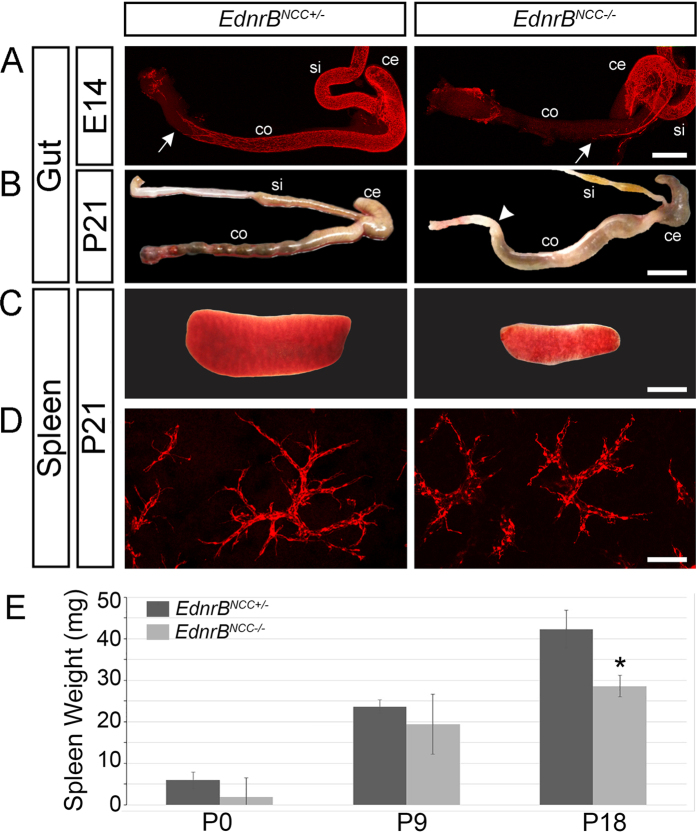
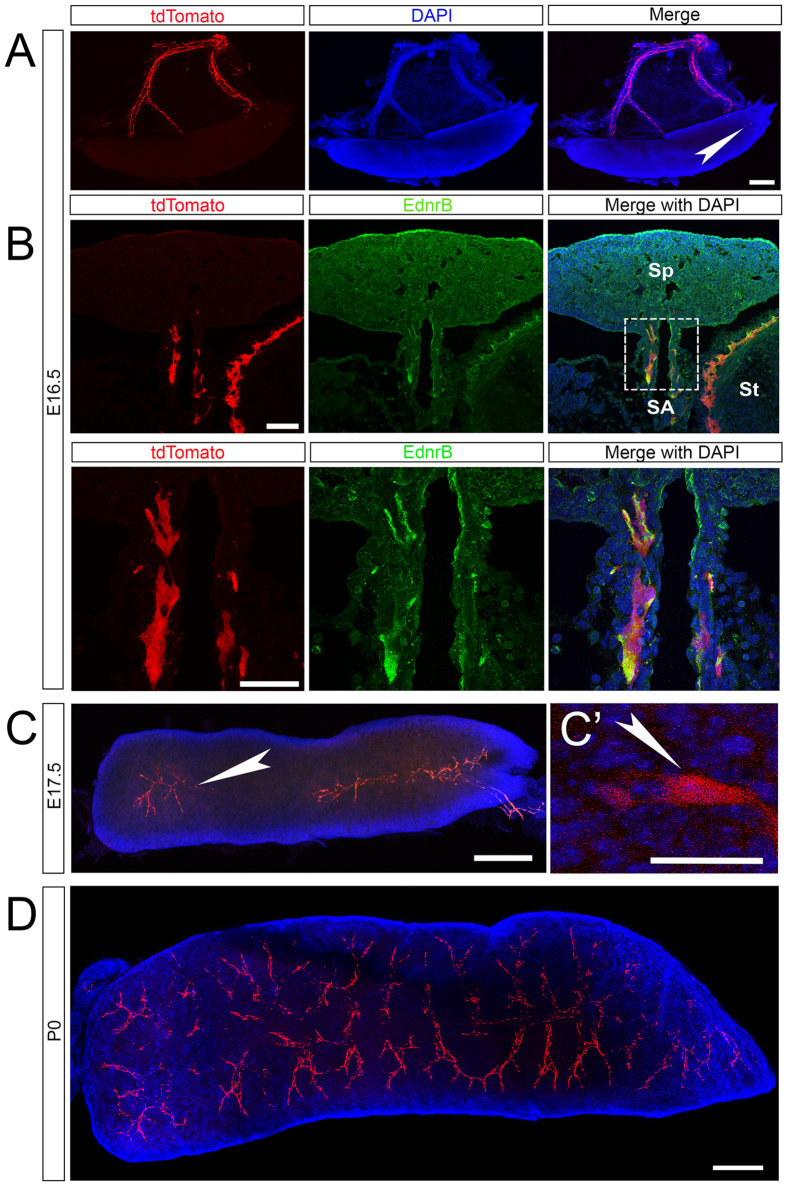
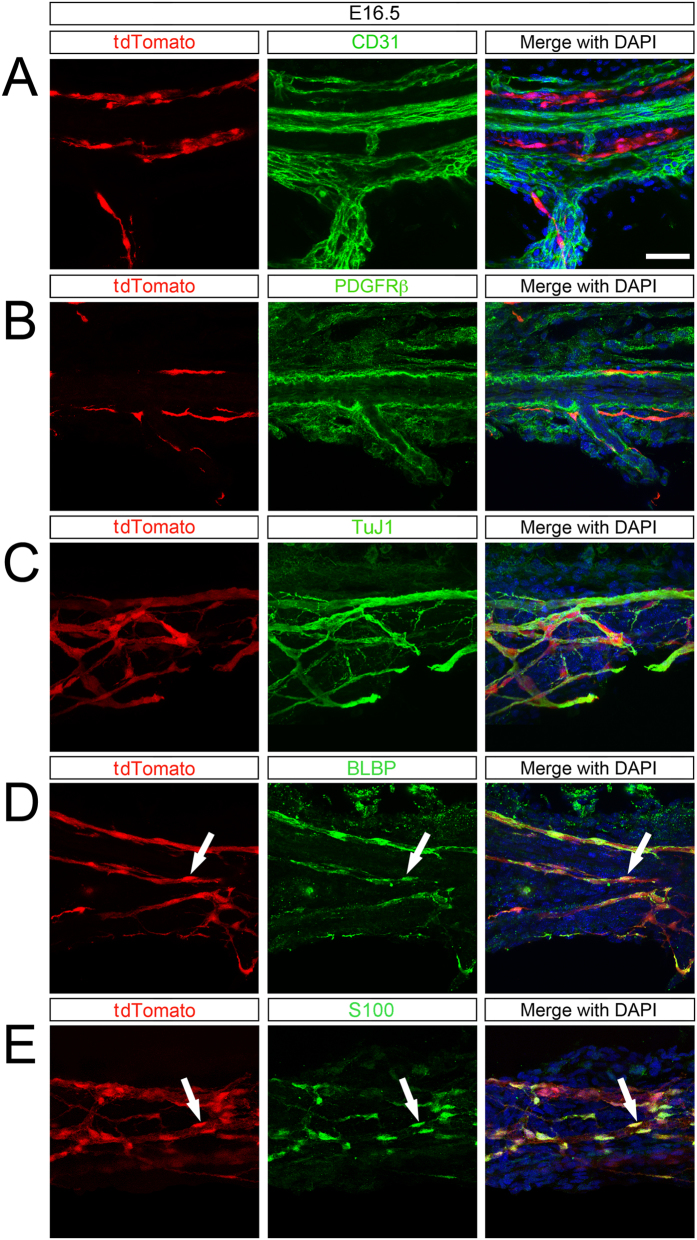
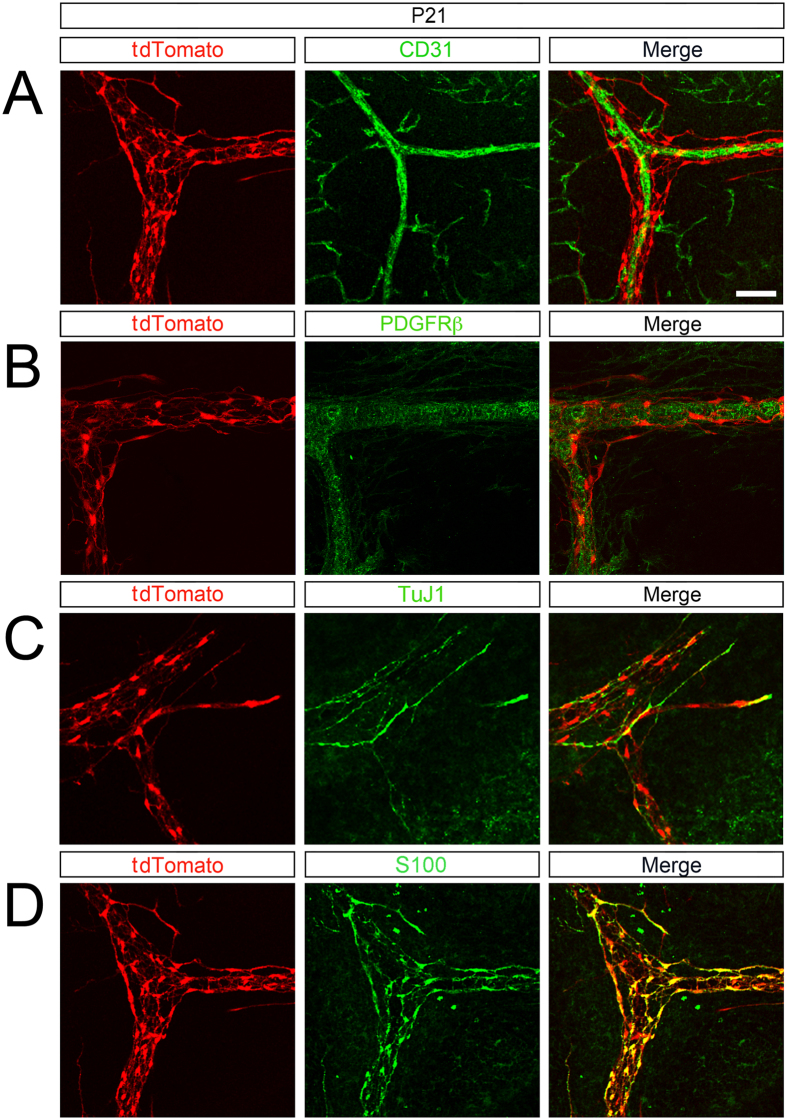
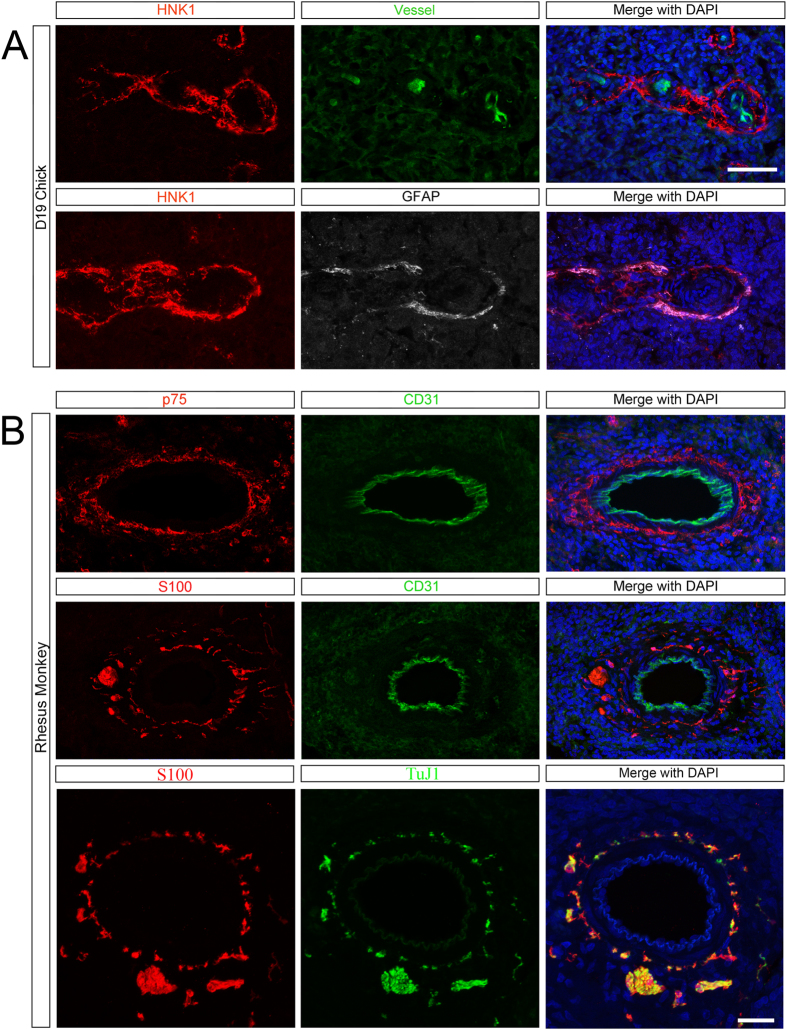
Neural crest cells (NCC) are multi-potent cells of ectodermal origin that colonize diverse organs, including the gastrointestinal tract to form the enteric nervous system (ENS) and hematopoietic organs (bone marrow, thymus) where they participate in lymphocyte trafficking. Recent studies have implicated the spleen as an anatomic site for integration of inflammatory signals from the intestine with efferent neural inputs. We have previously observed alterations in splenic lymphocyte subsets in animals with defective migration of NCC that model Hirschsprung's disease, leading us to hypothesize that there may be a direct cellular contribution of NCC to the spleen. Here, we demonstrate that NCC colonize the spleen during embryogenesis and persist into adulthood. Splenic NCC display markers indicating a glial lineage and are arranged anatomically adjacent to blood vessels, pericytes and nerves, suggesting an astrocyte-like phenotype. Finally, we identify similar neural-crest derived cells in both the avian and non-human primate spleen, showing evolutionary conservation of these cells.
神经嵴细胞(NCC)是外胚层起源的多能细胞,可定植于多种器官,包括胃肠道以形成肠神经系统(ENS)和造血器官(骨髓、胸腺),在这些器官中它们参与淋巴细胞迁移。最近的研究表明,脾脏是将来自肠道的炎症信号与传出神经输入整合的解剖部位。我们之前观察到在模型先天性巨结肠症的 NCC 迁移缺陷动物中,脾脏淋巴细胞亚群发生改变,这使我们假设 NCC 可能对脾脏有直接的细胞贡献。在这里,我们证明 NCC 在胚胎发生期间定植于脾脏,并持续存在于成年期。脾脏 NCC 表达表明其神经胶质谱系的标志物,并在解剖上与血管、周细胞和神经相邻排列,提示其具有星形胶质细胞样表型。最后,我们在禽类和非人类灵长类动物的脾脏中均鉴定出类似的神经嵴衍生细胞,表明这些细胞具有进化保守性。