Lambertus Stanley, Bax Nathalie M, Fakin Ana, Groenewoud Joannes M M, Klevering B Jeroen, Moore Anthony T, Michaelides Michel, Webster Andrew R, van der Wilt Gert Jan, Hoyng Carel B
Department of Ophthalmology, Donders Institute for Brain, Cognition and Behaviour, Radboud university medical center, Nijmegen, The Netherlands.
Moorfields Eye Hospital and UCL Institute of Ophthalmology, London, United Kingdom.
PLoS One. 2017 Mar 29;12(3):e0174020. doi: 10.1371/journal.pone.0174020. eCollection 2017.
Each inherited retinal disorder is rare, but together, they affect millions of people worldwide. No treatment is currently available for these blinding diseases, but promising new options-including gene therapy-are emerging. Arguably, the most prevalent retinal dystrophy is Stargardt disease. In each case, the specific combination of ABCA4 variants (> 900 identified to date) and modifying factors is virtually unique. It accounts for the vast phenotypic heterogeneity including variable rates of functional and structural progression, thereby potentially limiting the ability of phase I/II clinical trials to assess efficacy of novel therapies with few patients. To accommodate this problem, we developed and validated a sensitive and reliable composite clinical trial endpoint for disease progression based on structural measurements of retinal degeneration.
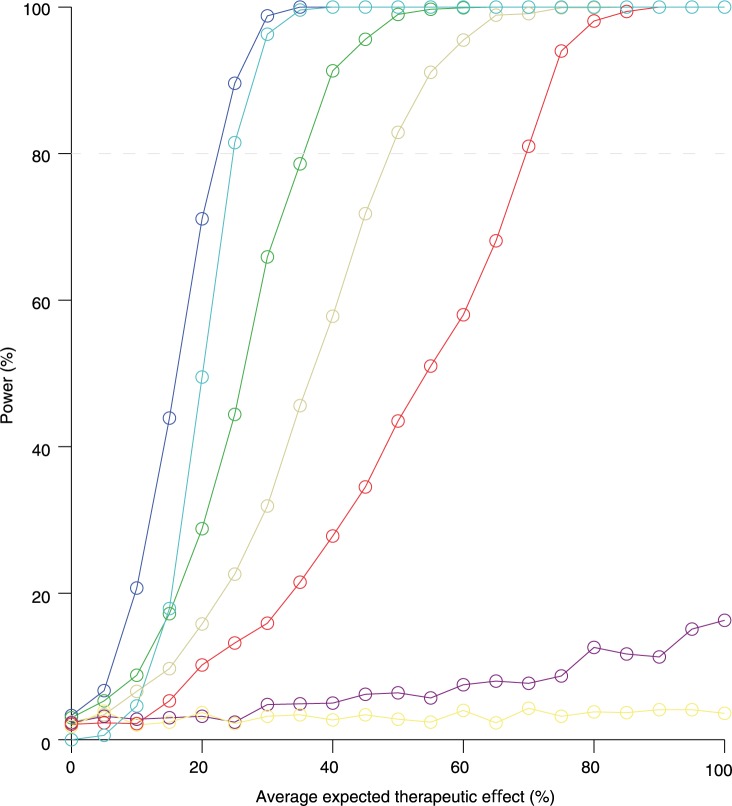
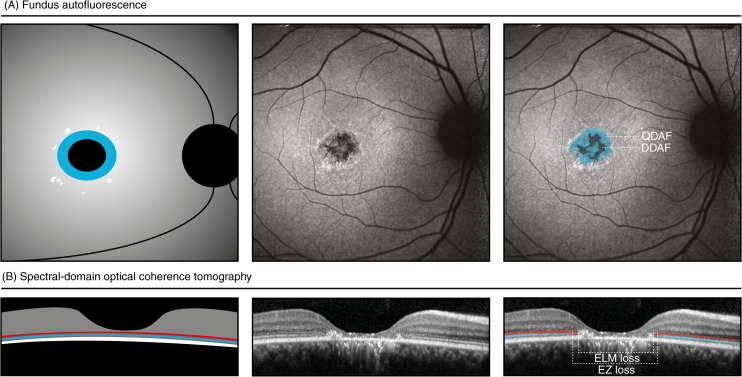
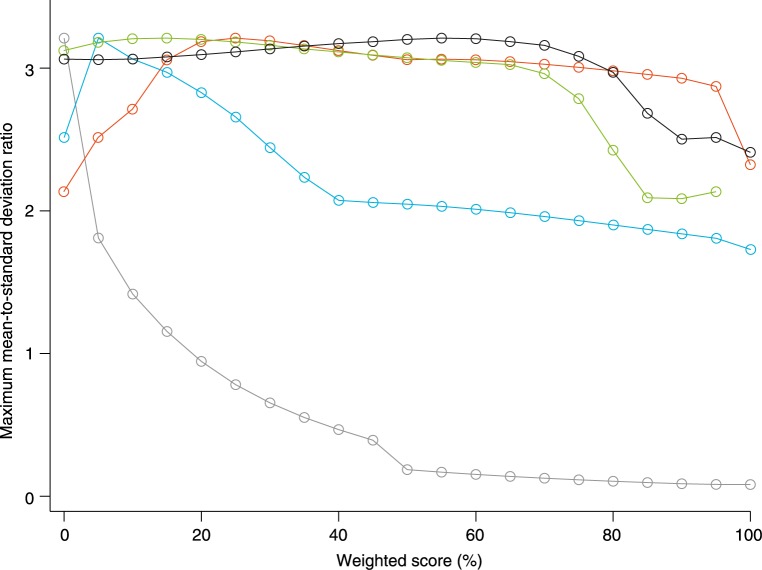
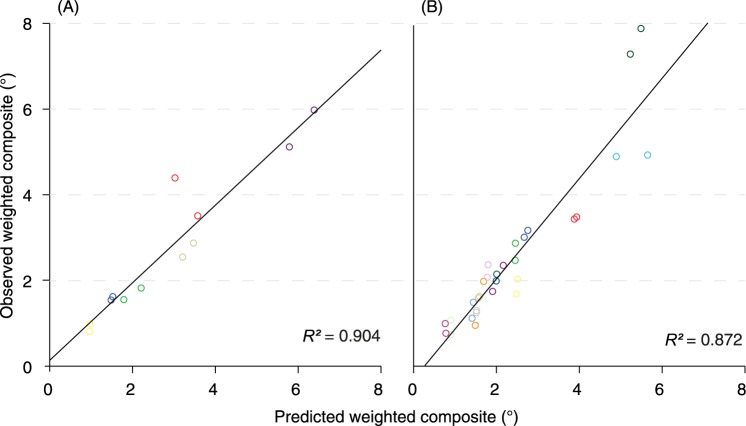
We used longitudinal data from early-onset Stargardt patients from the Netherlands (development cohort, n = 14) and the United Kingdom (external validation cohort, n = 18). The composite endpoint was derived from best-corrected visual acuity, fundus autofluorescence, and spectral-domain optical coherence tomography. Weighting optimization techniques excluded visual acuity from the composite endpoint. After optimization, the endpoint outperformed each univariable outcome, and showed an average progression of 0.41° retinal eccentricity per year (95% confidence interval, 0.30-0.52). Comparing with actual longitudinal values, the model accurately predicted progression (R2, 0.904). These properties were largely preserved in the validation cohort (0.43°/year [0.33-0.53]; prediction: R2, 0.872). We subsequently ran a two-year trial simulation with the composite endpoint, which detected a 25% decrease in disease progression with 80% statistical power using only 14 patients.
These results suggest that a multimodal endpoint, reflecting structural macular changes, provides a sensitive measurement of disease progression in Stargardt disease. It can be very useful in the evaluation of novel therapeutic modalities in rare disorders.
每种遗传性视网膜疾病都很罕见,但总体而言,它们影响着全球数百万人。目前尚无针对这些致盲疾病的治疗方法,但包括基因疗法在内的有前景的新选择正在出现。可以说,最常见的视网膜营养不良是斯塔加特病。在每种情况下,ABCA4变体(迄今已鉴定出900多种)与修饰因子的特定组合几乎都是独特的。这导致了广泛的表型异质性,包括功能和结构进展的不同速率,从而可能限制了I/II期临床试验在少数患者中评估新疗法疗效的能力。为了解决这个问题,我们基于视网膜变性的结构测量,开发并验证了一种用于疾病进展的敏感且可靠的综合临床试验终点。
我们使用了来自荷兰(开发队列,n = 14)和英国(外部验证队列,n = 18)的早发性斯塔加特病患者的纵向数据。综合终点来自最佳矫正视力、眼底自发荧光和光谱域光学相干断层扫描。加权优化技术将视力排除在综合终点之外。优化后,该终点优于每个单变量结果,显示每年视网膜偏心度平均进展0.41°(95%置信区间,0.30 - 0.52)。与实际纵向值相比,该模型准确预测了进展情况(R2,0.904)。这些特性在验证队列中基本得以保留(0.43°/年[0.33 - 0.53];预测:R2,0.872)。随后,我们使用综合终点进行了为期两年的试验模拟,该模拟仅使用14名患者就以80%的统计功效检测到疾病进展降低了25%。
这些结果表明,一个反映黄斑结构变化的多模态终点为斯塔加特病的疾病进展提供了敏感的测量方法。它在评估罕见疾病的新型治疗方式方面可能非常有用。