Ballenghien Marion, Faivre Nicolas, Galtier Nicolas
UMR5554 - Institute of Evolutionary Sciences, University Montpellier, CNRS, IRD, EPHE, Place Eugène Bataillon, CC64, 34095, Montpellier, France.
UMR7144 - Adaptation et Diversité en Milieu Marin - CNRS, Université Pierre et MarieCurie, Station Biologique de Roscoff, 29680, Roscoff, France.
BMC Biol. 2017 Mar 29;15(1):25. doi: 10.1186/s12915-017-0366-6.
Contamination is a well-known but often neglected problem in molecular biology. Here, we investigated the prevalence of cross-contamination among 446 samples from 116 distinct species of animals, which were processed in the same laboratory and subjected to subcontracted transcriptome sequencing.
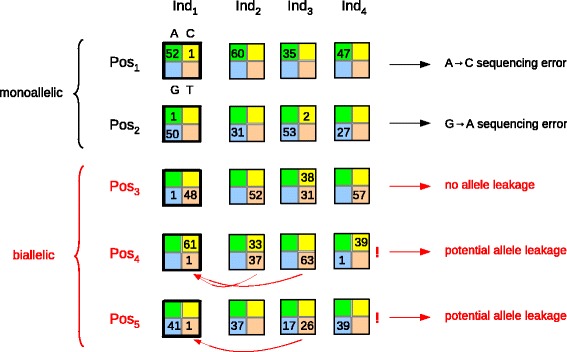
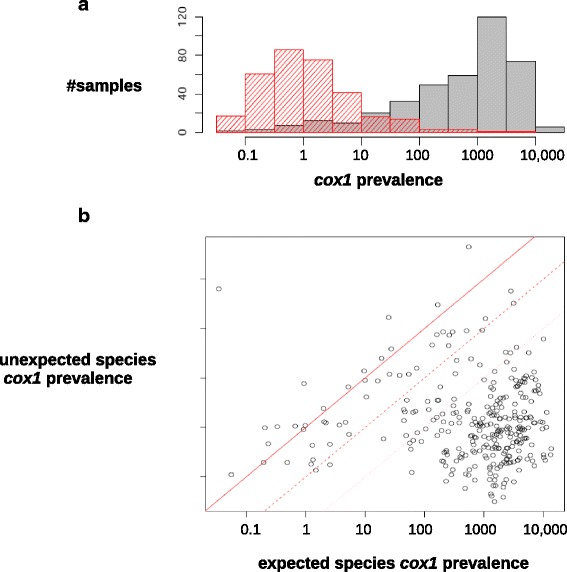
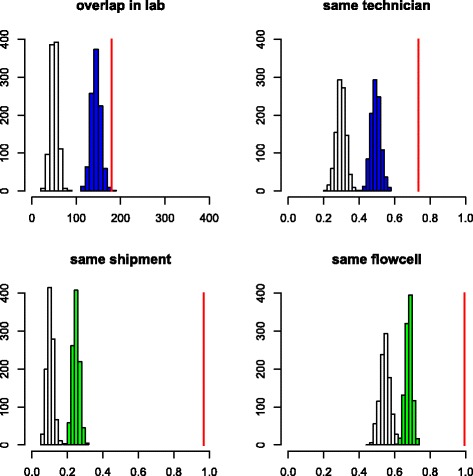
Using cytochrome oxidase 1 as a barcode, we identified a minimum of 782 events of between-species contamination, with approximately 80% of our samples being affected. An analysis of laboratory metadata revealed a strong effect of the sequencing center: nearly all the detected events of between-species contamination involved species that were sent the same day to the same company. We introduce new methods to address the amount of within-species, between-individual contamination, and to correct for this problem when calling genotypes from base read counts.
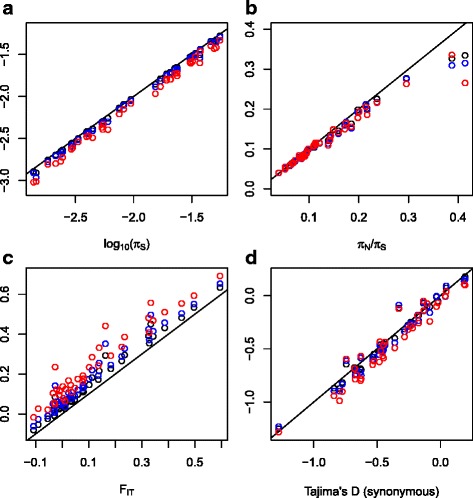
We report evidence for pervasive within-species contamination in this data set, and show that classical population genomic statistics, such as synonymous diversity, the ratio of non-synonymous to synonymous diversity, inbreeding coefficient F, and Tajima's D, are sensitive to this problem to various extents. Control analyses suggest that our published results are probably robust to the problem of contamination. Recommendations on how to prevent or avoid contamination in large-scale population genomics/molecular ecology are provided based on this analysis.
污染是分子生物学中一个广为人知但常被忽视的问题。在此,我们调查了来自116种不同动物的446个样本之间交叉污染的发生率,这些样本在同一实验室处理并进行了外包转录组测序。
使用细胞色素氧化酶1作为条形码,我们鉴定出至少782起种间污染事件,约80%的样本受到影响。对实验室元数据的分析揭示了测序中心的强烈影响:几乎所有检测到的种间污染事件都涉及同一天送往同一家公司的物种。我们引入了新方法来处理种内、个体间污染的数量,并在从碱基读数计数中调用基因型时校正这一问题。
我们报告了该数据集中普遍存在种内污染的证据,并表明经典的群体基因组统计数据,如同义多样性、非同义与同义多样性的比率、近交系数F和 Tajima's D,在不同程度上对这一问题敏感。对照分析表明,我们已发表的结果可能对污染问题具有稳健性。基于此分析,提供了关于如何在大规模群体基因组学/分子生态学中预防或避免污染的建议。