Department of Life, Health and Chemical Sciences, Biomedical Research Network, Open University, Walton Hall, Milton Keynes, MK7 6AA, UK.
Randall Division of Cell and Molecular Biophysics, King's College London, New Hunt's House, Guy's Campus, London SE1 1UL, UK.
Sci Rep. 2017 Mar 30;7:45284. doi: 10.1038/srep45284.
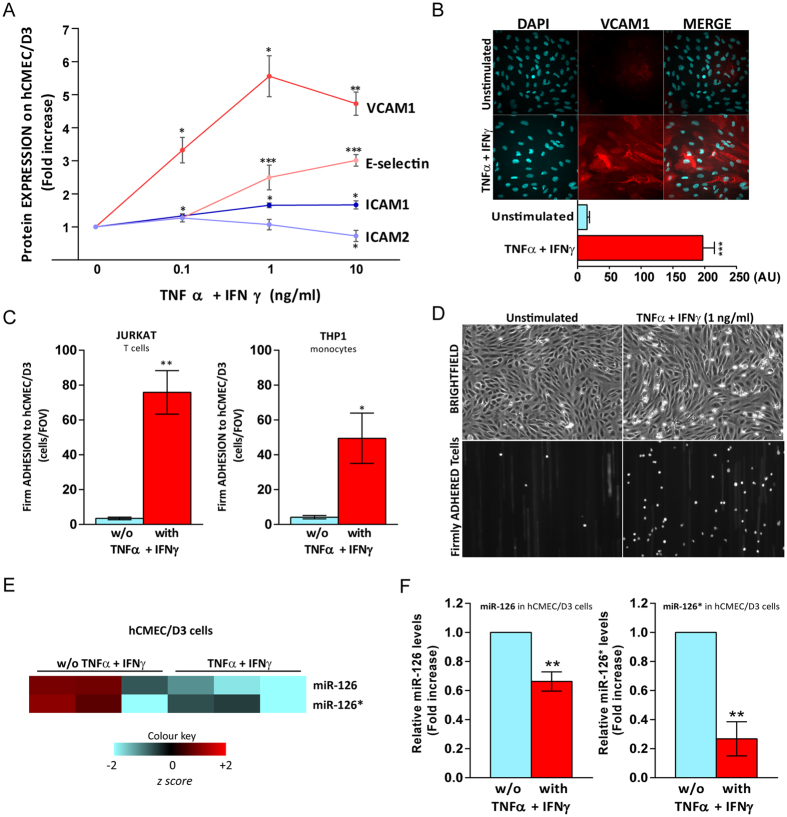
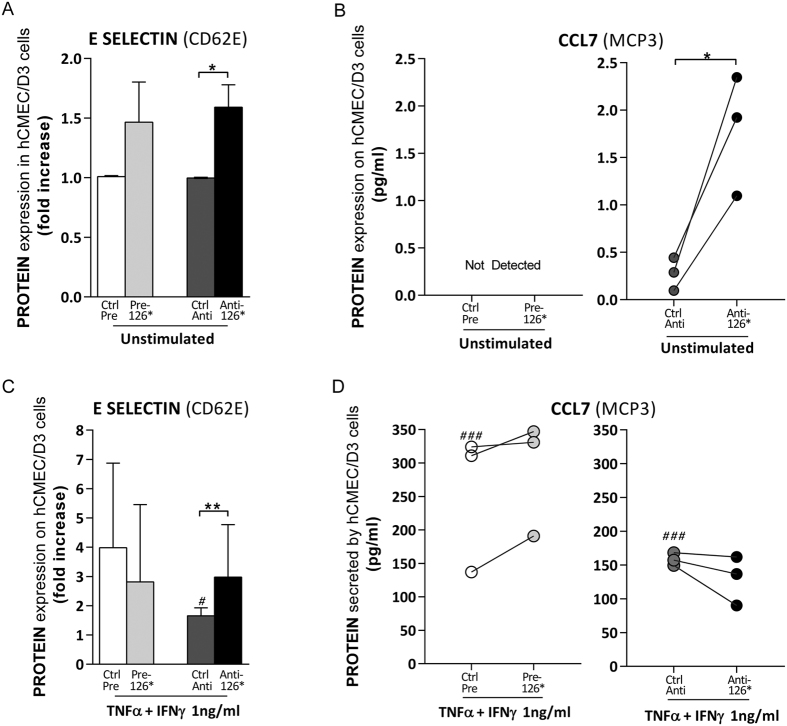
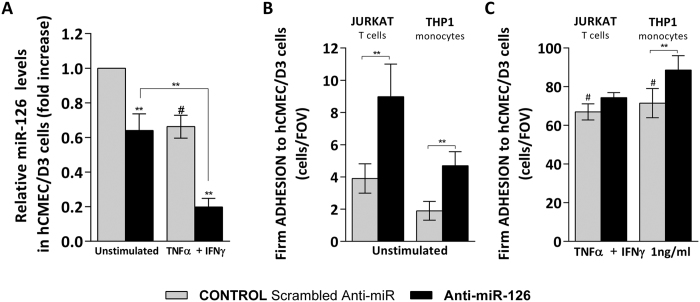
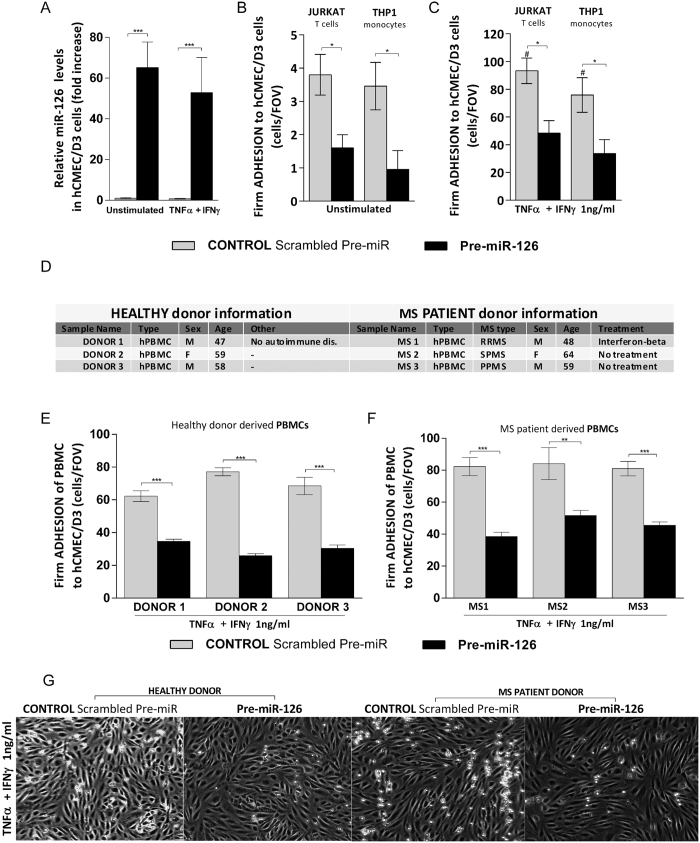
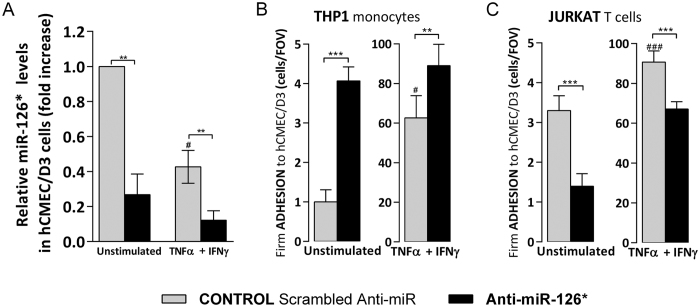
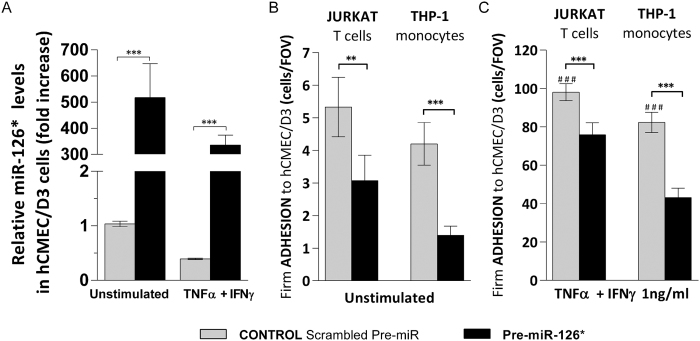
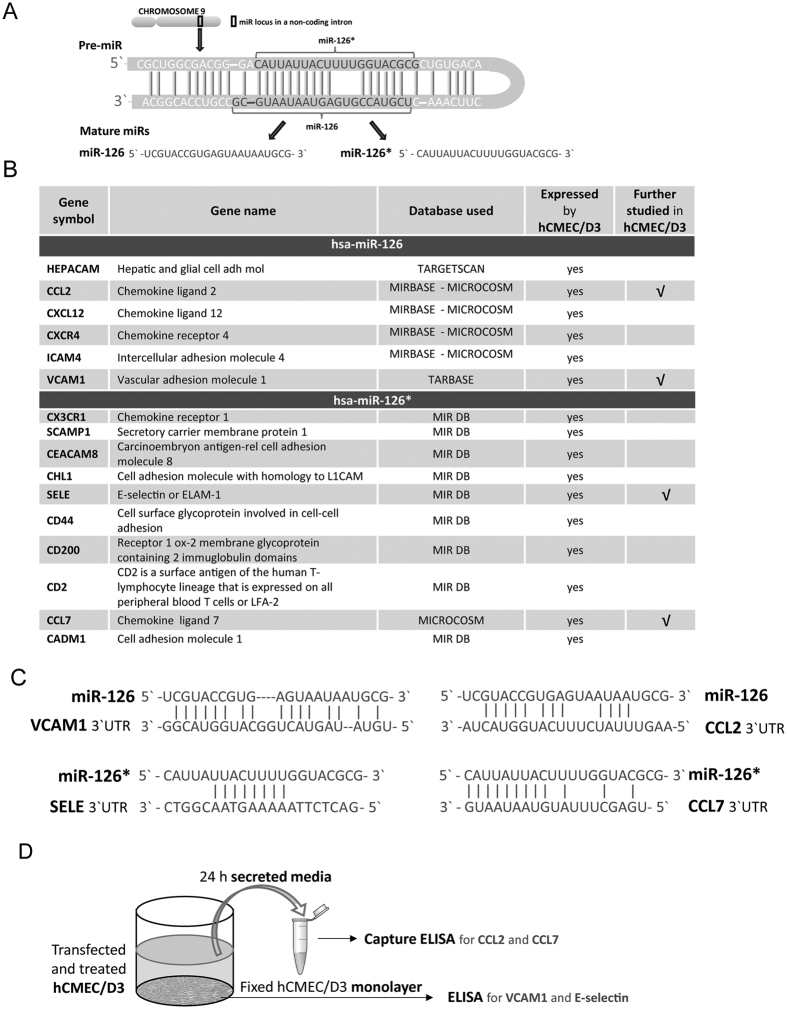
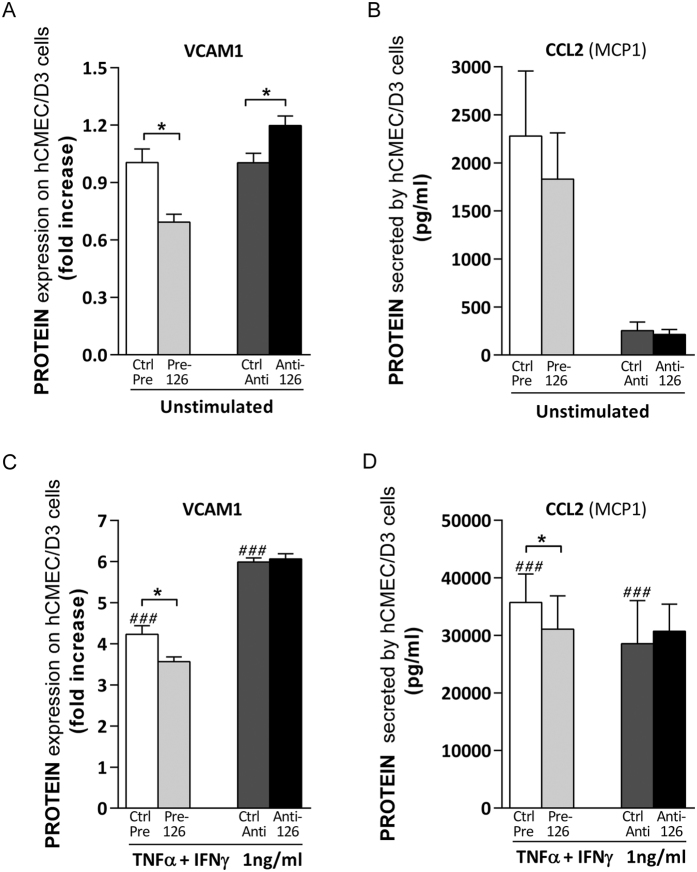
Leukocyte adhesion to brain endothelial cells, the blood-brain barrier main component, is a critical step in the pathogenesis of neuroinflammatory diseases such as multiple sclerosis (MS). Leukocyte adhesion is mediated mainly by selectins, cell adhesion molecules and chemokines induced by pro-inflammatory cytokines such as TNFα and IFNγ, but the regulation of this process is not fully clear. This study investigated the regulation of firm leukocyte adhesion to human brain endothelium by two different brain endothelial microRNAs (miRs), miR-126 and miR-126*, that are downregulated by TNFα and IFNγ in a human brain endothelial cell line, hCMEC/D3. Using a leukocyte adhesion in vitro assay under shear forces mimicking blood flow, we observed that reduction of endothelial miR-126 and miR-126* enhanced firm monocyte and T cell adhesion to hCMEC/D3 cells, whereas their increased expression partially prevented THP1, Jurkat and primary MS patient-derived PBMC firm adhesion. Furthermore, we observed that miR-126* and miR-126 downregulation increased E-selectin and VCAM1, respectively, while miR-126 overexpression reduced VCAM1 and CCL2 expression by hCMEC/D3 cells, suggesting that these miRs regulate leukocyte adhesion by modulating the expression of adhesion-associated endothelial mRNA targets. Hence, human brain endothelial miR-126 and miR-126* could be used as a therapeutic tool to reduce leukocyte adhesion and thus reduce neuroinflammation.
白细胞黏附于脑内皮细胞,即血脑屏障的主要组成部分,是多发性硬化症(MS)等神经炎症性疾病发病机制中的关键步骤。白细胞黏附主要由选择素、细胞黏附分子和趋化因子介导,这些物质由促炎细胞因子如 TNFα 和 IFNγ 诱导产生,但这一过程的调节机制尚不完全清楚。本研究利用 TNFα 和 IFNγ 下调的两种不同脑内皮 microRNA(miR),即 miR-126 和 miR-126*,研究了其对人脑血管内皮细胞系 hCMEC/D3 中白细胞牢固黏附的调节作用。在模拟血流剪切力的体外白细胞黏附实验中,我们观察到内皮细胞 miR-126 和 miR-126* 的减少增强了单核细胞和 T 细胞与 hCMEC/D3 细胞的牢固黏附,而其表达增加则部分阻止了 THP1、Jurkat 和原发性 MS 患者来源的 PBMC 的牢固黏附。此外,我们发现 miR-126* 和 miR-126 的下调分别增加了 E-选择素和 VCAM1 的表达,而 miR-126 的过表达降低了 hCMEC/D3 细胞中 VCAM1 和 CCL2 的表达,提示这些 miR 通过调节黏附相关内皮细胞 mRNA 靶标来调节白细胞黏附。因此,人脑内皮 miR-126 和 miR-126* 可作为一种治疗工具,减少白细胞黏附,从而减轻神经炎症。