Hu Rui, Wei Pan, Jin Lu, Zheng Teng, Chen Wen-Yu, Liu Xiao-Ya, Shi Xiao-Dong, Hao Jing-Ru, Sun Nan, Gao Can
Jiangsu Province Key Laboratory of Anesthesiology, Xuzhou Medical University, Xuzhou, Jiangsu 221004, China.
Jiangsu Province Key Laboratory of Anesthesia and Analgesia Application, Xuzhou Medical University, Xuzhou, Jiangsu 221004, China.
Cell Death Dis. 2017 Mar 30;8(3):e2717. doi: 10.1038/cddis.2017.140.
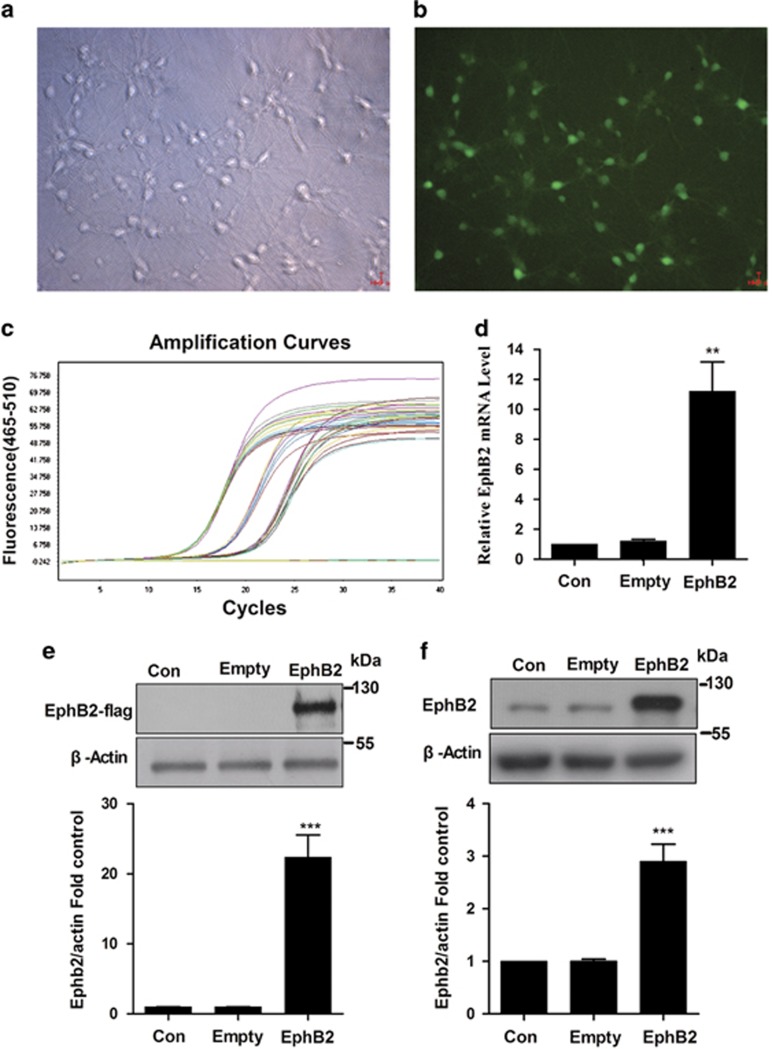
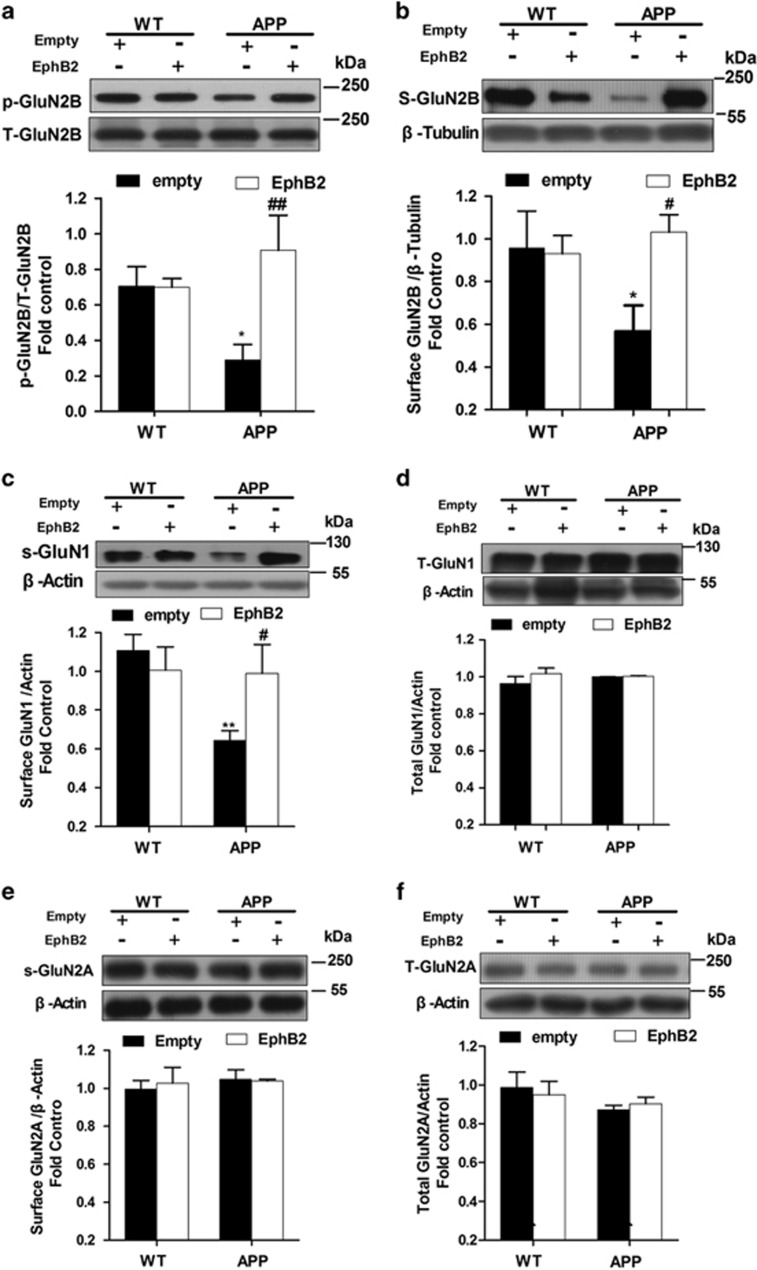
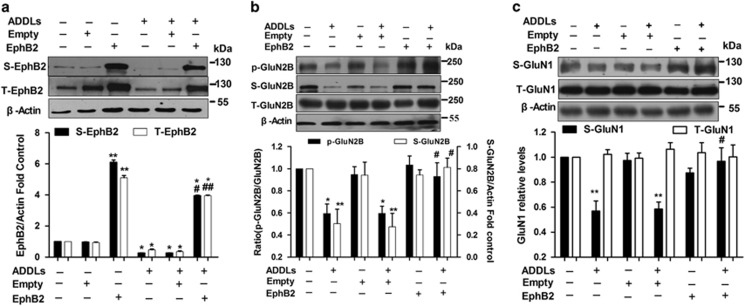
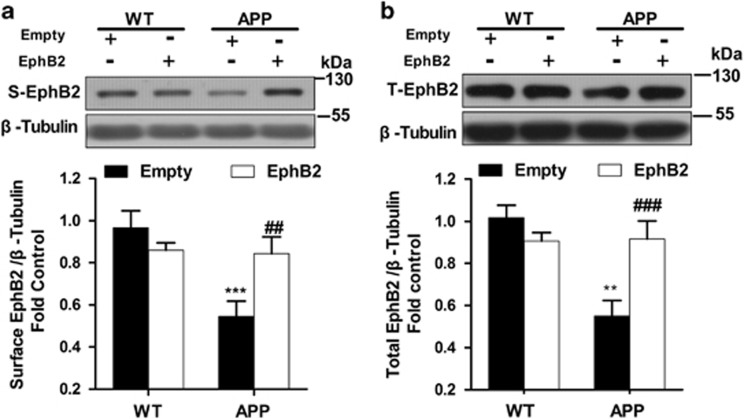
Alzheimer's disease (AD) is a progressive neurodegenerative disease, which affects more and more people. But there is still no effective treatment for preventing or reversing the progression of the disease. Soluble amyloid-beta (Aβ) oligomers, also known as Aβ-derived diffusible ligands (ADDLs) play an important role in AD. Synaptic activity and cognition critically depend on the function of glutamate receptors. Targeting N-methyl-D-aspartic acid (NMDA) receptors trafficking and its regulation is a new strategy for AD early treatment. EphB2 is a key regulator of synaptic localization of NMDA receptors. Aβ oligomers could bind to the fibronectin repeats domain of EphB2 and trigger EphB2 degradation in the proteasome. Here we identified that overexpression of EphB2 with lentiviral vectors in dorsal hippocampus improved impaired memory deficits and anxiety or depression-like behaviors in APPswe/PS1-dE9 (APP/PS1) transgenic mice. Phosphorylation and surface expression of GluN2B-containing NMDA receptors were also improved. Overexpression of EphB2 also rescued the ADDLs-induced depletion of the expression of EphB2 and GluN2B-containing NMDA receptors trafficking in cultured hippocampal neurons. These results suggest that improving the decreased expression of EphB2 and subsequent GluN2B-containing NMDA receptors trafficking in hippocampus may be a promising strategy for AD treatment.
阿尔茨海默病(AD)是一种进行性神经退行性疾病,影响着越来越多的人。但目前仍没有有效的治疗方法来预防或逆转该疾病的进展。可溶性淀粉样β(Aβ)寡聚体,也称为Aβ衍生的可扩散配体(ADDLs),在AD中起着重要作用。突触活动和认知严重依赖于谷氨酸受体的功能。靶向N-甲基-D-天冬氨酸(NMDA)受体的转运及其调节是AD早期治疗的一种新策略。EphB2是NMDA受体突触定位的关键调节因子。Aβ寡聚体可与EphB2的纤连蛋白重复结构域结合,并触发EphB2在蛋白酶体中的降解。在此,我们发现用慢病毒载体在背侧海马中过表达EphB2可改善APPswe/PS1-dE9(APP/PS1)转基因小鼠的记忆缺陷以及焦虑或抑郁样行为。含GluN2B的NMDA受体的磷酸化和表面表达也得到改善。EphB2的过表达还挽救了ADDLs诱导的培养海马神经元中EphB2表达的减少以及含GluN2B的NMDA受体转运的减少。这些结果表明,改善海马中EphB2表达的降低以及随后含GluN2B的NMDA受体的转运可能是一种有前景的AD治疗策略。