Sun Ruifang, Liu Zhigang, Tong Dongdong, Yang Yang, Guo Bo, Wang Xiaofei, Zhao Lingyu, Huang Chen
Department of Pathology, School of Basic Medical Sciences, Xi'an Jiaotong University Health Science Center, 76 Yanta West Road, Xi'an, Shaanxi 710061, P.R. China.
Key Laboratory of Environment and Genes Related to Diseases, Xi'an Jiaotong University, Ministry of Education of China, 76 Yanta West Road, Xi'an, Shaanxi 710061, P.R. China.
Cell Death Dis. 2017 Mar 30;8(3):e2714. doi: 10.1038/cddis.2017.134.
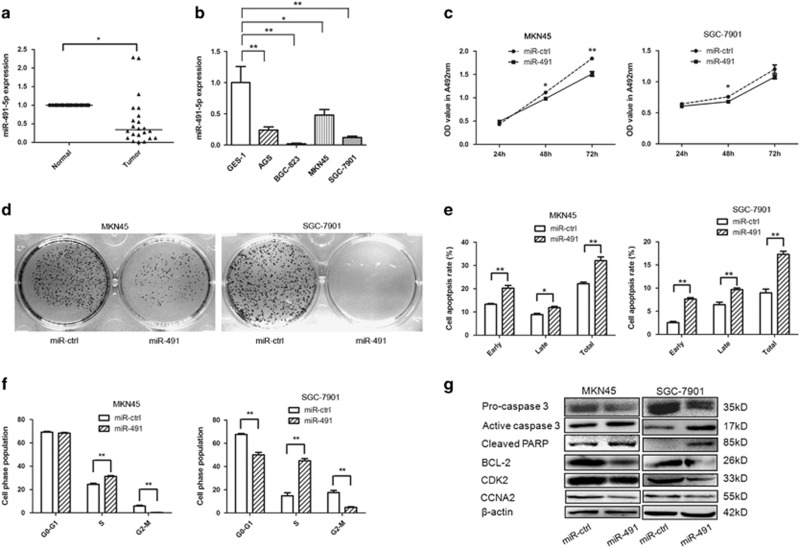
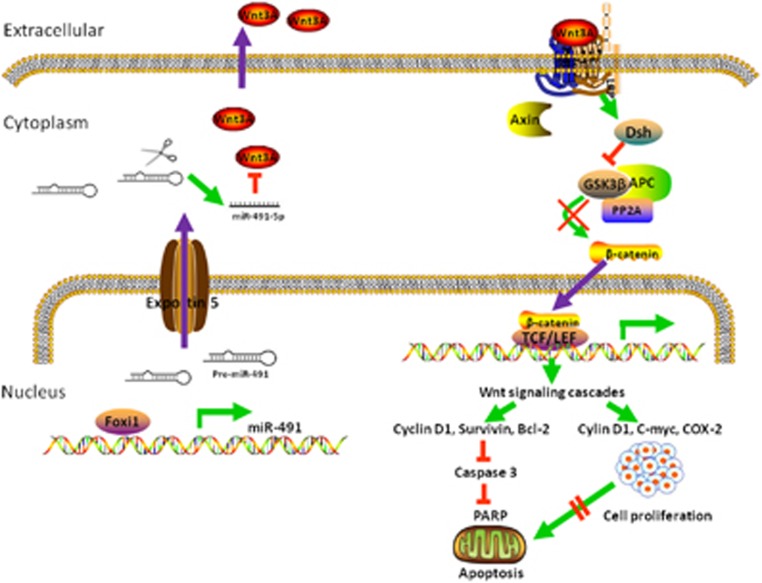
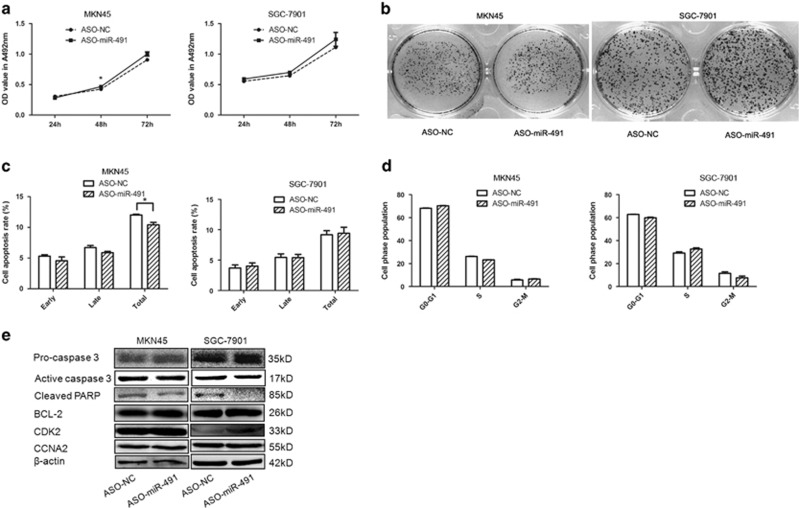
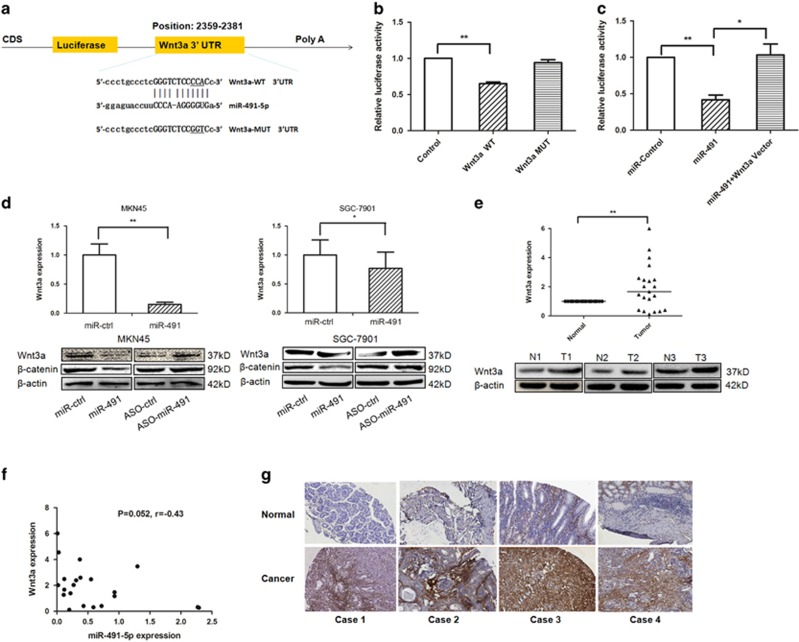
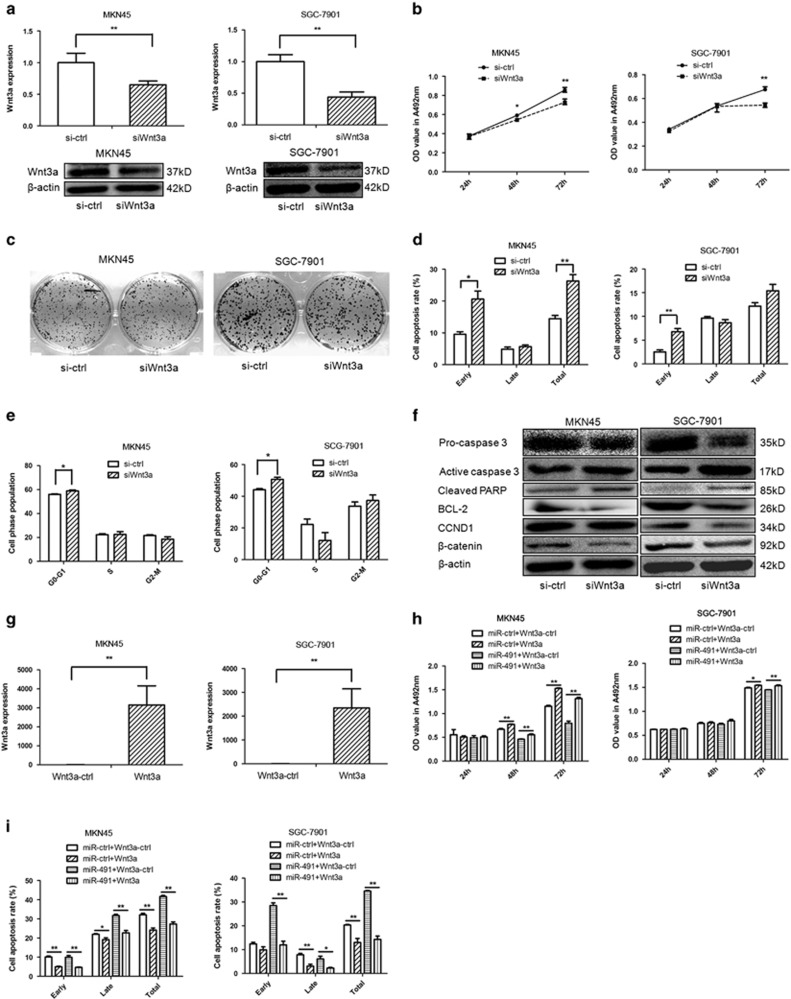
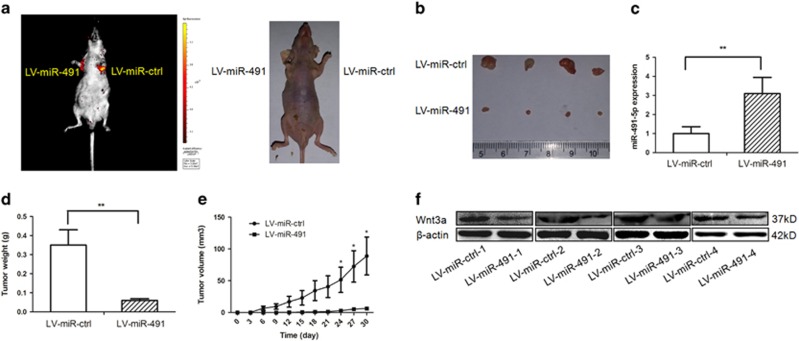
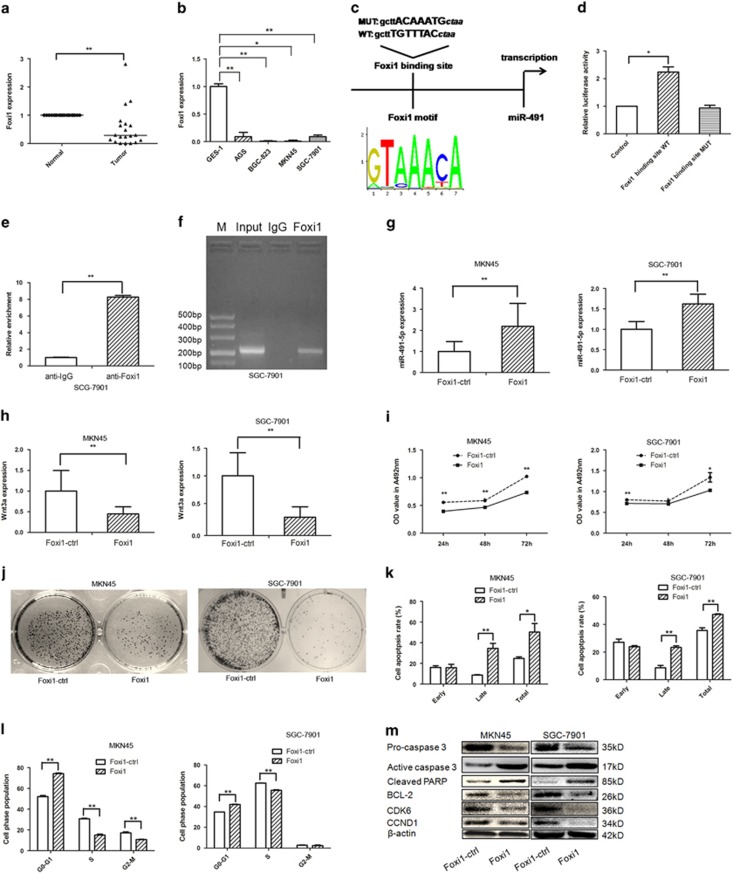
Accumulated evidence has suggested that microRNAs (miRNAs) have an important role in tumor development and progression by regulating diverse signaling pathways. However, the precise role of miRNAs in gastric cancer (GC) has not been elucidated. In this study, we describe the function and regulation network of miR-491-5p in GC. miR-491-5p is frequently downregulated in GC tissues compared with adjacent non-cancerous tissues. Forced expression of miR-491-5p significantly inhibits proliferation and colony formation, and promotes apoptosis in GC cells. Through bioinformatic analysis and luciferase assays, we confirm that miR-491-5p targets Wnt3a. Silencing Wnt3a inhibits cell proliferation and induces apoptosis. Similarly, restoration of Wnt3a counteracts the effects of miR-491-5p expression. Moreover, bioinformatic and luciferase assays indicate that the expression of miR-491-5p is regulated by Foxi1, which binds to its promoter and activates miR-491-5p expression. In conclusion, to the best of our knowledge, our findings are the first to demonstrate that Foxi1 is a key player in the transcriptional control of miR-491-5p and that miR-491-5p acts as an anti-oncogene by targeting Wnt3a/β-catenin signaling in GC. Our study reveals that Foxi1/miR-491-5p/Wnt3a/β-catenin signaling is critical in the progression of GC. Targeting the pathway described in this study may open up new prospects to restrict the progression of GC.
越来越多的证据表明,微小RNA(miRNA)通过调节多种信号通路在肿瘤发生和发展中发挥重要作用。然而,miRNA在胃癌(GC)中的具体作用尚未阐明。在本研究中,我们描述了miR-491-5p在GC中的功能和调控网络。与相邻的非癌组织相比,miR-491-5p在GC组织中经常下调。miR-491-5p的强制表达显著抑制GC细胞的增殖和集落形成,并促进其凋亡。通过生物信息学分析和荧光素酶测定,我们证实miR-491-5p靶向Wnt3a。沉默Wnt3a可抑制细胞增殖并诱导凋亡。同样,Wnt3a的恢复可抵消miR-491-5p表达的影响。此外,生物信息学和荧光素酶测定表明,miR-491-5p的表达受Foxi1调控,Foxi1与其启动子结合并激活miR-491-5p的表达。总之,据我们所知,我们的研究结果首次证明Foxi1是miR-491-5p转录调控的关键因子,并且miR-491-5p通过靶向GC中的Wnt3a/β-连环蛋白信号通路发挥抗癌基因的作用。我们的研究表明,Foxi1/miR-491-5p/Wnt3a/β-连环蛋白信号通路在GC进展中至关重要。针对本研究中描述的通路进行靶向治疗可能为限制GC进展开辟新的前景。