Chitramuthu Babykumari P, Kay Denis G, Bateman Andrew, Bennett Hugh P J
Endocrine Research Laboratory, Royal Victoria Hospital, McGill University Health Centre Research Institute, Montreal, Québec, Canada.
Neurodyn Inc., Charlottetown, Prince Edward Island, Canada.
PLoS One. 2017 Mar 30;12(3):e0174784. doi: 10.1371/journal.pone.0174784. eCollection 2017.
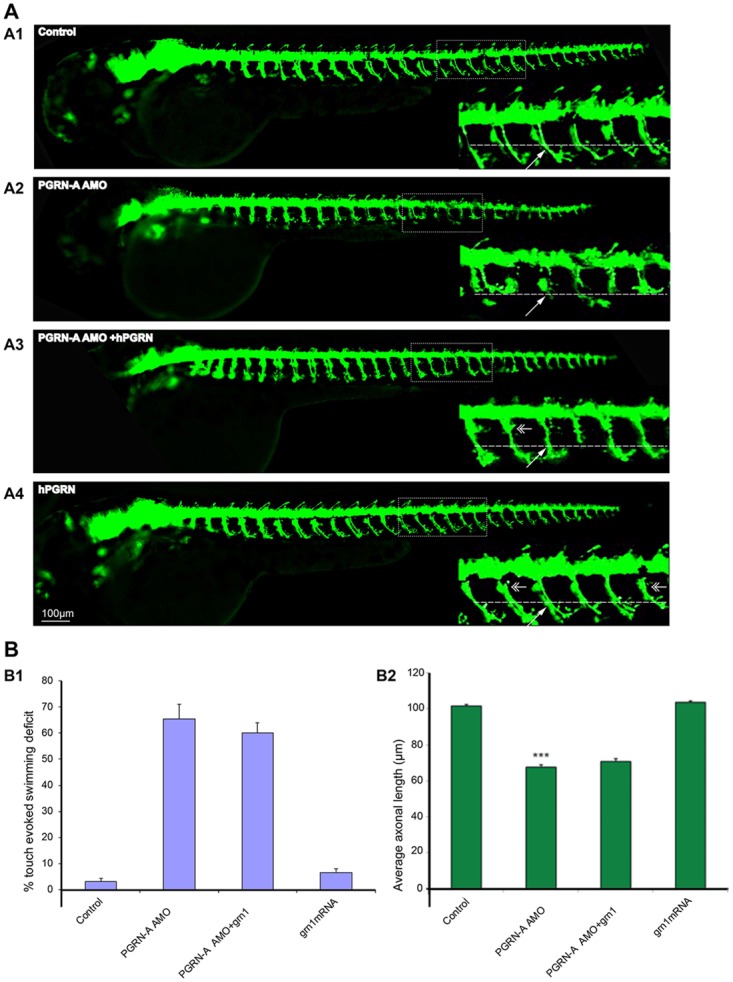
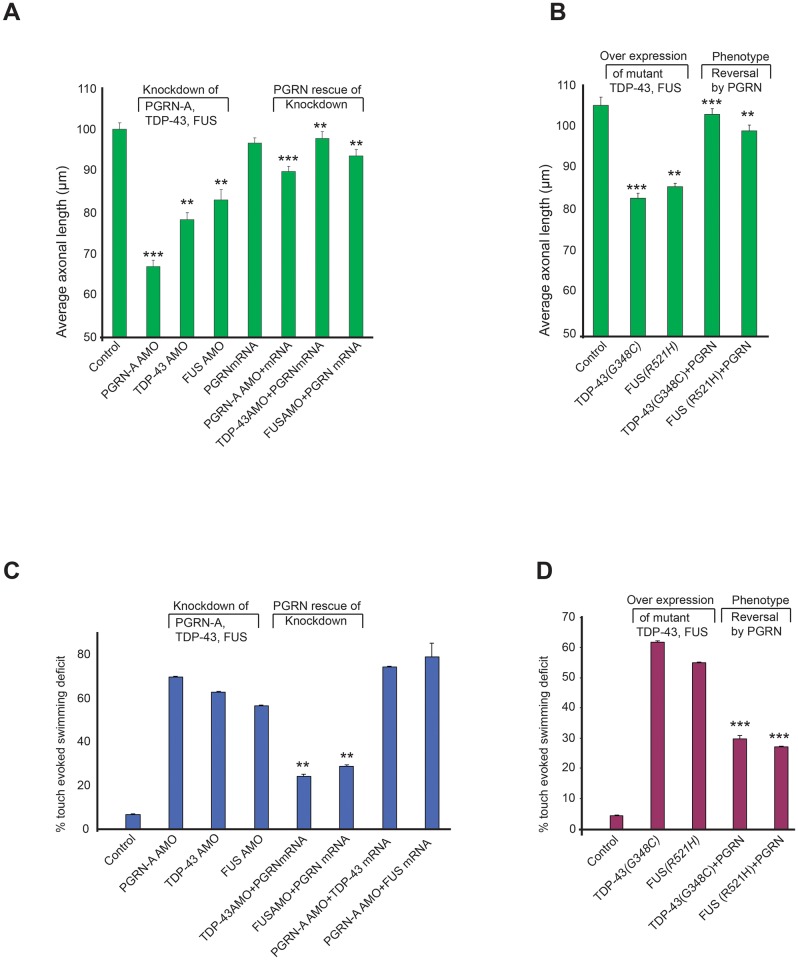
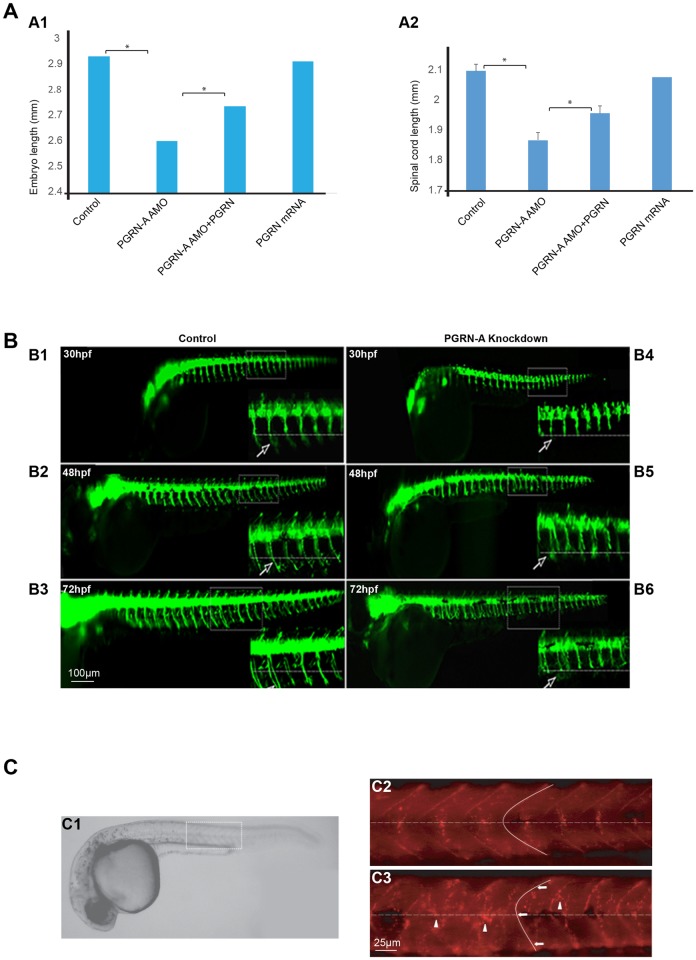
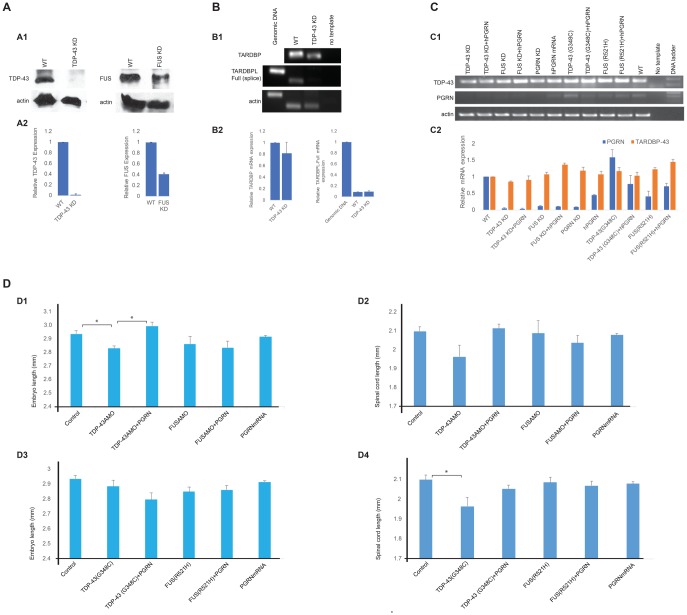
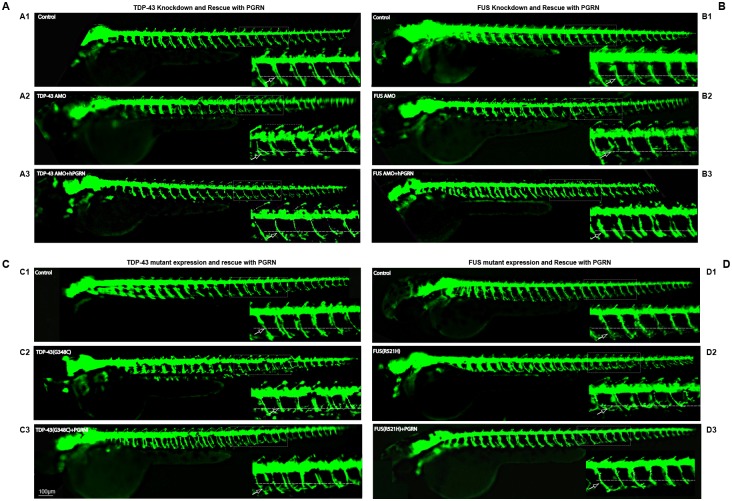
Progranulin (PGRN) is a glycoprotein with multiple roles in normal and disease states. Mutations within the GRN gene cause frontotemporal lobar degeneration (FTLD). The affected neurons display distinctive TAR DNA binding protein 43 (TDP-43) inclusions. How partial loss of PGRN causes TDP-43 neuropathology is poorly understood. TDP-43 inclusions are also found in affected neurons of patients with other neurodegenerative diseases including amyotrophic lateral sclerosis (ALS) and Alzheimer's disease. In ALS, TDP-43 inclusions are typically also immunoreactive for fused in sarcoma (FUS). Mutations within TDP-43 or FUS are themselves neuropathogenic in ALS and some cases of FTLD. We used the outgrowth of caudal primary motor neurons (MNs) in zebrafish embryos to investigate the interaction of PGRN with TDP-43 and FUS in vivo. As reported previously, depletion of zebrafish PGRN-A (zfPGRN-A) is associated with truncated primary MNs and impaired motor function. Here we found that depletion of zfPGRN-A results in primary MNs outgrowth stalling at the horizontal myoseptum, a line of demarcation separating the myotome into dorsal and ventral compartments that is where the final destination of primary motor is assigned. Successful axonal outgrowth beyond the horizontal myoseptum depends in part upon formation of acetylcholine receptor clusters and this was found to be disorganized upon depletion of zfPGRN-A. PGRN reversed the effects of zfPGRN-A knockdown, but a related gene, zfPGRN-1, was without effect. Both knockdown of TDP-43 or FUS, as well as expression of humanTDP-43 and FUS mutants results in MN abnormalities that are reversed by co-expression of hPGRN mRNA. Neither TDP-43 nor FUS reversed MN phenotypes caused by the depletion of PGRN. Thus TDP-43 and FUS lie upstream of PGRN in a gene complementation pathway. The ability of PGRN to override TDP-43 and FUS neurotoxicity due to partial loss of function or mutation in the corresponding genes may have therapeutic relevance.
颗粒蛋白前体(PGRN)是一种在正常和疾病状态下具有多种作用的糖蛋白。GRN基因内的突变会导致额颞叶痴呆(FTLD)。受影响的神经元会出现独特的TAR DNA结合蛋白43(TDP - 43)包涵体。PGRN部分缺失如何导致TDP - 43神经病理学改变尚不清楚。在包括肌萎缩侧索硬化症(ALS)和阿尔茨海默病在内的其他神经退行性疾病患者的受影响神经元中也发现了TDP - 43包涵体。在ALS中,TDP - 43包涵体通常对肉瘤融合蛋白(FUS)也具有免疫反应性。TDP - 43或FUS内的突变本身在ALS和某些FTLD病例中具有神经致病性。我们利用斑马鱼胚胎中尾侧初级运动神经元(MNs)的生长来研究PGRN与TDP - 43和FUS在体内的相互作用。如先前报道,斑马鱼PGRN - A(zfPGRN - A)的缺失与初级MNs截断和运动功能受损有关。在这里我们发现,zfPGRN - A的缺失导致初级MNs生长在水平肌隔处停滞,水平肌隔是将肌节分为背侧和腹侧部分的分界线,也是初级运动神经元的最终目的地所在位置。轴突成功生长超过水平肌隔部分取决于乙酰胆碱受体簇的形成,并且发现zfPGRN - A缺失时其会紊乱。PGRN可逆转zfPGRN - A敲低的影响,但相关基因zfPGRN - 1则无此作用。敲低TDP - 43或FUS,以及表达人TDP - 43和FUS突变体均会导致MN异常,而hPGRN mRNA的共表达可逆转这些异常。TDP - 43和FUS均不能逆转由PGRN缺失引起的MN表型。因此,在基因互补途径中,TDP - 43和FUS位于PGRN的上游。PGRN能够克服由于相应基因功能部分丧失或突变导致的TDP - 43和FUS神经毒性,这可能具有治疗意义。