Department of Neurology, Perelman School of Medicine, University of Pennsylvania, Philadelphia, PA 19104, USA.
Department of Pathology and Laboratory Medicine, University of Pennsylvania, Philadelphia, PA 19104, USA; Children's Hospital of Philadelphia, 3501 Civic Center Boulevard, 5060 CTRB, Philadelphia, PA 19104, USA.
Mol Ther. 2019 Feb 6;27(2):465-478. doi: 10.1016/j.ymthe.2018.11.013. Epub 2018 Nov 17.
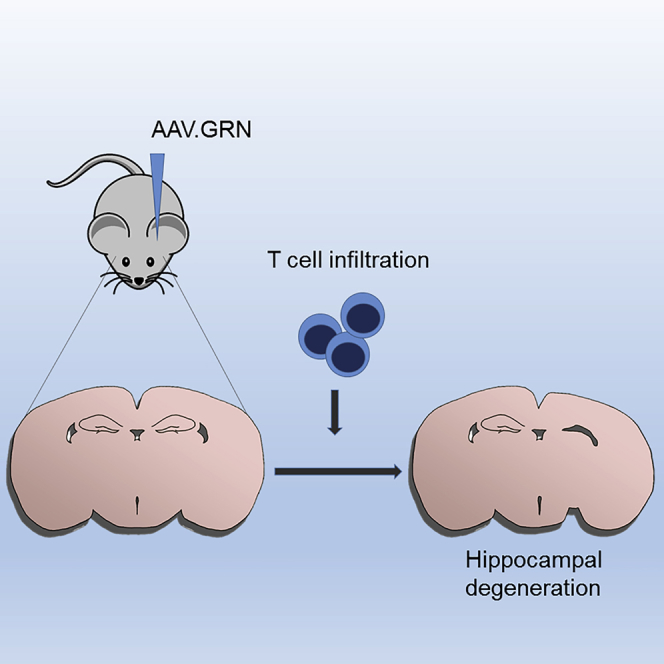
Adeno-associated virus-mediated gene replacement is emerging as a safe and effective means of correcting single-gene mutations affecting the CNS. AAV-mediated progranulin gene (GRN) delivery has been proposed as a treatment for GRN-deficient frontotemporal dementia and neuronal ceroid lipofuscinosis, and recent studies using intraparenchymal AAV-Grn delivery to brain have shown moderate success in histopathologic and behavioral rescue in mouse models. Here, we used AAV9 to deliver GRN to the lateral ventricle to achieve widespread expression in the Grn null mouse brain. We found that, despite a global increase in progranulin, overexpression resulted in dramatic and selective hippocampal toxicity and degeneration affecting neurons and glia. Hippocampal degeneration was preceded by T cell infiltration and perivascular cuffing. GRN delivery with an ependymal-targeting AAV for selective secretion of progranulin into the cerebrospinal fluid similarly resulted in T cell infiltration, as well as ependymal hypertrophy. Interestingly, overexpression of GRN in wild-type animals also provoked T cell infiltration. These results call into question the safety of GRN overexpression in the CNS, with evidence for both a region-selective immune response and cellular proliferative response. Our results highlight the importance of careful consideration of target gene biology and cellular response to overexpression prior to progressing to the clinic.
腺相关病毒介导的基因替换正在成为一种安全有效的纠正影响中枢神经系统的单基因突变的方法。AAV 介导的颗粒蛋白基因 (GRN) 传递被提议作为治疗 GRN 缺乏性额颞叶痴呆和神经元蜡样脂褐质沉积症的方法,最近使用脑内 AAV-Grn 传递的研究在小鼠模型中显示出在组织病理学和行为挽救方面取得了一定的成功。在这里,我们使用 AAV9 将 GRN 递送至侧脑室,以在 Grn 敲除小鼠脑中实现广泛表达。我们发现,尽管颗粒蛋白普遍增加,但过度表达导致了明显的选择性海马毒性和退行性变,影响神经元和神经胶质。海马退行性变之前伴有 T 细胞浸润和血管周围袖套。用靶向室管膜的 AAV 进行 GRN 传递,以将颗粒蛋白选择性分泌到脑脊液中,同样导致了 T 细胞浸润和室管膜肥大。有趣的是,野生型动物中 GRN 的过表达也引发了 T 细胞浸润。这些结果对 CNS 中 GRN 过表达的安全性提出了质疑,证据表明存在区域选择性免疫反应和细胞增殖反应。我们的结果强调了在向临床推进之前,仔细考虑靶基因生物学和细胞对过表达的反应的重要性。