Tong Chao, Tian Fei, Zhang Cunfang, Zhao Kai
Key Laboratory of Adaptation and Evolution of Plateau Biota, Northwest Institute of Plateau Biology, Chinese Academy of Sciences, Xining, China.
Laboratory of Plateau Fish Evolutionary and Functional Genomics, Northwest Institute of Plateau Biology, Chinese Academy of Sciences, Xining, China.
PLoS One. 2017 Mar 30;12(3):e0174534. doi: 10.1371/journal.pone.0174534. eCollection 2017.
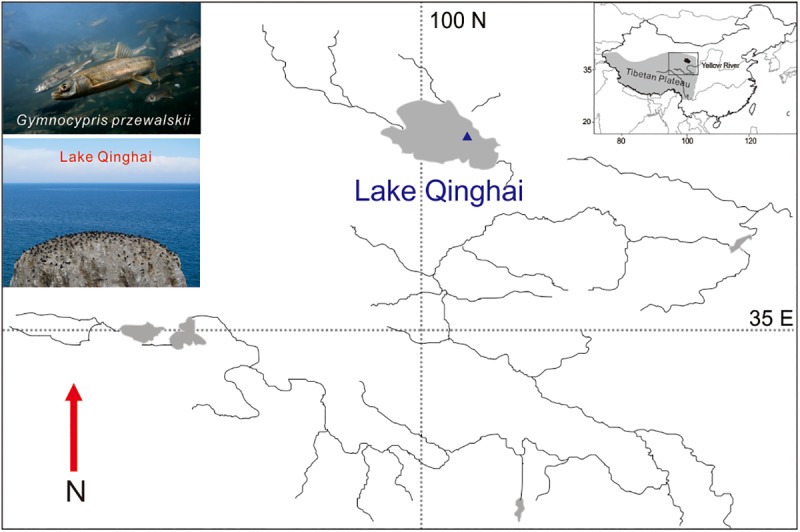
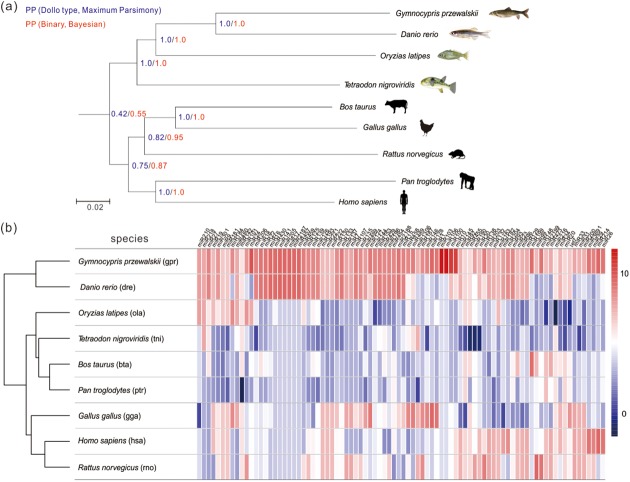
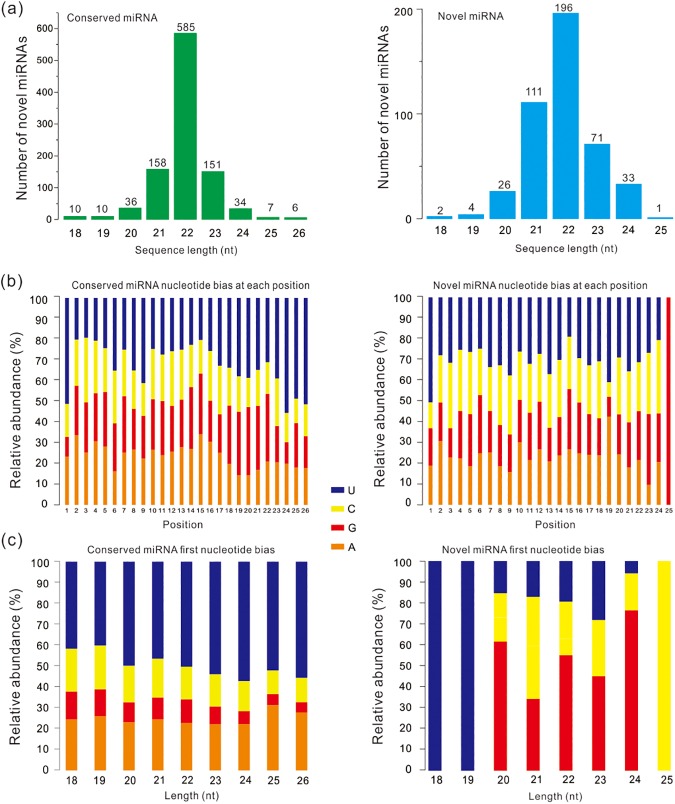
Tibetan naked carp Gymnocypris przewalskii is an ideal model system to study highland adaptation of fish, because it evolved specific genetic and phenotypic characteristics to adapt to chronic cold and alkaline environments in Lake Qinghai. MicroRNAs (miRNAs) are small noncoding RNAs that regulating gene expression post-transcriptionally in a wide range of biological processes. In this study, we focus on the role of miRNAs in adaptation of G. przewalskii to extreme conditions in Lake Qinghai. We generate the first miRNAome of G. przewalskii in Schizothoracinae fish. Using several genomic resources, we inferred 341 conserved miRNAs belonged to 152 miRNA families and 43 novel miRNAs in G. przewalskii, and also identified 15 teleost-specific miRNAs. Using a large scale of conserved miRNAs, we constructed a high-confidence phylogenetic tree between teleost and mammals than mitochondria and nuclear genes. In addition, we found that several miRNA family (e.g. miR-10 and let-7) members highly expressed in G. przewalskii, which may function in multiple biological processes. Finally, we predicted a total of 34,258 miRNA targets genes. Conserved miRNAs target genes participating in signal transduction, cell differentiation and biosynthetic process, and showed signature of functional constraint. While novel miRNAs in a species displayed species-specific targets and involved in ion binding, transport and oxidoreductase activity, may affect the expression patterns of targets with signature of gene family expansion or positive selection under extreme environment. Taken together, this study demonstrated that miRNAs may involve into roles of adaptation of G. przewalskii to highland aquatic environment, and also provide insights into miRNA regulatory network in Schizothoracinae fish as a case study.
青海湖裸鲤是研究鱼类高原适应性的理想模型系统,因为它进化出了特定的遗传和表型特征以适应青海湖长期寒冷和碱性的环境。微小RNA(miRNA)是一类小的非编码RNA,在广泛的生物过程中通过转录后调控基因表达。在本研究中,我们聚焦于miRNA在青海湖裸鲤适应极端环境中的作用。我们首次构建了裂腹鱼亚科青海湖裸鲤的miRNA组。利用多种基因组资源,我们推断出青海湖裸鲤中属于152个miRNA家族的341个保守miRNA和43个新miRNA,还鉴定出15个硬骨鱼特异性miRNA。利用大量保守miRNA,我们构建了一个比线粒体和核基因更具可信度的硬骨鱼和哺乳动物之间的系统发育树。此外,我们发现几个miRNA家族(如miR-10和let-7)的成员在青海湖裸鲤中高度表达,它们可能在多种生物过程中发挥作用。最后,我们共预测了34258个miRNA靶基因。保守miRNA的靶基因参与信号转导、细胞分化和生物合成过程,并显示出功能限制的特征。而一个物种中的新miRNA显示出物种特异性靶标,并参与离子结合、转运和氧化还原酶活性,可能在极端环境下通过基因家族扩张或正选择的特征影响靶标的表达模式。综上所述,本研究表明miRNA可能参与青海湖裸鲤对高原水生环境的适应作用,同时作为一个案例研究为裂腹鱼亚科鱼类的miRNA调控网络提供了见解。