Han Sheng, Meng Lingxuan, Jiang Yang, Cheng Wen, Tie Xinxin, Xia Junzhe, Wu Anhua
Department of Neurosurgery, The First Hospital of China Medical University, Nanjing Street 155, Heping District, Shenyang 110001, China.
Br J Cancer. 2017 May 9;116(10):1302-1311. doi: 10.1038/bjc.2017.89. Epub 2017 Mar 30.
We previously showed that activation of the nuclear factor of activated T cells (NFAT)1/Fas ligand (FasL) pathway induces glioma cell death. Lithium (Li) is an inhibitor of glycogen synthase kinase (GSK)-3 that activates NFAT1/FasL signalling. Temozolomide (TMZ) inhibits GSK-3 and activates Fas in tumour protein (TP)53 wild-type (TP53wt) glioma cells. The present study investigated the combinational effects of TMZ and low-dose Li on TP53wt glioma cells.
The combined effect of TMZ and Li was examined in TP53wt U87 and primary glioma cells and a mouse xenograft model.
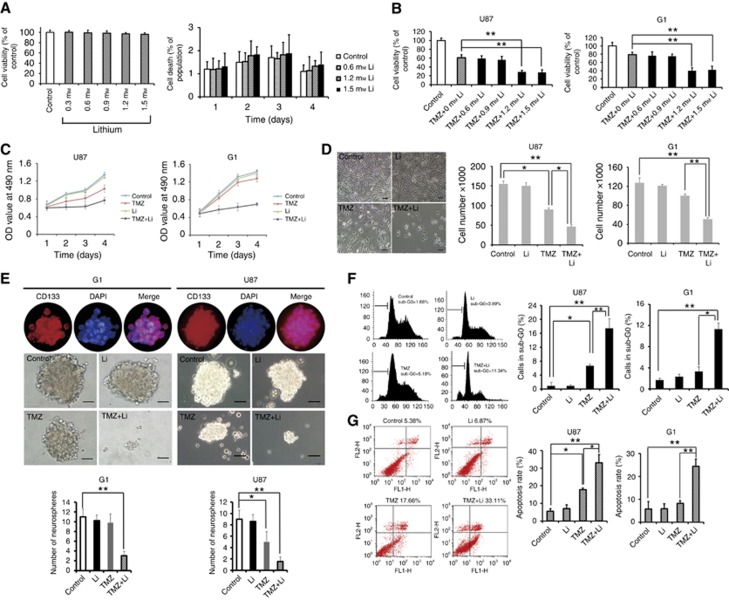
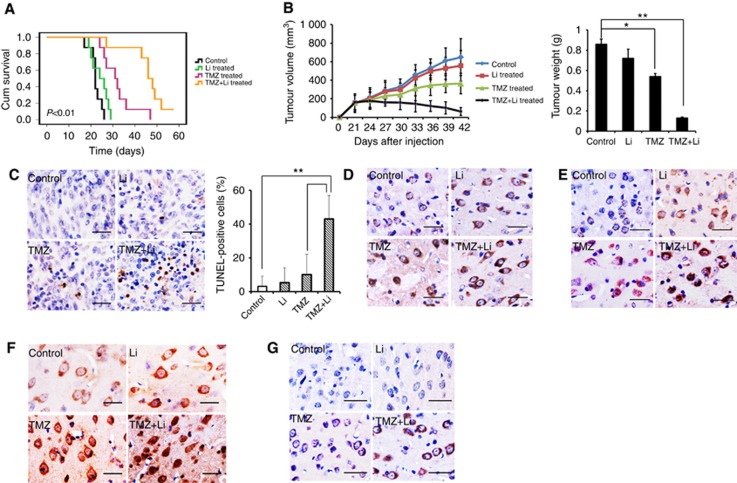
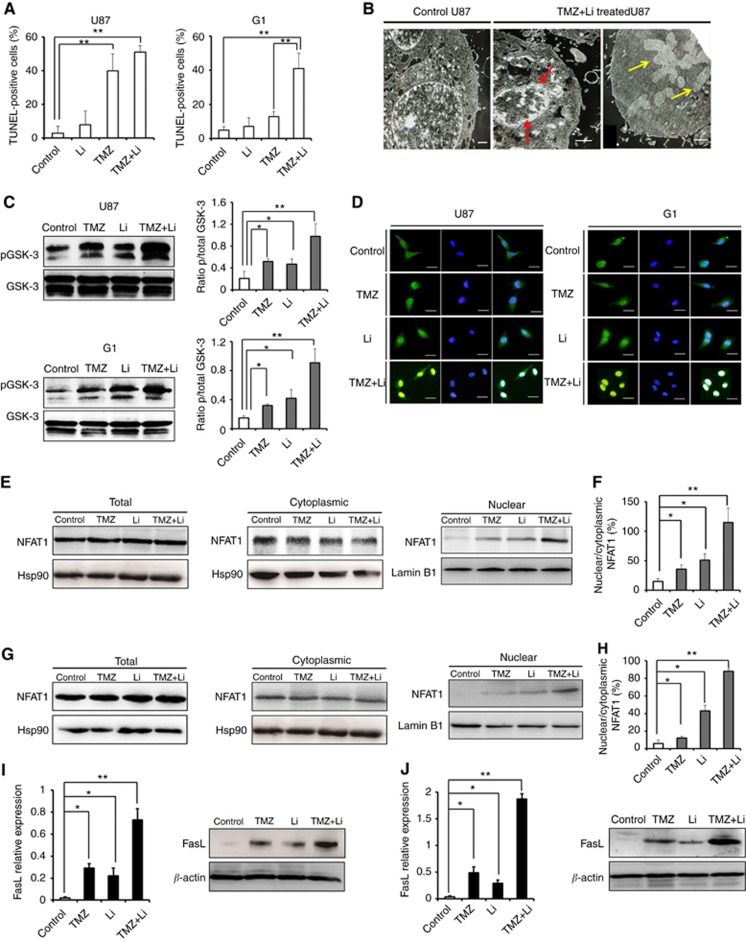
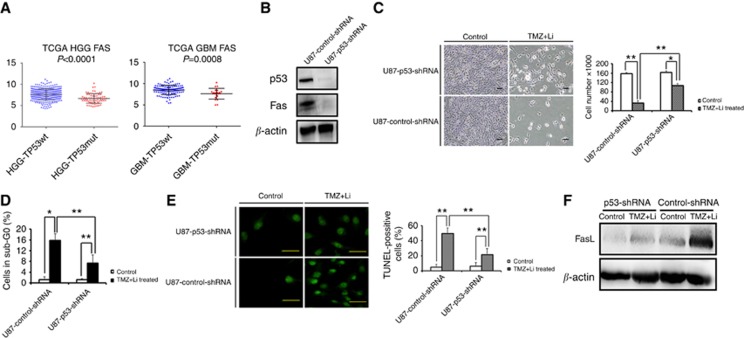
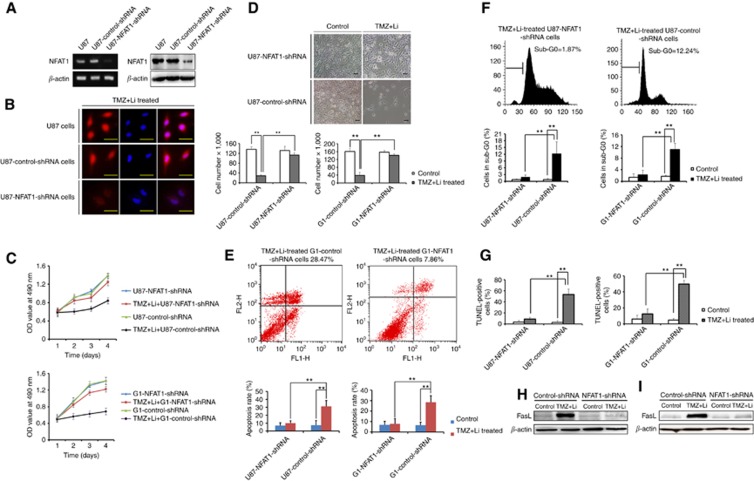
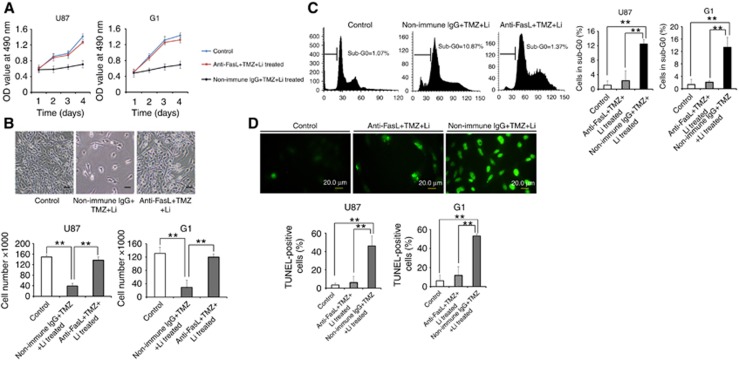
Combination with 1.2 mM Li potentiated TMZ-induced cell death in TP53wt glioma cells, as determined by neurosphere formation and apoptosis assays. Temozolomide combined with Li treatment inhibited GSK-3 activation, promoted NFAT1 nuclear translocation and upregulated Fas/FasL expression. Targeted knockdown of NFAT1 expression blocked the induction of cell death by TMZ and Li via FasL inhibition. In vivo, combined treatment with TMZ and Li suppressed tumour growth and prolonged the survival of tumour-bearing mice. However, the combination of TMZ and Li did not produce a statistically significant effect in TP53mut glioma cells.
Temozolomide combined with low-dose Li induces TP53wt glioma cell death via NFAT1/FasL signalling. This represents a potential therapeutic strategy for TP53wt glioma treatment.
我们之前的研究表明,活化T细胞核因子(NFAT)1/ Fas配体(FasL)信号通路的激活可诱导胶质瘤细胞死亡。锂(Li)是糖原合酶激酶(GSK)-3的抑制剂,可激活NFAT1/FasL信号。替莫唑胺(TMZ)可抑制GSK-3并在肿瘤蛋白(TP)53野生型(TP53wt)胶质瘤细胞中激活Fas。本研究探讨了TMZ与低剂量Li联合作用于TP53wt胶质瘤细胞的效果。
在TP53wt U87细胞、原代胶质瘤细胞和小鼠异种移植模型中检测TMZ与Li的联合作用。
通过神经球形成和凋亡检测发现,1.2 mM Li与TMZ联合使用可增强对TP53wt胶质瘤细胞的诱导死亡作用。TMZ联合Li治疗可抑制GSK-3激活,促进NFAT1核转位并上调Fas/FasL表达。靶向敲低NFAT1表达可通过抑制FasL阻断TMZ和Li诱导的细胞死亡。在体内,TMZ与Li联合治疗可抑制肿瘤生长并延长荷瘤小鼠的生存期。然而,TMZ与Li联合使用在TP53突变型胶质瘤细胞中未产生统计学上的显著效果。
TMZ联合低剂量Li通过NFAT1/FasL信号诱导TP53wt胶质瘤细胞死亡。这代表了一种治疗TP53wt胶质瘤的潜在策略。